|

V
Kanadě je důvod k oslavám. Vláda premiéra
Marka Carneyho se rozhodla natrvalo zachovat daňovou
pobídku na podporu fondů zaměstnaneckého
vlastnictví (EOT). To znamená, že počet převodů
podniků do rukou zaměstnanců bude v
Kanadě nadále růst, stejně jako tomu
bylo ve Spojených státech a od roku 2014 také ve Spojeném
království.
Umožňuje to právě model fondu zaměstnaneckého
vlastnictví. Fond zaměstnaneckého vlastnictví
znamená vlastnictví firmy komunitou tvořenou
jejími zaměstnanci. Tento kolektiv se stává vlastníkem
společnosti, aniž by zaměstnanci museli
investovat jedinou korunu ze svých vlastních prostředků.
Jedná se o prodej na úvěr. Ve většině
případů poskytuje úvěr fondu zaměstnaneckého
vlastnictví ten, kdo společnost prodává, a to
formou tzv. „vendor loan“. Prodávající souhlasí s
tím, že úhradu kupní ceny rozloží do delšího časového
období, zpravidla na pět až sedm let. Protože
je vlastníkem společnosti fond zaměstnaneckého
vlastnictví, může využívat zisky firmy ke splácení
dluhu vůči prodávajícímu.
Proč
prodávající na takové období splácení přistupuje?
Protože daňová pobídka osvobozuje prodávajícího
od daně z prodeje společnosti fondu zaměstnaneckého
vlastnictví. A tím se celý kruh uzavírá. V konečném
důsledku jsou hlavními příjemci bezdaňového
výnosu z prodeje právě zaměstnanci společnosti.
Ve Spojeném království už ale důvod k oslavám
není. Situace je zde už téměř šest měsíců
nepřehledná a chaotická. Vláda ministryně
financí Rachel Reevesové se rozhodla znovu zdanit
prodeje firem zaměstnancům. Namísto stoprocentního
daňového osvobození výnosů z prodeje nyní
platí pouze padesátiprocentní úleva.
V důsledku toho se stal úvěrový mechanismus
umožňující rozložit platby v čase mnohem
složitějším, nebo dokonce zcela neproveditelným.
Mnoho vlastníků se proto rozhodlo své firmy zaměstnancům
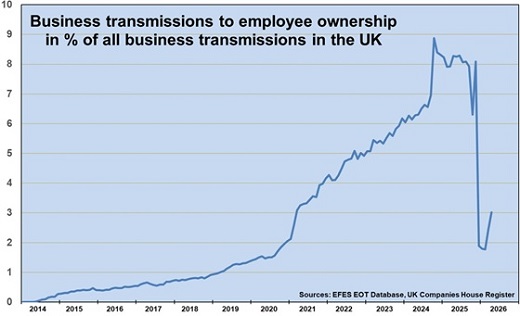
neprodávat. Prakticky ze dne na den prudce poklesl
počet podniků převáděných do rukou
zaměstnanců. Nedávná zjištění ukazují,
že se situace posouvá k nové rovnováze: Zatímco před
rozhodnutím paní Reevesové bylo zaměstnancům
předáno přibližně 100 firem, nyní jich
bude pouze 50, tedy polovina, případně ještě
méně. A zatímco předtím směřovalo
k zaměstnancům přibližně 8 % všech
převodů podniků, do budoucna to budou
jen 3 až 4 % (viz graf).
Motivy paní Reevesové zůstávají v tomto zmatku
nejasné – jde o kombinaci ideologických rozmarů
a partikulárních zájmů, bez jakéhokoli pevného
základu. Důsledky jsou přitom rozsáhlé a
my se k nim brzy vrátíme. Jisté je, že na novém zdanění,
které prosazuje vláda Rachel Reevesové, nakonec nejvíce
prodělají zaměstnanci.
Existuje pouze jediný způsob, jak této britské
katastrofě zabránit.Je nezbytné obnovit stoprocentní
osvobození od daně z kapitálových výnosů
při prodeji společnosti fondu zaměstnaneckého
vlastnictví.
More
info
|