| |
NEWS
 Day after day, all news
on the web about employee ownership
Day after day, all news
on the web about employee ownership
|
 Februar
2022
- Katastrophe
in Norwegen
Februar
2022
- Katastrophe
in Norwegen
|
|

Es
ist beschlossen. Seit dem 1. Januar ist die
überraschende Abschaffung aller Anreize für
die Mitarbeiterkapitalbeteiligung durch die
neue norwegische Regierung beschlossene Sache.
Daher ist es an der Zeit für eine politische
Debatte. Was ist zu tun, welche Alternative
gibt es? Wie ein sozialistischer Premierminister,
der in Belgien berühmt wurde, zu sagen pflegte:
„Erst handle ich, dann denke ich nach“.
Für die norwegische sozialdemokratische Partei
war die Mitarbeiterbeteiligung ein Faktor,
der zu Ungleichheit führte. Sie werde durch
Steuervergünstigungen für Aktienoptionen in
Startups ersetzt, das sei sicher viel egalitärer.
In Europa gibt es derzeit eine politische
Begeisterung für Startups.
In der Europäischen Kommission hielt uns Kommissar
Thierry Breton vor einiger Zeit eine ähnliche
Rede. Wir wiesen auf den Rückstand Europas
bei der Mitarbeiterbeteiligung in KMU hin
und auf die Notwendigkeit, bei uns die geeigneten
Finanzinstrumente für die Übertragung von
Unternehmen an Mitarbeiter einzuführen. „The
job is done“ ließ er uns sagen, die Arbeit
ist getan: in nur wenigen Monaten haben wir
eine europäische Strategie entwickelt, die
den Einsatz von Aktienoptionen in Startups
fördern soll.
Diese europäische Strategie (der EU Startup
Nation Standard) besteht im Wesentlichen darin,
die europäischen Staaten zum Handeln aufzufordern,
was offenbar auch in Norwegen geschieht.
Wir antworteten, dass eine Strategie, die
auf die 20-30.000 europäischen Startups abzielt,
den Bedürfnissen der europäischen KMU nicht
gerecht werden kann. In der Tat gibt es in
der Europäischen Union heute zwei Millionen
KMU, die 50 Millionen Menschen beschäftigen
(ohne die 23 Millionen Kleinstunternehmen
zu zählen, die ebenfalls fast 50 Millionen
Menschen beschäftigen).
Mit solchen Argumenten kann Europa auf Raketen
verzichten, um zum Mars zu fliegen, da es
heutzutage sehr gute Elektrofahrräder gibt.
Zumindest in Norwegen wird die Debatte lebhaft
geführt, wie man in unserem Pressespiegel
sehen kann.
|
|
Januar
2022
- Modellpläne
|
|
Was
ist Mitarbeiterkapitalbeteiligung? Von Mitarbeiterkapitalbeteiligung
spricht man, wenn Mitarbeiter einen Anteil
am Kapital des Unternehmens halten, in dem
sie beschäftigt sind. Sie beginnt damit, dass
ein Mitarbeiter eine Aktie hält, und kann
sich bis zu 100 % auf alle Mitarbeiter ausweiten.
Weltweit gibt es eine geringe Anzahl von Modellen
für Mitarbeiterbeteiligungspläne (allerdings
mit vielen Variationen je nach den spezifischen
Rechtsvorschriften der einzelnen Länder).
Diese Pläne sind mehr oder weniger auf Neugründungen
(oder Kleinstunternehmen) oder auf KMU oder
Großunternehmen zugeschnitten.
Wie das Unternehmenseigentum im Allgemeinen
lassen sich auch Mitarbeiterbeteiligungspläne
in zwei Hauptkategorien unterteilen: direkter
individueller Aktienbesitz und indirekter
kollektiver Aktienbesitz:
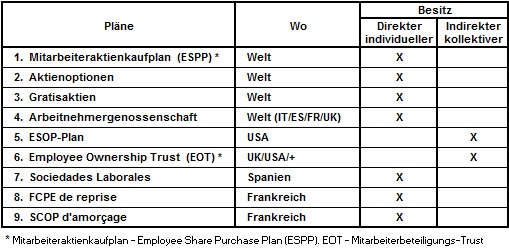
Die direkte Mitarbeiterkapitalbeteiligung
ist die traditionellste und bekannteste Form.
Zu diesem Zweck setzt der Mitarbeiter einen
Teil seiner Ersparnisse oder finanziellen
Mittel ein, um Aktien des Unternehmens zu
kaufen, und geht damit ein persönliches Risiko
ein. Dies ist im Rahmen verschiedener Arten
von Plänen möglich. Diese Kategorie von Mitarbeiterbeteiligungsplänen
ist praktisch die einzige ihrer Art in Kontinentaleuropa.
Indirekte kollektive Mitarbeiterbeteiligung
wird in Europa (außer im Vereinigten Königreich)
kaum praktiziert. Dies erklärt, warum die
Mitarbeiterkapitalbeteiligung in Europa in
KMU so gut wie nicht existiert und außerhalb
von Großunternehmen fast unbekannt ist. KMU
vermeiden es in der Regel, die Zahl ihrer
Anteilseigner zu erhöhen, unabhängig davon,
ob sie Mitarbeiter sind oder nicht. Sie werden
erst dazu gezwungen, wenn sie größer werden.
Andererseits kann eine bestimmte Phase den
Wunsch nach neuen Aktionären auslösen: Unternehmensübertragung.
Deshalb ist dies der beste Zeitpunkt für die
Einführung der Mitarbeiterbeteiligung in KMU.
Indirektes kollektives Eigentum ist die an
der besten geeigneten Form für die Übertragung
eines Unternehmens auf die Mitarbeiter. Pläne
dieser Kategorie (ESOP, EOT) wurden zu diesem
Zweck entwickelt. Sie ermöglichen es den Mitarbeitern,
Eigentum an ihrem Unternehmen zu erwerben,
häufig zu 100%, ohne ihre Ersparnisse oder
persönlichen Finanzen aufzubrauchen und somit
ohne persönliches Risiko.
Indirekte kollektive Mitarbeiterbeteiligungspläne
(ESOP, EOT) erleichtern die Übertragung von
Unternehmen auf die Mitarbeiter, was bei direkten
individuellen Aktienbeteiligungsplänen nur
mit großen Schwierigkeiten und Kosten möglich
ist, da die Ersparnisse der Mitarbeiter in
der Regel nicht ausreichen.
Mehr
|
|
December
2021
- Bedrohung in Norwegen
|
|

Es
begann in Dänemark.
Unter dem Schreckgespenst der Finanzkrise
war es eine der ersten Amtshandlungen der
neuen dänischen Regierung im Jahr 2011 (Helle
Thorning-Schmidt, Sozialdemokratin), alle
Anreize für Mitarbeiterbeteiligungen zu stoppen.
Fünf Jahre später, im Jahr 2016, bestand eine
der ersten Amtshandlungen der neuen dänischen
Regierung (Lars Rasmussen, konservativ-liberal)
darin, sie unverändert wieder einzuführen.
Aber nichts geschah. Verhängnisvolle politische
Instabilität. Die Reinvestitionen in neue
Mitarbeiterbeteiligungsprogramme blieben aus,
die Unternehmen kehrten nicht zurück.
Heute wird Dänemark wieder von einer sozialdemokratischen
Regierung geführt. Diese träumt davon, „demokratische“
Unternehmen zu fördern.
Und dann ist da noch Norwegen.
Mit 40.000 Mitarbeiteraktionären, die nur
etwa 10% der Beschäftigten in Großunternehmen
ausmachen, ist es nicht das geeignetste Land
in Europa für die Entwicklung der Mitarbeiterkapitalbeteiligung.
Um den Rückstand aufzuholen, hatte die norwegische
Regierung beschlossen, die Anreize für Mitarbeiterbeteiligungen
bis 2021 zu erhöhen.
Aber in der Zwischenzeit gab es Wahlen. Eine
neue sozialdemokratische Regierung. Überraschenderweise
ändert sich das Projekt. Jetzt geht es darum,
alle steuerlichen Anreize für Mitarbeiterbeteiligungen
abzuschaffen, da sie als Quelle von Ungleichheiten
angesehen werden.
Dabei ist seit langem bekannt, dass die Mitarbeiterbeteiligung
nicht nur ihren direkten Nutznießern und den
Unternehmen zugute kommt, sondern auch der
Lebensqualität und der Bevölkerung im Allgemeinen.
In der norwegischen Presse prallen Pro- und
Kontra-Argumente aufeinander, Organisationen
und Gewerkschaften sind gespalten...
Siehe
Presseschau
|
|
November
2021
Go Ape Adventure
Forest - Neues
Unternehmen im Besitz von Mitarbeitern im
VK
|
|
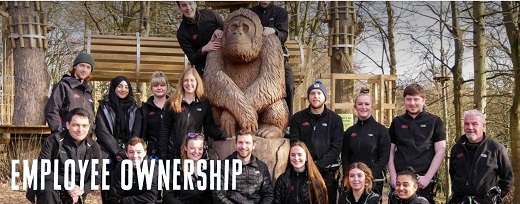
Die
Gründer Rebecca und Tristram Mayhew gaben
am 23. Oktober 2021 bekannt, dass 90% der
Go Ape-Aktien in einen Mitarbeiterbeteiligungs-Trust
(EOT) übertragen werden, der allen derzeitigen
und künftigen Mitarbeitern zugute kommt. Die
restlichen 10% des Unternehmens werden von
Rebecca und Tristram gehalten.
Seit der Gründung von Go Ape im Jahr 2002
hat das stolze unabhängige Unternehmen ein
„atemberaubendes“ Wachstum erlebt. Nach fast
20 Jahren haben seine Gründer ein mehrfach
preisgekröntes Waldabenteuer-Unternehmen mit
35 Standorten in ganz Großbritannien aufgebaut.
Es begrüßt jährlich über eine Million Kunden
und beschäftigt im Vereinigten Königreich
ein Team von eintausend Mitarbeitern. Go Ape
hat sich auch über dem großen Teich niedergelassen
und ist in 16 amerikanischen Bundesstaaten
vertreten.
Wie sieht nun die neue Führungsstruktur von
Go Ape aus?
Bevor sie die große Mehrheit ihrer Aktien
in einen Mitarbeiterbeteiligungs-Trust (EOT)
zum Vorteil aller Mitarbeiter übertrugen,
verfassten die Gründer von Go Ape eine Erklärung
über die Ziele des Unternehmens für die Zukunft.
Diese Erklärung ist unter dem Titel „The Founders’
Wishes“ verzeichnet.
Sie basiert auf den Grundwerten, die die Richtung
und die Entscheidungsfindung in den ersten
20 Jahren von Go Ape geprägt haben.
Weitere Informationen unter
The Founders'
Wishes
|
|
Oktober
2021
- Die 1BY30-Koalition
|
|
Im
Vereinigten Königreich wird eine Koalition
gebildet. Sie bringt die führenden Organisationen
der Genossenschaftsbewegung und der Arbeitnehmer-beteiligung
– „Co-operatives UK“ und „Employee
Ownership Association“ zusammen.
Sie werben für die 1 bis 30 - die eine Million
Eigentümer: Eine Million Mitarbeiter als Eigentümer
in britischen KMU bis 2030. Das ist mehr als
in der gesamten Europäischen Union heute.
In den letzten Jahren ist die Nachfrage nach
professioneller Beratung und Unterstützung
im Bereich der Mitarbeiterkapitalbeteiligung
im Vereinigten Königreich gestiegen. Aus diesem
Grund hat die Koalition den „Ownership
Hub“ (Eigentums-Hub) eingerichtet.
The
Ownership Hub entwickelt Ressourcen und
Schulungen für professionelle Berater, um
Unternehmer und Unternehmen bei der Einführung
von Mitarbeiterbeteiligungen und Arbeitnehmergenossenschaften
in den verschiedenen Phasen des Unternehmens-lebenszyklus
zu unterstützen.
Arbeitnehmergenossenschaften sind das bewährte
Modell für die Gründung von Unternehmen, die
von Anfang an im Besitz der Arbeitnehmer sind.
Das Genossenschaftsmodell wird auch häufig
von jungen Unternehmen genutzt, um frühzeitig
auf die Beteiligung der Arbeitnehmer umzustellen.
Darüber hinaus nutzen Start-ups häufig Mitarbeiterbeteiligungsprogramme,
insbesondere Aktienoptionen.
Ganz anders sieht es dagegen im Rahmen der
Eigentumsnachfolge aus. Für die Übertragung
von Unternehmen an Arbeitnehmer sind die ESOP/EOT-Modelle
in vielen Fällen am effektivsten.
Weitere Informationen unter
The
Ownership Hub
|
|
|
September
2021
- Mitarbeiterbeteiligung als
Motor der wirtschaftlichen Erholung
in Schottland
|
|
Die
schottische Regierung hofft, bis 2030 die
Zahl der von Mitarbeiterbeteiligungs-Trusts
(EOT) kontrollierten Unternehmen auf 500 erhöhen
zu können. Zehntausende von neuen Mitarbeiteraktionären.
Sie
erleben die Vorteile, die es mit sich bringt,
wenn Unternehmen in den Besitz ihrer Mitarbeiter
übergehen, nicht nur für die Mitarbeiter selbst,
sondern auch, weil dadurch Arbeitsplätze,
Wohlstand und Talente in Schottland gebunden
werden. Die Rolle der Mitarbeiterbeteiligung
bei der langfristigen Erholung von der Coronavirus-Pandemie
sollte nicht übersehen werden.
Der
Übergang zur Mitarbeiterbeteiligung wird in
der Regel von Unternehmern oder Familienunternehmen
im Rahmen ihrer Nachfolgeplanung vorgenommen.
Was
sind die Vorteile für die Verkäufer? Was sind
die Vorteile für die Mitarbeiter? Sehen
Sie sich die Fakten an: In unserer Presseschau
finden Sie ein Dutzend realer Fälle und Erfahrungsberichte,
die in diesem Sommer in der britischen Presse
veröffentlicht wurden.
Mehr
dazu
|

|
|
Juli
2021
Meld
Studios - Australiens
erstes Unternehmen das in einen Mitarbeiterbeteiligungs-Trust
übergeht
|
|

Wir
haben eine neue Eigentümerstruktur!
Nach
einer einjährigen Einflussnahme auf die australische
Gesetzgebung freuen wir uns, nun offiziell
in den Status eines Mitarbeiterbeteiligungs-Trusts
überzugehen.
Dies ist ein wichtiger Meilenstein in der
Geschichte von Meld und in der Geschichte
des australischen Unternehmensbesitzes.
Was
bedeutet „Mitarbeiterbeteiligungs-Trust“?
Technisch
gesehen, ist ein Mitarbeiterbeteiligungs-Trust
(Employee Owned Trust) oder EOT:
Ein
Trust, der von einem Unternehmen gegründet
wurde, um Eigenkapital für seine Mitarbeiter
zu halten, wobei in der Regel alle - oder
zumindest die Mehrheit - der Aktien von dem
Trust gehalten werden.
Praktisch
bedeutet ein EOT, dass:
·
Die Aktien von unseren drei Gründern
(Eigentümern) im Laufe der Zeit auf den Meld
EOT übergehen
·
Alle fest angestellten Mitarbeiter
sind Begünstigte dieses Trusts
·
Als Begünstigter ist jeder Mitarbeiter
indirekt Eigentümer von Meld
·
Jeder Mitarbeiter von Meld hat somit
zwei Rollen: Mitarbeiter und Geschäftsinhaber
·
Jeder Mitarbeiter von Meld hat durch
etablierte Beteiligungsstrukturen ein direktes
Mitspracherecht bei der Ausrichtung des Unternehmens
·
Alle Mitarbeiter von Meld profitieren
zu gleichen Anteilen von den Ergebnissen unserer
gemeinsamen Bemühungen.
Die
ganze Geschichte
|
|
Juni
2021 -
Mitarbeiterkapitalbeteiligung
und die Post-Covid-Wirtschaft
|
|
Das
Vereinigte Königreich sucht nach einem neuen
Konzept für Mitarbeiterbeteiligungspläne für
die 2020er Jahre.
Kürzlich
wurde ein Bericht mit Empfehlungen für die
Ausweitung der Nutzung von Mitarbeiterbeteiligungsplänen
veröffentlicht, während sich das Vereinigte
Königreich auf die wirtschaftliche Erholung
nach Covid konzentriert: "A
Stake in Success - Employee Share Ownership
and the post-Covid economy".
Zu verdanken ist dies der Social Market Foundation
und Proshare, dem Sprachrohr der Branche für
Mitarbeiterbeteiligungspläne im Vereinigten
Königreich.
Er
bringt einige wichtige Empfehlungen ein, darunter:
•
Die Beteiligung an Mitarbeiterbeteiligungsplänen
muss ausgeweitet werden, und ein wichtiger
Teil davon könnte die Neugestaltung von steuerbegünstigten
Plänen sein, um ihre Attraktivität für Arbeitnehmer
mit niedrigerem Einkommen zu erhöhen. "Die
Regeln für den Aktiensincentiveplan (Share
Incentive Plan) sollten geändert werden,
um Arbeitnehmern mit niedrigerem Einkommen
einen bevorzugten Zugang zu Gratisaktien zu
ermöglichen."
•
"Einführung eines neuen Beteiligungsmodells,
um die Mitarbeiterkapitalbeteiligung als wichtigen
Bestandteil der Unternehmensnachfolgeplanung
zu fördern. Das US-amerikanische ESOP-Modell
sollte in das Vereinigte Königreich eingeführt
werden, wobei Employee Ownership Trusts
(EOTs) die Möglichkeit haben sollten, sich
in ESOP-Pläne umzuwandeln, bei denen die Aktien
den einzelnen Mitarbeitern zugeteilt, anstatt
in einem kollektiven Pool gehalten zu werden.
Die Einbeziehung von EOT- und ESOP-Plänen
als Teil der Unternehmensnachfolgeplanung
könnte dazu beitragen, die Mitarbeiterbeteiligung
im Laufe der Zeit zu erweitern."
•
"Die Regierung muss die Mitarbeiterbeteiligung
unterstützen und sie zu einem wichtigen Teil
der wirtschaftlichen Agenda und des Narrativs
nach Covid machen. Sie sollte ein Schlüsselelement
nicht nur für eine "faire Erholung"
sein, sondern auch, um das langjährige Problem
der unzureichenden Produktivität der britischen
Wirtschaft anzugehen."
|
|
|
Mai
2021 -
Eine
Fehlinformationskampagne in Frankreich
|
|
In
den letzten Monaten rollte weltweit eine Welle
von Unternehmensübertragungen an Mitarbeiter
an. Es ist eine Entwicklung infolge der Pandemie.
Im Zuge der Krise haben viele Mittelständler
ihr Lebenskonzept geändert und möchten ihr
Unternehmen übergeben.
In Großbritannien wird derzeit jeden Tag ein
KMU an seine Mitarbeiter übergeben, im Durchschnitt
85 Personen. Jeden Tag ein KMU! Die
Mitarbeiter werden zu Mehrheitsaktionären
des Unternehmens, in der Regel sogar zu 100%,
wie es bei den SCOP, den Mitarbeitergenossenschaften
in Frankreich, der Fall ist.
Dies ist dem Mitarbeiterbeteiligungsplan ESOP
und seiner britischen Variante, dem EOT (Employee
Ownership Trust), zu verdanken.
Dabei handelt es sich nicht um Aktienkaufpläne,
wie wir sie in großen Unternehmen in Paris
kennen. Die Mitarbeiter müssen ihre Ersparnisse
nicht investieren. Außerdem würden ihre Ersparnisse
nicht ausreichen, um ihr Unternehmen zu kaufen.
Beim ESOP-Modell tragen die Mitarbeiter das
finanzielle Risiko nicht selbst.
In mehreren Ländern gehört die Genossenschaftsbewegung
zu den Vorreitern der ESOP-Pläne in KMU. Das
Gleiche gilt für die Gewerkschaftsbewegung.
So zum Beispiel in Wales mit dem Wales
Co-operative Centre oder in Schottland
mit der Agentur Co-operative Development
Scotland.
Im Gegensatz dazu bietet Frankreich im Moment
ein auffälliges Bild. In der Tat ist es einer
durch die Presse und politische Lobbyarbeit
organisierten Fehlinformationskampagne zu
verdanken, dass das ESOP-Modell in Frankreich
begrüßt wurde.
Diese Kampagne wird von der FAS geleitet,
einer Organisation, in der ein Dutzend aktiver
Vereinigungen von Mitarbeiteraktionären in
großen Konzernen in Paris zusammengeschlossen
sind. Mehr
dazu
|

Supermenteur
|
|
Mai
2021 -
Neue
Gesetzgebung in Deutschland
|
|
Das
neue Gesetz zur Mitarbeiterbeteiligung wurde
am 22. April vom Bundestag verabschiedet.
Das ist ein großer Schritt vorwärts. Die Steuervergünstigungen
werden mit vier multipliziert, d.h. 1.440
€ pro Jahr und pro Person. Wir können davon
ausgehen, dass sich noch viel mehr Unternehmen
der Mitarbeiterbeteiligung zuwenden werden,
sowohl große als auch KMU und Start-ups. Die
politischen Entscheidungen in Deutschland
haben sich plötzlich beschleunigt. Von den
Anforderungen der Praxis und internationalen
Standards sind wir aber noch weit entfernt
(siehe unseren Pressespiegel). Mehr
Informationen
|
|
März
2021 -
Eine
französische Erfolgsgeschichte
|
|
Seit
Anfang des Jahres wächst die Zahl der Employee
Ownership Trusts (Mitarbeiterkapitalbeteiligungs-Trusts)
in Großbritannien immer schneller.
Bei diesem Tempo wird sich die Zahl der auf
Mitarbeiter übertragene Unternehmen in diesem
Jahr auf 6 bis 700 verdoppeln. In nur wenigen
Jahren, seit der Einführung der Formel im
April 2014, hat sie sich zu einem großen Erfolg
entwickelt.
Zum Vergleich: Frankreich führte 2006 ein
Unternehmens-Investmentfonds-System ("FCPE
de reprise") ein.
Auch
in Frankreich steigt die Zahl stark an. Tatsächlich
wurden zwischen 2006 und 2020 nur zwei Fälle
von Unternehmensübertragungen zur Übernahme
durch "FCPEs de reprise" durchgeführt,
aber diese Zahl könnte bis 2021 auf drei ansteigen,
d.h. +50%. Damit wäre Frankreich nicht weit
von den in Großbritannien erwarteten +100%
entfernt und läge auf jeden Fall deutlich
höher als alle anderen europäischen Länder.
|
|
|
Der
"FCPE de reprise" wurde nach dem
gleichen Prinzip konzipiert wie die in großen
Unternehmen so erfolgreichen FCPEs. In beiden
Fällen handelt es sich um Aktienkaufpläne
für Mitarbeiter.
Bei Aktienkaufplänen werden die Mitarbeiter
aufgefordert, einen Teil ihrer Ersparnisse
in Unternehmensaktien zu investieren. Die
Mitarbeiter profitieren von Anreizen (Preisnachlässe,
Firmenbeiträge, Steuerboni, etc). Diese Pläne
eignen sich gut für große Unternehmen, deren
Größe ein Faktor zur Minderung des finanziellen
Risikos ist.
Der Kauf von Anteilen an einem KMU ist hingegen
ein viel riskanteres Geschäft. Und die Investition
von Mitarbeitern in ein KMU erfolgt in der
Regel bei einem Betriebsübergang, so dass
ein erheblicher Teil des Unternehmens, oft
100%, erworben werden muss. Im Allgemeinen
fallen Einsparungen der Mitarbeiter nicht
in den Rahmen eines solchen Vorgangs.
Die Länder, die bei der Organisation einer
Mitarbeiterbeteiligungspolitik in KMU am erfolgreichsten
waren, sind diejenigen, die finanzielle Mechanismen
eingeführt haben, die sich von Aktienkaufplänen
deutlich unterscheiden.
Die ESOP-Pläne in den USA und die Employee
Ownership Trusts in Großbritannien sind keine
Aktienkaufpläne für Mitarbeiter. Die Mitarbeiter
gehen nicht das Risiko ein, ihre persönlichen
Ersparnisse zu investieren. Diese Mitarbeiterbeteiligungsprogramme
sind daher viel weniger riskant. Und doch
lassen sie die Mitarbeiter zu Eigentümern
ihres Unternehmens werden, oft zu 100%.
Es spricht nichts dagegen, die gleichen finanziellen
Mechanismen auch in Frankreich anzuwenden.
Der Umsetzung einer effizienten Mitarbeiterbeteiligungspolitik
in KMU steht nichts Ernsthaftes im Wege, um
daraus eine neue französische Erfolgsgeschichte
zu machen. Mehr
Informationen
|
|
Februar
2021 - Wie
viele Mitarbeiteraktionäre gibt es in Europa?
|
|
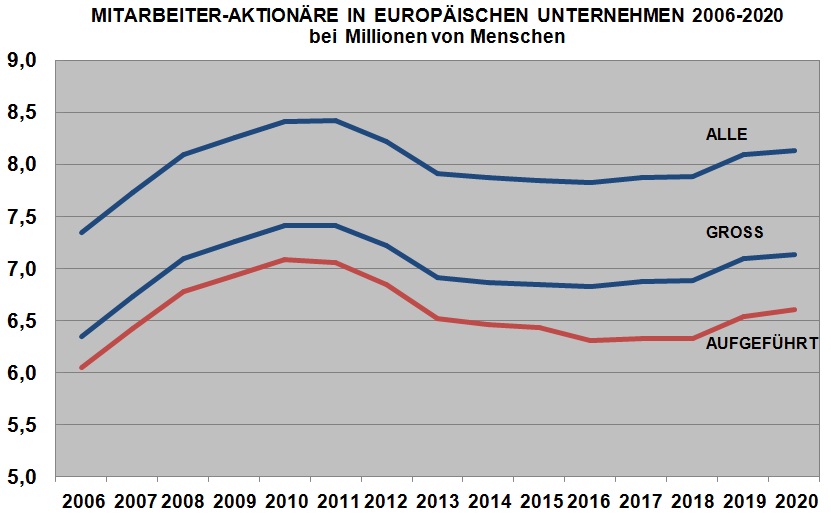
Die
Zahl der Mitarbeiteraktionäre in Europa nimmt
weiter zu.
Das zeigen die ersten Zahlen der neuen Erfassung
der Mitarbeiterkapitalbeteiligung in Europa,
die im kommenden April veröffentlicht wird.
Die Grafik ermöglicht es, zwischen den Entwicklungen
in börsennotierten Unternehmen, aber auch
in der Gesamtheit der großen Unternehmen (börsennotiert
und nicht börsennotiert) und in KMU zu unterscheiden.
|
|
In
großen Unternehmen hat die Mitarbeiterbeteiligung
unter der negativen Politik gelitten, die
von den Regierungen in Ländern wie Frankreich
oder Dänemark in den frühen 2010er Jahren
beschlossen wurde.
In letzter Zeit ist die Politik wieder positiver
geworden, aber die negativen Auswirkungen
sind noch lange nicht überwunden. Es ist leichter,
Vertrauen zu brechen, als es wiederherzustellen.
In Dänemark zum Beispiel wurden die steuerlichen
Anreize 2011 abgeschafft und 2016 wieder hergestellt,
aber nur wenige Unternehmen, die ihre Mitarbeiterbeteiligungsprogramme
eingestellt haben, sind bisher das Risiko
eingegangen, wieder in diese zu investieren.
In den KMU stagniert die Zahl der Mitarbeiteraktionäre
in Europa nach wie vor bei rund einer Million
Beschäftigten. Abgesehen von Großbritannien
hat bisher kein europäisches Land ein auf
KMU zugeschnittenes Mitarbeiterbeteiligungsprogramm
eingerichtet (mit Ausnahme der Mitarbeitergenossenschaften).
Dies ist nicht vergleichbar mit den USA, wo
es allein bei ESOP-Plänen 14 Millionen Mitarbeiteraktionäre
gibt.
Bei dem derzeitigen Tempo wird Europa etwas
mehr als 400 Jahre brauchen, um eine Anzahl
von Mitarbeiteraktionären zu erreichen, die
mit der heutigen in den USA vergleichbar ist.
Los, wir können es besser!
|
|
Januar
2021 - Mitarbeiterkapitalbeteiligung in KMU
- Großbritanniens
Erfolg
|
|
Es
ist bekannt, dass die Übertragung eines Unternehmens
der günstigste Zeitpunkt und die effizienteste
Maßnahme zur Steigerung der Mitarbeiterkapitalbeteiligung
in KMU ist.
Diese
Erkenntnis hat die USA ab 1974 veranlasst,
Modelle der Mitarbeiterkapitalbeteiligung
(ESOP) einzuführen. In
Europa war das erste Land, das diesem Beispiel
folgte, Großbritannien, das im April 1974
den Employee Ownership Trust (EOT) aufgelegt
hat.
Frage:
Ist dieses Modell ein Erfolg?
-
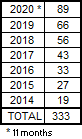
Waren
es im Jahre 2014 erst 19 Übertragungen,
so stieg diese Zahl auf 27 im Jahr 2015,
dann auf 33, 43, 56, 66 und schließlich
86 in den ersten elf Monaten des Jahres
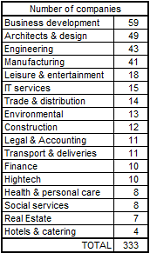
2020 (siehe Tabelle 1). Insgesamt wurden
damit 333 Unternehmen an mehr als 30.000
kapitalbeteiligte Beschäftigte übertragen.
Um auf eine vergleichbare Anzahl kapitalbeteiligter
ArbeitnehmerInnen zu kommen, hat Frankreich
mit seinem Modell der Arbeiterkooperative
(SCOP) mehr als hundert Jahre gebraucht!
-
In
sehr vielen Fällen handelt es sich, wie
bei ESOP-Modellen, um 100%ige Unternehmensübertragungen
an Mitarbeiter. In anderen Fällen handelt
es sich um eine Teilübertragung.
-
Die
durchschnittliche Größe der übertragenen
Unternehmen beträgt 91 Beschäftigte, was
sehr repräsentativ für die Größe des durchschnittlichen
KMU ist. In wenigen Fällen handelt es
sich dabei um Übertragungen von Kleinstunternehmen
mit einer durchschnittlichen Größe von
7 Beschäftigten. Die durchschnittliche
Größe der übertragenen "kleinen"
Unternehmen liegt bei 25 Beschäftigten,
die durchschnittliche Größe der "mittleren"
Unternehmen bei 100 Beschäftigten. Bei
"großen", nicht börsennotierten
Unternehmen schließlich sind es 806 Mitarbeiter.
All diese Zahlen entsprechen weitgehend
der durchschnittlichen Größe von Unternehmen
aller Größenordnungen. Das Modell zeigt
daher den sehr hohen Eignungsgrad dieses
Modells ungeachtet der Größe der Unternehmen.
-
Bei
den betroffenen Wirtschaftszweigen handelt
es sich hauptsächlich um Sektoren mit
hoher Wertschöpfung und Schwerpunkt Hochtechnologie
(siehe Tabelle 2). Auch hier ist die große
Bandbreite der Geschäftsbereiche ein Zeichen
für die umfassende Eignung des Modells.
|

|
|
Kurzum:
ein bemerkenswerter Erfolg !
Damit
ist Großbritannien das einzige europäische
Land, dem es bisher gelungen ist, eine effiziente
Politik der Mitarbeiterkapitalbeteiligung
in KMU zu etablieren.
Hier
ist allerdings noch Luft nach oben.
So
hatte der ESOP-Plan im Jahr 1980 nur wenige
Jahre nach seiner Einführung im Jahr 1974
bereits zu rund 5.000 Unternehmensübertragungen
in den USA geführt. Damals betrug das zahlenmäßige
Verhältnis der Unternehmen in Großbritannien
und den USA 1 zu 3. In Großbritannien hatte
der ESOP-Plan also etwas mehr als 1.500 Unternehmens-übertragungen
ermöglicht, verglichen mit den heute beobachteten
333 Unternehmensübertragungen nach dem EOT-Modell.
Wie
lässt sich der unterschiedliche Erfolg dieser
beiden Modelle erklären?
Das
EOT-Modell ist ein vereinfachter ESOP-Beteiligungsplan.
Es scheint, dass in diesem Fall, wie so oft,
das Original besser ist als die Kopie.
In
der Tat gibt es zwei wesentliche Unterschiede
zwischen ESOP und EOT:
1.
Das EOT-Modell basiert darauf, dass aufgrund
einer besonderen gesetzlichen Regelung keine
Einkommenssteuer für bis zu 3.600 Pfund Bonuszahlungen
pro MitarbeiterIn erhoben wird. Im
Vergleich dazu erlaubt der ESOP-Plan nicht
nur die Steuerbefreiung der Dividendenzahlungen,
sondern auch der eigenen Gewinne des Unternehmens.
Das ESOP-Modell vermeidet daher sowohl die
Einkommenssteuer als auch die Dividendensteuer.
Dies ist nicht auf eine bestimmte Gesetzgebung
zurückzuführen, sondern auf das einfache steuerliche
Konstrukt der Mitarbeiterkapitalbeteiligung.
2.
Beim ESOP-Modell können die Beschäftigten
ihre Anteile verkaufen, wenn sie das Unternehmen
verlassen (in der Regel bei der Pensionierung).
Beim EOT-Modell ist dies nicht möglich, der
Treuhandfonds hält die Anteile auf Dauer und
über einen unbestimmten Zeitraum.
Diese
beiden Unterschiede erklären wahrscheinlich
den viel größeren Erfolg des ESOP-Modells.
Inzwischen
hat jedoch eine weltweite Debatte über die
jeweiligen Vorteile der beiden Modelle begonnen.
ESOP oder EOT? Das Thema steht sowohl in Großbritannien
als auch in den USA, Kanada und Australien
zur Diskussion.
Zwei
Modelle sind besser als eins! In den USA
könnte es sinnvoll sein, das EOT-Modell als
Ergänzung des bestehenden ESOP-Modells einzuführen.
Und in Großbritannien wäre es zweifellos ratsaml,
neben dem EOT-Modell auch das ESOP-Modell
anzubieten.
In
beiden Fällen sollte es einfach sein, die
Wahl des Modells den neuen AnteilseignerInnen
zu überlassen. Sobald der Treuhandfonds eingerichtet
ist, würde die Wahl des Modells den neuen
AnteilseignerInnen überlassen, die sich entweder
für das ESOP-Modell oder das EOT-Modell entscheiden
können. Es besteht kein Zweifel, dass die
Mitarbeiterkapitalbeteiligung auf diese Weise
noch mehr Akzeptanz und Unterstützung finden
würde.
Mehr
dazu
|
|
Dezember
2020 - Steuertechnik
|
|
Welches
Unternehmen träumt nicht davon, seine Rentabilität
zu verdoppeln?
Dies
ermöglicht der ESOP-Mitarbeiterbeteiligungsplan
in den meisten europäischen Ländern, in Abhängigkeit
von den Steuersätzen auf Gewinne und Unternehmensdividenden.
Es
ist bekannt, dass jede Art von Firmeninhaber
ihre eigenen besonderen Formen der Steuertechnik
hat. Ob es sich um eine große internationale
Firmengruppe, den individuellen Inhaber oder
das Familienunternehmen handelt, sie alle
haben ihre eigenen Methoden.
Dagegen
wird im Allgemeinen ignoriert, dass die Mitarbeiter-beteiligung
besonders wirksame Mechanismen für KMU bietet.
Tatsächlich
bietet das bestehende Steuersystem Anreize
für die Mitarbeiterbeteiligung und den Abbau
von Vermögens-ungleichheiten. Und dies ohne
eine besondere neue Gesetzgebung. Diese
Besonderheit ist die Ursache für den Erfolg
der ESOP-Mitarbeiterbeteiligungspläne.
Der
ESOP-Plan ermöglicht es nämlich, den Gewinn
des Unternehmens in Form von zusätzlichen
Rentenbeiträgen für die Mitarbeiter-Eigentümer
des Unternehmens abzuführen. Sobald der Gewinn
abgeführt wurde, gibt es keine Versteuerung
des Gewinns oder der Dividenden mehr. So einfach
ist das.
Dadurch
ist der ESOP-Plan einfacher und effektiver
als jede andere Mitarbeiterbeteiligung in
KMU und für die Bereitstellung von Eigenkapital.
Dies
ist seit 1974 einer der beiden Schlüssel zum
Erfolg der ESOP-Pläne in KMU in den USA.
Deshalb gibt es in den USA 14 Millionen Mitarbeiteraktionäre
in ESOP-Plänen, verglichen mit knapp einer
Million Mitarbeiteraktionäre in KMU in Europa,
obwohl die US-Bevölkerung nur halb so groß
ist wie unsere.
Die
Steuertechnik wird oft angeprangert. In vielen
Fällen ermöglicht sie eine Steuersenkung zugunsten
privater Interessen zu Lasten des öffentlichen
Interesses.
Bei
der Steuertechnik der Mitarbeiterbeteiligung
ist das völlig anders. Diese kommt allen Beschäftigten
und dem öffentlichen Interesse zugute. Tatsächlich
zeigen alle Studien, dass sie zum allgemeinen
Wohlbefinden und zur Verringerung von Ungleichheiten
beiträgt.
Die
Steuertechnik der Mitarbeiterbeteiligung ist
eine rechtschaffene Steuertechnik.
Mehr
dazu
|

|
|
November
2020 - Wie man einen ESOP-Plan erstellt
|
|
Für
die Mitarbeiterkapitalbeteiligung in KMU ist
der ESOP der einfachste und effektivste Plan
der Welt.
So wird es gemacht:
1. Sie sind der Hauptaktionär des Unternehmens
XYZ und möchten Ihre Aktien verkaufen.
2. Sie gründen eine „Stiftung für Aktienbesitz
und Renten der Mitarbeiter im Unternehmen
XYZ“.
3. Sie verkaufen Ihre Aktien an die Stiftung.
Für die Zahlung gewähren Sie der Stiftung
einen Kredit (oder helfen ihr, einen Kredit
oder eine andere Finanzierung zu erhalten).
4. Im folgenden Jahr macht das Unternehmen
XYZ wie jedes Jahr einen Gewinn. Dieser wurde
zuvor besteuert. Nun ist das nicht mehr der
Fall. Das Unternehmen berechnet und zahlt
der Stiftung einen Rentenbeitrag, der dem
Gewinn vor der Mitarbeiterbeteiligung entspricht.
Von da an verschwindet der Gewinn. Ohne Gewinn,
keine Steuern.
5. Die Stiftung erhält den jährlichen Rentenbeitrag.
Es handelt sich um eine gemeinnützige Organisation,
deren Einkommen nicht besteuert wird. Auch
dort gibt es keine Steuern.
6. Die Stiftung richtet für jeden Mitarbeiter
ein individuelles Konto ein. Damit werden
die Rechte jedes Mitarbeiters auf den Erhalt
von Aktien des Unternehmens XYZ eingetragen,
wenn er oder sie das Unternehmen verlässt
(normalerweise im Rentenalter).
7. Darüber hinaus organisiert die Stiftung
ein System für Mitarbeiteraktionäre zur Abstimmung
über Punkte auf der Tagesordnung der Jahreshauptversammlung
der Aktionäre des Unternehmens XYZ.
8. Jedes Jahr erhält die Stiftung den zusätzlichen
Rentenbeitrag der Mitarbeiter, die dem Plan
angehören. Dieser Beitrag wird zunächst zur
Rückzahlung des ursprünglich für den Kauf
der Aktien erhaltenen Kredits verwendet.
9. Dann werden die rückerstattungsfreien Aktien
jedes Jahr abgerechnet und in Form von „Anrechten“
auf das individuelle Konto jedes Mitarbeiters
übertragen, wobei ein einfacher Verteilungsschlüssel
(oft anteilig zum Lohn) verwendet wird.
10. Somit üben die Mitarbeiter ihre Rechte
als Aktionäre aus und besitzen die Aktien,
mit dem Vorbehalt, dass sie über diese nur
dann verfügen (sie verkaufen) können, wenn
sie das Unternehmen verlassen. Sie sind hoch
motiviert, dass alles zum Besten läuft. Tatsächlich
wurde beobachtet, dass Unternehmen mit ESOP-Plänen
besser funktionieren als andere.
So einfach ist ein ESOP-Plan.
Download
|

|
|
Oktober
2020 - Sogar in Frankreich
|
|
14
Millionen Mitarbeiteraktionäre im ESOP-Modell
allein in den USA. Millionen von Mitarbeiteraktionären
in KMU dort, bei uns fast keine. Wohlstand
für sie, Brotkrumen hier.
Aber was ist wirklich amerikanisch am ESOP-Modell?
Ist ein Management-Buy-Out (MBO) ameri-kanisch?
Sicherlich nicht, es geht um Finanzen, es
ist universell. Sogar in Frankreich.
Ist ein Leveraged Buy Out (LBO) ameri-kanisch?
Sicherlich nicht, es geht um Finanzen, denn
zwei und zwei macht vier, es ist universell.
Sogar in Frankreich.
Ist ein Fonds oder eine Stiftung, um Aktien
im Namen von Mitarbeitern zu halten, amerika-nisch?
Sicherlich nicht, es ist universell. Sogar
in Frankreich.
Ist ein Aktionär, der seine Aktien ganz oder
teilweise an eine Stiftung verkauft, Amerikaner?
Natürlich nicht, das wird überall gemacht.
Sogar in Frankreich.
Sind vom Unternehmensgewinn abzugsfähige Zusatzrenten
amerikanisch? Sicherlich nicht, das sieht
man überall. Sogar in Frankreich.
Ist eine Stiftung, bei der Aktien, die im
Namen der Mitarbeiter gehalten werden, erst
verfügbar werden, wenn die Mitarbeiter das
Unternehmen verlassen, eine amerikanische
Stiftung? Siehe Österreich, auch in sehr großen
Unternehmen wie Voestalpine oder Erste Bank.
Siehe Schweden... Ist das hier möglich? Eindeutig
ja. Sogar in Frankreich.
|
Superdupont
|
|
Dies sind also die Hauptmerkmale des ESOP-Modells.
All dies ist auch in Europa möglich. Ohne
spezielle Gesetzgebung, mit geltendem Recht.
Sogar in Frankreich.
Wir erinnert uns, dass unsere Freunde von
Equalis Capital in Paris zu Recht stolz darauf
waren, vor einigen Jahren ein erstes, französisches
ESOP-Modell anzukündigen (von der Art ohne
Leverage, das stimmt). Wann wird also das
erste ESOP-Modell mit Leverage in Frankreich
gestartet?
Was am ESOP-Modells amerikanisch ist, ist
eine Sache und nur eine: Sie nutzen es und
wir nicht. Werden wir eines Tages nicht mehr
so dumm sein, und das ESOP-Modell wohl anwenden?
Sogar in Frankreich?
Wie
kann diese Art von Mitarbeiterbeteiligungsplan
in jedem europäischen Land eingeführt werden?
Eine Gruppe von europäischen und amerikanischen
Experten erklärt es in
dieser Veröffentlichung.
|
|
September
2020 - Eine umfassende Bibliothek
|
|
Der
ESOP ist der bekannteste Mitarbeiter-beteiligungsplan
weltweit. Er ist so ikonisch, dass er als
"der" Mitarbeiterbeteiligungsplan
bezeichnet wird ("the" Employee
Stock Ownership Plan, was auch zu Verwirrung
führte).
Bei
keinem anderen Modell sind so viele Mitarbeiter
beteiligt (14 Millionen in den USA). Seit
seiner Einführung im Jahr 1974 hat er die
Aufmerksamkeit der bekanntesten Experten und
Forscher auf dem Gebiet der Mitarbeiter-beteiligung
auf sich gezogen.
Jedes
Jahr treffen sich diese Experten, darunter
viele Europäer, in San Diego, Kalifornien.
Er ist das Thema der meisten Forschungs- und
wissenschaftlichen Arbeiten über die Mitarbeiterbeteiligung
weltweit.
Und
er ist das effektivste und erfolgreichste
Mitarbeiterbeteiligungsprogramm für KMU.
Eine
umfassende Spezialbibliothek mit über 600
Quellen unterstützt die Lehr- und Forschungs-arbeit
zum Thema Mitarbeiterbeteiligung. Alle Informationen
zur CLEO-Bibliothek finden Sie hier.
Wie
können wir diese Art von Mitarbeiter-beteiligungsplan
in jedem europäischen Land einführen? Eine
Gruppe europäischer und amerikanischer Experten
erklärt es in
dieser Veröffentlichung.
|

|
|
Juli
2020 - Mitarbeiterkapitalbeteiligung für KMU
|
|
Weltweit gibt es
ein Modell für Mitarbeiterbeteiligungspläne
für KMU, das tausendmal effektiver ist als
alle anderen. Es ist das ESOP-Modell. Es ist
sowohl für Inhaber von KMU als auch für Arbeitnehmer
sehr gut geeignet.
Warum?
Weil es auf den heutigen Finanztechniken basiert
und nicht auf denen der vergangenen Jahrhunderte.
Bei
diesem Modell müssen die Mitarbeiter nicht
das Geld auftreiben, ihre Ersparnisse opfern,
das Risiko eingehen. So wie bei fremdfinanzierten
Übernahmen sind es in der Tat das Unternehmen
und seine Aktionäre, die die Finanzierung
und die Garantien bereitstellen.
Wie
können wir diese Art von Mitarbeiterbeteiligungsplan
in jedem europäischen Land einführen? Eine
Gruppe europäischer und amerikanischer Experten
erklärt es in
dieser Veröffentlichung
|
|
|
Juni
2020 - Die drei Zweige der Mitarbeiterkapitalbeteiligung
|
|
Wir müssen uns in Europa darüber im Klaren
sein, dass die Kapitalbeteiligung der Mitarbeiter
kein einheitliches Modell ist - tatsächlich
gibt es im Wesentlichen drei Modelle von Mitarbeiterbeteiligungsplänen.
1) Aktienkaufpläne für Mitarbeiter (ESPPs
= Employee Share Purchase Plans). Bei
diesem Modell kaufen die Mitarbeiter Aktien
des Unternehmens, für das sie arbeiten, in
der Regel zu einem ermäßigten Preis. ESPPs
sind die effektivsten Pläne für große börsennotierte
Unternehmen.
2) Aktienoptionen, diese sind die effektivsten
Pläne für Startups.
3) Das ESOP-Modell. Es unterscheidet sich
grundlegend von den ersten beiden Modellen
und ist der effektivste Mitarbeiterbeteiligungsplan
für KMU. In diesem Modell werden die Mitarbeiter
zum kollektiven Eigentümer des Unternehmens,
für das sie arbeiten. Dafür müssen sie keine
eigenen Ressourcen oder Ersparnisse einsetzen.
Die Finanzierung erfolgt normalerweise aus
externen Quellen, in der Regel von Banken
(wie bei einem Leverage-Buyout) oder aus anderen
Quellen wie im Zusammenhang mit der Korona-Krise.
Die ersten Nutznießer der ESOPs sind somit
nicht die Arbeitnehmer, sondern die Unternehmen.
In den USA stellt dies eine bedeutende Möglichkeit
zur Finanzierung der gesamten Wirtschaft dar.
Das ESOP-Modell kann Unternehmen bei der Bewältigung
von Liquiditätsproblemen und Insolvenzen unterstützen,
bei denen die Mitarbeiter die letztendlichen
Nutznießer sind - deshalb handelt es sich
um ein "Mitarbeiter"-Beteiligungsplan.
Werfen wir einen Blick auf Europa in Bezug
auf diese drei verschiedenen Modelle.
1) ESPPs sind in Europa gut bekannt: Mehrere
europäische Länder fördern diese Programme
seit langem und mit Erfolg. Sie sind hauptsächlich
für die rund 10.000 europäischen börsennotierten
Unternehmen bestimmt, die 36 Millionen Arbeitnehmer
oder 25% der Mitarbeiter in europäischen Privatunternehmen
beschäftigen.
2) Aktienoptionen. Die Europäische Kommission
hat gerade beschlossen, eine neue Strategie
zur Förderung von Mitarbeiteraktienoptionen
für Startups zu entwickeln. Zweifellos ein
bedeutender Schritt nach vorne. Sie konzentriert
sich auf die etwa 18.250 europäischen Startups,
die einige Zehntausende Arbeitnehmer oder
0,1% aller Mitarbeiter in privaten Unternehmen
beschäftigen.
3) ESOPs. Dieses Modell richtet sich hauptsächlich
an KMU (und an große, nicht börsennotierte
Unternehmen). Wir schätzen, dass es in Europa
1,7 Millionen KMU gibt, die 54 Millionen Personen
oder 37% der Mitarbeiter in privaten Unternehmen
beschäftigen, - und sogar 67 Millionen oder
46%, wenn wir große, nicht börsennotierte
Unternehmen einbeziehen.
Noch heute ist die Mitarbeiterkapitalbeteiligung
an europäischen KMU praktisch unbekannt. Sie
ist seit 45 Jahren in den USA sehr erfolgreich,
und so gibt es bereits das Modell dafür –
das ESOP. Die europäischen KMU versäumen sehr
viel, und dies könnte ein wichtiges Instrument
zur Bewältigung der Krise sein. Die Europäische
Kommission hat bei Aktienoptionen für Start-ups
gute Fortschritte erzielt. Wir fordern dringend
ähnliche Bemühungen für ESOPs in KMU. Die
einschlägigen Zahlen sind um ein Vielfaches
höher. Weitere
Informationen
|

|
|
April 2020 - Pandemie
|
|
Februar 2020 - Contrasts
in the UK |
|
No this is not about
Brexit.
Six new firms moved last month to the Employee
Ownership Trust scheme, the highest number
in a single month since the scheme was introduced
into British law in 2014. Like the ESOP plan
in the USA from which it is loosely inspired,
the scheme aims to encourage the transmission
of SMEs to employees.
On the other hand, while presenting itself
as the best example for employee share schemes
in the UK and employee ownership as the key
point of its strategy, John Lewis department
stores chain today faces the biggest crisis
in its 156-year history.
|
|
|
January 2020 - France: On the way for the 10% |
|
France decided last year to reach a
10% employee shareholding target in French
economy by 2030.
This basically means doubling the current
level in large listed companies.
On the other hand, everything remains to be
done in French SMEs.
Very ambitious objective!
A working group of experts is now proposing
the set of 13 "strong and disruptive"
measures to reach the target. More
details
|
|
|
November 2019 - Deutschland:
Koalition beschließt Verdopplung des Freibetrages
|
|
Im Zuge der Verhandlungen um die Grundrente
hat sich die Koalition auf eine Erhöhung des
steuerlichen Freibetrags für Arbeitnehmerbeteiligungen
am Betriebskapital von 360 Euro auf 720 Euro
verständigt. In dem Koalitionsbeschluss vom
10. November 2019 heißt es: „Mitarbeiterkapitalbeteiligungen
tragen zur Vermögensbildung der Arbeitnehmerinnen
und Arbeitnehmer bei. Um ihre Attraktivität
zu erhöhen, wird der steuerfreie Höchstbetrag
von derzeit 360 Euro auf 720 Euro angehoben“.
Damit greift die Koalition eine langjährige
Forderung des Bundesverbands Mitarbeiterbeteiligung
auf, die steuerlichen Rahmenbedingungen für
die Mitarbeiterkapitalbeteiligung zu verbessern.
Mit der Erhöhung des Freibetrages erwartet
der Bundesverband einen deutlichen Effekt
für den Vermögensaufbau von Arbeitnehmern,
die schon jetzt entsprechende Beteiligungsangebote
ihres Unternehmens nutzen können. „Inwieweit
mehr Unternehmen zukünftig Beteiligungsprogramme
für ihre Mitarbeiter anbieten werden, bleibt
jedoch abzuwarten, da der Freibetrag im europäischen
Vergleich weiterhin gering ausfällt. Die europäische
Erfahrung zeigt hier einen deutlichen Zusammenhang
zwischen Förderhöhe und Verbreitungsgrad der
Mitarbeiterkapitalbeteiligung“, so AGP-Geschäftsführer,
Dr. Heinrich Beyer. Der Verband plädiert daher
für einen weiteren stufenweisen Ausbau der
steuerlichen Förderung. Eine weitere Erhöhung
könnte so auch die deutschen Startup-Unternehmen
im internationalen Standortwettbewerb um qualifizierte
Fachkräfte stärken.
|
|
|
November 2019 - Employee share
ownership in SMEs
|
|
Employee
share ownership cannot be effectively developed
in SMEs by applying the same schemes as for
large companies. Large companies have to raise
more capital, they have to multiply the number
of shareholders in this view, and it makes
sense to involve many employee shareholders
as well. In SMEs, the need for capital is
limited, shareholders are few, and most often
it does not make sense to allocate shares
to many employees. In SMEs, collective employee
share ownership schemes are far more efficient
and, worldwide, the ESOP plan adopted in 1974
in the US is by far the most efficient of
all.
The United Kingdom is the only country in
Europe to have introduced employee share ownership
schemes for SMEs with some success (but much
less than in the US). For its part, the Labour
Party has also made a proposal under the label
of "employee ownership", which
is controversial.
On the other hand, employee share ownership
in SMEs, whether individual and direct as
in large companies raises the question of
devices to be able to exchange shares, as
can be done on a stock market. In the US,
the OTC Markets Group is pushing
for this.
|
|
| Oktober
2019 - Employee share ownership impacts top
executives compensation |
|
A research project at the University of Aix-Marseilles
in France highlights the impact of employee
share ownership on the level of compensation
of top executives in listed companies.
Employee share ownership affects the organization
of work, policies and management practices,
leading ultimately to an impact on corporate
performance.
The results of the study show that employee
share ownership plays a direct and indirect
role on the determinants of executive compensation,
with a significant moderating impact.
In addition, the presence of employee shareholders
directors on the Board of Directors tends
to limit executive compensation.
More information (in French)
|
|
| Juni
2019 - The
USA is widening the gap |
Studies are proliferating about employee share
ownership in the US, bringing useful information
for everyone in the world, including Europe.
The 2018 administration of the US General Social
Survey, a long-standing survey of the US work
force, included a segment on employee ownership.
It found that 20% of private-sector workers
in the USA have some level of ownership in the
companies where they work, including 11 million
who participate in ESOPs and 25 million with
some other form of stock-based compensation.
This is 36 million in total compared to 9 million
in Europe.
The survey found that among those workers that
hold company stock, the average value of that
stock was $75,205.
In total $2,700 billion compared to 400 billion
€ in Europe.
The study's author, professor Douglas Kruse,
noted that employee-owners are "six times
less likely to be laid off." The study
found that, over the last year, the surveyed
non-employee-owners were laid off at a rate
of 3.7%, versus 0.6% for the employee-owners.
Among companies with employee engagement programs,
the study found that companies with generous
employee ownership plans had a rate of turnover
in general (i.e., including voluntary turnover)
of 6%, far less than the 14% rate for those
with no stock plan.
This reality is far from the idea which was
prevailing in the Juncker Commission in Brussels,
that employee share ownership would be too risky
and bringing additional uncertainty to workers.
The truth is that employee share ownership brings
more wealth and stability. More
information |
|
| March
2019 - Congratulations
from the Irish Parliament |
|
The
Irish Parliament likes this newsletter, he
let us know by letter.
Every month, this newsletter highlights the
significant facts of employee share ownership
worldwide, as well as European policies.
The monthly press review is a fabulous source
of information. It sheds light on proven facts
and helps sort out fake news, delivering a
story full of novelties and twists.
The progress and benefits of employee share
ownership are becoming more and more evident.
Letter
from the Irish Parliament
|
|
|
December
2018 - Call
from European startups
European
tech startups are asking politicians to
reform employee stock ownership rules to help
them better compete with Silicon Valley peers
in hiring.
Europe
could be the world’s most entrepreneurial
continent. But
policies that currently govern employee ownership
across Europe are often archaic and highly
ineffective.
“Some
are so punishing that they put our startups
at a major disadvantage"...
More information
|
|
| November
2018 - European
Parliament's Vote |
|
The Parliament passed its Resolution by an
overwhelming majority on 23 October in Strasbourg
(589 for, 39 against and 10 abstentions).
This is thanks to the Report due to Ms Renate
Weber, Romanian Member of the European Parliament
(MEP), reiterating the Parliament's support
to the goal of "employee share ownership
for all" and the need for a European
Action Plan.
Amongst all benefits, the Report particularly
highlights the positive effect of employee
share ownership on growth and employment.
Together with other MEPs, candidates to the
2019 Election and European Commissioners,
Ms Renate Weber will conclude the Conference
of 6 February in Brussels.
More
information
|
|
| October
2018 - Employee
share ownership? Which one? |
|
How
to make employee share ownership really work?
If there is one thing that absolutely everyone
believes in the UK, it is that employee share
ownership is a very good thing. However,
the new proposals due to the Labour Party
provoke violent controversies.
What
really matters is not just the shares but
the rights, obligations and extent of ownership
attached to them. Full rights or imitations?
In the Labour Party version, "employee"
ownership would not really be an ownership
scheme: Employees would not be able to buy
or sell the shares that would be notionally
theirs...
|
|
|
September
2018 - Legislative
proposal in Germany
|
|
North Rhine-Westphalia Government wants to
make employee ownership in start-ups much
more attractive in Germany through higher
tax incentives. A legislative proposal in
this sense is submitted to the Bundesrat.
The
current tax incentive would be increased from
360€ as it is now in Germany to 5.000€ annually.
This way, Germany would be at a standard level
for such incentives in Europe.
A European wave to promote employee ownership
and stock options in start-ups can be observed
in Europe recently. New legislation in this
sense are already in force in Ireland, France,
Sweden and the Netherlands, and projects are
also in discussion in Austria, Luxembourg
and Switzerland.
More
information
|
|
|
September
2018 - President
Donald Trump
|
|
President Donald Trump signed historic new
law bringing new incentives to promote employee-owned
businesses. It is known as the "Main
Street Employee Ownership Act".
The
new legislation had co-sponsors on both sides
of the political aisle, Democrats and Republicans.
It
is the most far-reaching employee share ownership
legislation to pass US Congress in over 20
years.
It is expected to double or even triple the
growth rate of employee-owned companies over
the next decade. More
information
|

|
| June
2018 - Barometer of
employee share ownership policies in European
countries |
|
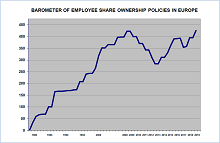
20 European countries now have policies for
the promotion and the development of employee
share ownership, against 18 in 2017 and 15
in 2015. This is driving our barometer to
its all-time high.
Austria, France, Ireland, The Netherlands,
Sweden, Denmark, they all introduced new pieces
of incentive legislation this year. In addition,
France - already number one for employee share
ownership in Europe - took the decision to
double its employee share ownership by 2030,
which would put it at the level reached today
by the USA. An important signal for all Europeans.
More information
|
Download
|
|
June
2018 - US Federal Reserve Bank on employee ownership |
|
In an ongoing series of articles on the quality
of work, the Federal Reserve Bank of Boston
published a long article on employee ownership,
showing how improved employee engagement benefits
companies, workers, and local economies.
The
article includes an interview with Douglas
Kruse of Rutgers University that covers the
background and latest research results about
employee ownership and ESOPs, plus an interview
with several employee-owners of Cape Air,
including a video about employee ownership
at the company.
More
information
|
|
|
May
2018 - Discriminations in voting rights
|
|
As
long term investors, employee shareholders
benefit from positive discrimination in France
since 2014: Voting rights are usually doubled,
which means that when employee shareholders
hold for instance 6%, their voting rights
count for 12%. This contributes to the growing
involvement of employee share ownership in
corporate governance in France. Employee shareholders
are represented in the Boards of Directors
in 33 of the largest French companies.
At the contrary, employee shareholders' voting
rights suffer negative discrimination in six
European countries: Denmark, Sweden, Finland,
The Netherlands, Switzerland and Germany.
Typical cases here are companies issuing two
classes of shares, A-shares with 10 votes
and B-shares with 1 vote. Controlling owners
hold high voting shares but employee share
plans are based on low voting ones. This way,
employee shareholders' voting rights are severely
discriminated, in up to 37% of large companies
in Sweden. Employee shareholders' voting rights
are generally reduced by 30% to 60% in Denmark
and Sweden, in comparison with the one-share-one-vote
rule. More
|
|
|
April 2018 - World's
First Institute for the Study of Employee Ownership |
|
Rutgers
School of Management (New York) launches the
world's first academic "Institute for the
Study of Employee Ownership and Profit Sharing".
The new global research hub will be dedicated
to addressing economic inequality through
capital shares. It will expand the existing
research programs, develop promising scholars
worldwide, and explore new collaborations,
with the goal of building a more inclusive
economy for workers and their families. More
|
|
|
February 2018 - The most remarkable cases
The
list of the most remarkable large European
companies considering employee share ownership
was just updated, with 113 most remarkable
cases in 2017. They are located in Austria,
Belgium, Switzerland, Denmark, Germany, Spain,
Finland, France, Hungary, Italy, Netherlands,
Norway, Sweden and the UK. The list will be
part of the coming "Annual Economic Survey
of Employee Share Ownership in European Countries
in 2017", to be released in March. Full
list
|
|
January 2018 - 10% in the hands of employees
in France |
|
The
objective of 10% to be held by employee shareholders
in France by 2030 was launched last month
in Paris by the French Federation of Employee
Shareholders Associations (FAS).
This may be compared with 4 to 6% held now
in large French companies (depending on definitions),
and to some 10% in the USA.
President Macron and the French Government
will back this objective, seeing employee
share ownership as a key factor for the revival
of a population of individual investors.
After eight years of negative policies under
Presidents Sarkozy and François Hollande,
this is a very good signal for employee share
ownership in Europe.
France is back !
|
|

|
Dezember
2017 - Gute
Nachrichten für alle Europäer ! |
|
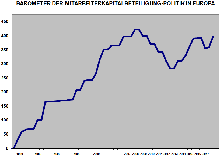
In zwanzig europäischen Ländern wird die Mitarbeiterkapitalbeteiligung
mittlerweile von Seiten der Politik aktiv
unterstützt. Niemals zuvor waren es mehr.
Diese
Maßnahmen zielen auf mehr und bessere Anreize
für Mitarbeiterbeteiligungs-programme und
bestätigen damit den positiven Trend seit
2013 in Europa.
In Österreich tritt zusätzlich zu den
beiden bestehenden Förderprogramme am 1.1.2018
eine weitere Fördermaßname im Kraft, die unter
bestimmten Bedingungen Mitarbeiter-beteiligungspläne
bis zu einer Höhe von 4.500 € steuer- und
sozialabgabenfrei stellt. In Frankreich
ist ab 2018 eine Reduzierung der Arbeitgeberbeiträge
zur Sozialversicherung für einige Beteiligungsvarianten
vorgesehen. Neue Gesetzgebungen haben wir
auch in Irland, den Niederlanden
und in Schweden. Polen bereit
entsprechende Fördermaßnahmen vor.
Wie
alle Barometer kündigt auch dieses die Zukunft
an. Unser Indikator für Mitarbeiterbeteiligung
zeigt seit 2013 einen positiven Trend bei
der Anzahl der Mitarbeiteraktionäre in europäischen
Unternehmen. Dieser Trend hält auch derzeit
an.
Mehr
|
|
|
November
2017 - What's going on with the European Commission |
|
The
main obstacle to the development of employee
share ownership across Europe is the lack
of information about its benefits and how
manage risks.
In
a letter to European Commissioner it is recalled
that the Commission is committed to launch
a European information plan to raise awareness
in this sense. A
section on the promotion of employee share
ownership has also been added to the Capital
Markets Union Action Plan.
However,
when it came time to vote on a budget to materialize,
some surprising objections have emerged within
the Commission.
The
letter to Commissioner Marianne Thyssen calls
on the Commission to fulfill its commitments.
More
|
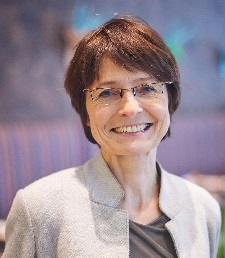
Marianne
Thyssen
|
|
October
2017 - A
big idea for tax reforms |
|
It's
time to expand the opportunity of the working
middle class to participate in broad-based
share plans.
Corporate
tax reform that assures that middle class
employees get a fair shake is the American
way to go. Congress is at present considering
about a half dozen employee ownership bills,
all of which have components that could make
the economy work better and more fairly.
Our
key message is that whatever it does, Congress
should make any tax reductions for corporations
conditional on sharing the benefits with workers.
This
is the repeated call from Professors Joseph
Blasi, Douglas Kruse and Richard Freeman,
world renowned for their research works on
employee ownership. More
|

|
|
September
2017 - Is employee
ownership contributing to China's stock market
rally?
|
|
This is the question posed by the National
Center for Employee Ownership in its last
edition.
As
stocks on the Shanghai rose to a 20-month
high, analysts cited China's ownership reforms
as contributing to investor confidence.
As
quoted in China Daily, Gao Ting, head of China strategy at UBS
Securities, cited reforms by China Unicom,
the country's second-largest mobile phone
provider, which include a diversified board
of directors and employee ownership. Investor
sentiment was boosted by signs of accelerated
ownership reforms at State-owned enterprises.
|

|
|
Juli
2017 - Austrian
example |
|
Austrian legislation for employee ownership
was simple until now. Any benefit that an
employee received from an employee share plan
(as share price rebate, as free shares, matching
shares, etc.) was free of tax up to 1.460
Euro annually.
This
amount was doubled last year, to 3.000 Euro
annually.
This
is probably the best example of the "basic
block", in a "building block" approach of
legislation for employee ownership.
This
simple piece of legislation enabled Voestalpine
(50.000 employees, the Austrian steel industry,
15% employee-owned) to make employee ownership
a key factor in its success.
A
strong contrast with many other steel industries
in Europe as Arcelor, Florange, Cockerill
and others !
Now
the Austrian Government (big coalition with
Christian Democrats and Social Democrats)
has just decided to increase the free annual
amount to 4.500 Euro annually.
This
will be conditioned to a new scheme: In place
of individual direct employee ownership, it
will be collectively managed through an Employee
Ownership Foundation (Mitarbei-terbeteiligungsstiftung),
as it is for Voestalpine.
Many
Austrian companies, even the largest, have
indicated that they are ready.
|

|
|
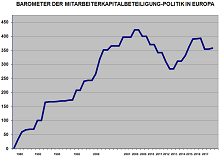
Juni 2017 - Barometer
der Mitarbeiterkapitalbeteiligung-Politik in
Europa |
|
Außer in Frankreich haben alle jüngeren politischen
Entwicklungen in Europa den Weg zu mehr Mitarbeiterkapitalbeteiligung
geebnet. Norwegen verdoppelte die steuerlichen
Anreize am 1.1.2017. Polen bereitet eine entsprechende
Gesetzgebung vor. Irland kündigt neue Anreize
für Mitarbeiterbeteiligungen in KMU an, die
im Jahr 2018 eingeführt werden sollen, ebenso
wie die Niederlande, die eine günstigere steuerliche
Behandlung von Aktienoptionen für Mitarbeiter
von innovativen Start-ups auf den Weg bringen
wollen. Diese neuen Entwicklungen bestätigen
den seit 2013 zu beobachtenden positiven Trend.
Auf der anderen Seite finden wir in Frankreich
eine restriktive Haltung, indem die alte Regierung
in 2017 die positiven Bestimmungen des achtzehn
Monate zuvor eingeführten "Macron-Gesetzes"
nicht umgesetzt hat. Das erklärt den Rückgang
des aktuellen Barometers. Die
negativen politischen Entscheidungen in Frankreich
schon seit 2009 beeinflussen leider die Statistiken
zur Entwicklung der Mitarbeiterbeteiligung
in Europa insgesamt.
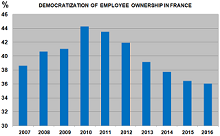
Frankreich
ist somit der Ausgangspunkt für den heute
niedrigeren „Demokratisierungs-Index“; die
Anzahl der Mitarbeiteraktionäre ist dort auf
drei Millionen zurückgegangen. Dies sind ca.
eine Million Aktionäre weniger, als vor dem
Politikwechsel.
|
Download
|
Juni
2017 - Employee ownership and economic well-being |
|
Employee Ownership —employees owning stock
in the companies where they work—is a major
aspect of the U.S. economy. But until now,
little research has explored its impact on
individual workers.
A new research on "Employee
Ownership and Economic Well-Being"
due to the NCEO in the USA presents some of
the first in-depth analysis of the relationship
between employee ownership and workers’ economic
well-being.
The findings of this research are remarkable.
Employee ownership is a market-friendly, anti-inequality
policy that improves outcomes for companies
and provides workers with higher wages, more
generous benefits, and greater job stability.
In short: Employee-owners lose less sleep
over their financial future. More
information
|

|
|
Mai 2017 - Only half as many layoffs |
|
Companies
with employee stock ownership had only half
as many layoffs as other companies during
the last two recessions.
A new study co-authored by Rutgers School
of Management and Professor Douglas Kruse
establishes the first conclusive link between
broad-based employee stock ownership and increased
employment stability in the USA.
"If good-paying, stable jobs are the
economy’s goal, then encouraging employee
stock ownership in companies makes a lot of
sense," said Douglas Kruse.
"Employee ownership is often seen primarily
as a way to improve employee relations and
increase productivity, but these results show
there is an important add-on effect on job
stability".
More information
|
|
|
April 2017 - Pivotal Part |
|
Employee
share ownership should be a pivotal part of
the Capital Markets Union, - this is the position
of the German Share Institute (Deutsches
Aktieninstitut - DAI), responding to the
public consultation organized by the European
Commission. The Capital Markets Union (CMU)
is a plan of the European Commission to mobilize
capital in Europe. "Employee share ownership
helps to stabilize the European economy as
a whole" tells the DAI. "Studies
from the US clearly show that companies offering
their employees a stake of the business capital
create more jobs than companies that do not
have the same instruments in place. Employee
shareholders accumulate more assets for retirement
purposes, get better wages and are less likely
to become unemployed compared to other employees.
As income of private households currently
depends highly on wages, employee shareowners
benefit from raising capital incomes, which
decreases wealth inequality in the society."
More
information
|
|
|
April 2017 - Need for a European
Action Plan |
|
In
its response to the public consultation on
the Capital Markets Union, the European Federation
of Employee Share Ownership points out the
fact that the EU is strongly underdeveloped
compared to the US considering employee share
ownership, which contributes much more to
the solidity and to the stability of capital
markets in the US than it does in Europe.
The underdevelopment of employee share ownership
hampers also Europe in terms of productivity,
growth, job creation, as well as in the fields
of pensions or business transmission, especially
considering SMEs. The CMU Action Plan should
face this through two new measures: First,
a dedicated European Action Plan should be
set up to promote European convergence in
this field. Secondly, the ignorance of the
ESOP scheme is a dramatic handicap for Europe,
leading to the fact that employee ownership
in SMEs is practically unknown in Europe compared
to the US. The CMU Action Plan should remedy
this. More
information
|
|
| |
|
February 2017 - The most remarkable
cases
The
list of the most remarkable large European
companies considering employee share ownership
was just updated, with 114 most remarkable
cases in 2016. They are located in Austria,
Belgium, Switzerland, Denmark, Germany, Spain,
Finland, France, Hungary, Ireland, Italy,
the Netherlands, Norway, Sweden and the UK.
The list will be part of the coming "Annual
Economic Survey of Employee Share Ownership
in European Countries in 2016", to be
published in March. Full
list
|
January 2017 - Formidable engine - again
and again
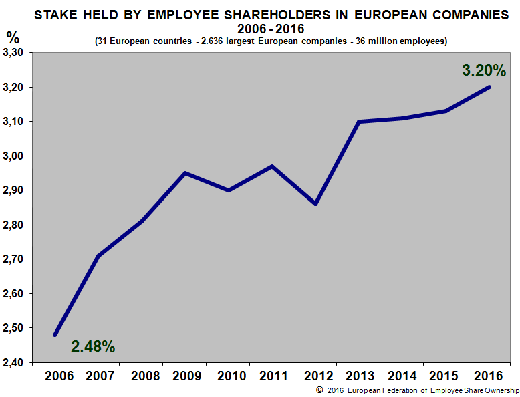
The stake held by employees in large European companies
continues its rise. It had never been so high before,
with 3.20% in 2016 (see chart). Even through the
European crisis, employee ownership demonstrates
again and again its status as a formidable engine
of participation and development. Assets per person
have doubled since 2009. These are the first indications
to be drawn from the new "Economic Survey of
Employee Share Ownership in European Countries",
which will be published in March 2017.
|

|
|
Dizember 2016 - Barometer
der Mitarbeiterkapitalbeteiligung-Politik
in Europa
Die neue Ausgabe des "Barometers der
Mitarbeiterkapitalbeteiligun-Politik in Europa"
ist verfügbar.
Mit Ausnahme von Frankreich zielen die jüngsten
politischen Entscheidungen zur Mitarbeiterkapitalbeteiligung
in Europa auf einen Ausbau der steuerlichen
Anreize:
· Polen
bereitet eine entsprechende Gesetzgebung vor.
· Die schwedische
Regierung erwägt die Einführung von Steuervergünstigungen
für kleine und mittlere Unternehmen ab 2018.
· In Irland
sollen ebenfalls in 2018 neue Anreize für
Beteiligungsangebote kleiner und mittlerer
Unternehmen geschaffen werden.
Diese neuen Entwicklungen bestätigen den seit
2013 zu beobachtenden positiven Trend: Die
jüngsten politischen Entscheidungen für mehr
Mitarbeiterkapitalbeteiligung in Europa sind
positiv. Mehr
|
|
November 2016 - Spanish
employee-owned "sociedades laborales"
|
|

|
The
European Parliament's Committee on Employment
and Social Affairs published a study on the
Spanish model of sociedades laborales.
This business model is characterized by the
majority of the company's capital being held
by employee shareholders.
Initially in the 80's, its creation was linked
to processes of crisis and industrial reconversion.
Since the mid 90's, it had an important boom
in corporate processes, boosting enterprise
creation.
Today, 66.000employees
are working for the 10.000 sociedades laborales,
most of them being shareholders of the company
they work for.
This is a typical business model for employee
ownership in very small enterprises.
More information
|
|
Oktober 2016 - All
is well in Paris
It is true that France is still number one
for employee share ownership in Europe. All
things are fine in Paris, my fair lady.
However, what a drop since 2011! The democratization
rate of employee ownership fell from 45 to
37% and the number of employee owners in France
returned to 3 million (instead of 4 million
if policies hadn't been changed).
The imposition of a specific tax on employee
share plans ("forfait social") had
a disastrous effect. Not only in France but
also by imitation in several other European
countries. Denmark is exemplary, which removed
all fiscal incentives for employee share plans
in 2011 (with a new social democratic government)
to restore them fully in 2016 (with a new
conservative-liberal government).
A good example to make things even better
in Paris! More information
|

|
Oktober 2016 - Risk
and performance of employee share ownership in France
ERES Group publishes outstanding results based on
the analysis of all broad-based employee share
plans in large French companies since 2006. After
5 years, employees having subscribed to an employee
share offering between 2006 and 2010 were winners
in 82% of cases (with the dividend, the discount
and the average employer contribution of 50%) while
ordinary shareholders would be winners in 60% of
cases. What confirms that employee ownership is
to be ranked into the category of "good risks".
More
information
|
September 2016 - Economic
freedom
A remarkable research work reports a strong
correlation between employee ownership incidence
and the index of economic freedom.
The author, Ricardo Machado of Porto School
of Management (Portugal), aims to understand
the determinants of the implementation of
economic democracy, measured by the incidence
of employee share ownership plans, within
the European Union countries.
The full publication about "The Determinants
of Employee Ownership Plan Implementation
in EU Countries - the Quest for Economic Democracy"
is available for download
here.
|

|
|
June 2016 - European
Conference on employee ownership policies |
|
|
The European Conference on European policies
for employee share ownership was held in Brussels
on May 19, 2016.
The Conference supports the project of a European
Action Plan to raise awareness about the benefits
of employee ownership and participation in
Europe.
The Final Report of the Conference and all
materials are now available for download
here
|
|
June 2016 - Barometer
of employee share ownership policies in European
countries |
|
The
mass development of employee share ownership
brings better motivation, productivity, profitability,
higher growth, more and better jobs. This
is good for all. But it depends on policy
will to initiate the virtuous circle through
appropriate fiscal incentives.
After 2008, some European countries took negative
decisions, removing or decreasing fiscal incentives,
which led to a decline of the number of employee
shareholders. Some other European countries
took the opposite way, applying new or higher
incentives, which led to a higher number of
employee shareholders.
All these policy decisions in various European
countries, in a positive or a negative way,
can be summarized through a single dedicated
tool.
This is the reason of the setting up of the
EFES "Barometer of employee share ownership
policies in European countries".
Before 2009, the barometer showed a continuous
increase, practically all policy decisions
being positive. A negative phase occurred
from 2009 to 2013. Since then, most policy
decisions are positive again.
|
More
information
|
More
information and download
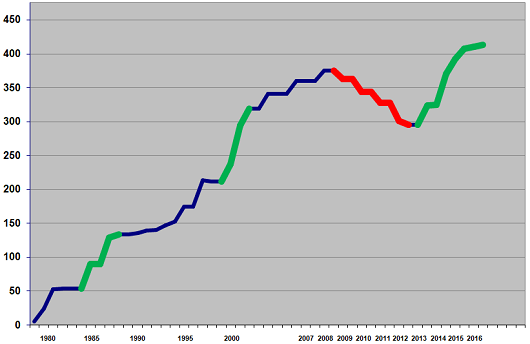
April 2016 - Employee
share ownership in SMEs
A first reliable study about employee share ownership
in French SMEs was published last month. It is well
known that employee share ownership in SMEs is underdeveloped
in Europe, especially compared to the USA. This
is due to the remarkable effectiveness of the ESOP
model, in use in the USA for over 40 years, but
not in Europe. The usual evaluation of the number
of employee shareholders in SMEs is 1 million in
Europe compared to 10 million in the US. The new
study, ordered by Eres and BDO, brings the number
of 250.000 in France, which confirms the former
usual evaluations. More
information
January 2016 - French
crusade
All actors of employee share ownership in France
met for their "Grand Prix" on 15 December
in Paris. They all agreed to launch a new "crusade"
for employee share ownership in France. Several
governments in the European Union chose for higher
fiscal incentives, considering employee share ownership
as an investment for the future and a key for recovering
from the European crisis. So did the UK and Austria
recently. The example is also coming from the USA,
with employee ownership being one of the themes
of the presidential election campaign. France should
get back to the same way.
January 2016 - Formidable
engine
Assets held by the employee owners in Europe were
never so high: 370 billion Euro and more than 3%
of the capital of all large European companies in
2015. This is more than 45,000 € per person (more
than 25,000 € if executive directors are excluded).
Thus, even through the European crisis, employee
share ownership is a formidable engine to share
in results and growth, - assets per person have
more than doubled since 2009. This is the first
indication from the next "Economic Survey of
Employee Share Ownership in European Countries"
to be published in March 2016. More
information

|
December 2015 - Employee
share schemes statistics provoke wide debate
in the UK |
The
latest published share scheme statistics has
sparked off a major debate over how best to
rejuvenate UK employee share ownership, following
the British ESOP Centre (see press review).
"The UK has perhaps the best employee share
plan legislation in the world", but it
is still far from Mrs Thatcher aspiration, 30
years ago, for a Britain where owning shares
would be "as common as having a car".
Now after 30 years of legislation in the UK
and in France, the facts have spoken: Employee
share ownership is twice more significant in
France; this is where the employee share plan
legislation was most effective. This is probably
due to the fact that employee share plans in
France are based on (blocked) shares, while
they are essentially based on share options
in the UK. As we already mentioned some time
ago, after a spectacular football match: France-UK:
2-1 |
|
|
November 2015 - Italian
Post: Missed opportunity |
The
Italian government offered 40% of the shares
of the Italian Post, on which 1.13% reserved
for employees. Results of the IPO are very satisfactory
for the Italian State, collecting 3.4 billion
euros, with total demand exceeding 4 times the
offer. Employees have received half of the reserved
shares: 26,234 employees subscribed, less than
20% of all employees of the Italian Post. In
an open letter, the CISL union had put forward
its own draft collective ownership, combined
with community representation of employees on
the German model. The Italian Government did
not want to go that way, nor did it choose for
a real employee share ownership plan supported
through fiscal incentives. Yet will there be
IPO bonuses for 12 top executives, up to half
of their annual salary. Comparison: The British
Government put Royal Mail on the stock market
two years ago, while awarding a 10% stake for
free to the 150,000 employees of the British
Post.
The
open letter of the CISL |
|
|
Oktober 2015 - Employee
share ownership is not a cuckoo |
A
dangerous and irritating situation is occurring
about employee share ownership within the OECD.
The OECD suggests that ESOPs and employee share
ownership should be discouraged because putting
all employees' eggs in the same basket, especially
considering pension savings. The principle of
diversification applies to employee share ownership
as to any other financial investment. It is
illustrated by the aphorism "do not put
all eggs in one basket."
However, employee share ownership is not just
a financial investment. It also has the character
of an industrial investment. This character
is most evident when the employees' stake reaches
100% of the company's capital, which is the
typical case of employee share ownership in
SMEs. However, it is also present, although
more incidentally, to the minority employee
share ownership in large companies.
If the aphorism of eggs and basket frequently
applies to the diversification of financial
investments, another aphorism applies better
to industrial investment: "The bird lays
all eggs in the same nest". Among the
few exceptions, the example of the cuckoo is
well known. It must be said: Employee share
ownership is not a cuckoo. More information
|
|
|
September 2015 - 2.000.000.000
Euro to promote employee ownership |
Two
billion Euro: On the scale of Europe, this is
the estimated tax cost to the US Federal Government
for ESOP-specific incentives in 2014 (US$ 1.9
billion). By comparison, a new study was just
published on the impact of employee ownership
and ESOPs on layoffs and the costs of unemployment
to the Federal Government. The data show that
employee-owners are far less likely to lose
their jobs than non-employee-owners. In turn,
these low job losses saved the Federal Government
US$17 billion in 2014 alone, making clear that
ESOP incentives have been an excellent investment
for the taxpayer, for the Federal Government
and for the US economy as a whole.
This is exactly what we need in Europe too:
The same ESOP model, with the same fiscal incentives,
for the same macroeconomic balance. The ESOP
(Employee Stock Ownership Plan) is the most
effective model in the world for employee ownership
in SMEs. It provides private owners with the
best way to sell their company to employees,
and for employees to become owners at low risk.
More
information |
|
|
June 2015 - German
politics finally needs to act |
Attention
has to be drawn to the recent call published
by the German Share Institute (Deutsches
Aktieninstitut).
Whereas in other European countries like France
(3.3 million employee shareholders) and Great
Britain (2.2 million) the numbers of employee
shareholders are counted in millions, in Germany
only 800.000 employees benefit from employee
share ownership.
In its call Deutsches Aktieninstitut therefore
demands of the governmental parties to finally
create higher tax incentives and better regulation
to promote employee share ownership. Due to
continuing low interest rates Germans will neither
be able to maintain their savings nor obtain
a sufficient amount of money for their retirement
arrangements without more share investment.
Employee share ownership is a good way to get
a first insight into saving with shares.
However, the number of employee shareholders
is declining in Germany. In fact, it has never
been so small. Fiscal aspects play a major role
for the dissemination of employee share ownership.
If Germany really wants to promote employee
share ownership, it needs to adapt its allowances
to common international levels and to increase
it strongly. More
information |
|
June 2015 - Call
from 10 major German organizations
Ten
major German organizations call for a new German
Agenda for employee share ownership. More
information
|
May 2015 - Fiscal
policies for employee share ownership |
| This
is the map of European countries encouraging
employee share ownership. In blue, the 12 European
countries supporting employee share ownership
through significant fiscal incentives. This
is a minority of Member States in the European
Union. However, this minority of 12 Member States
of the EU represents the lion's share when considering
European listed companies, stock market capitalization
and employee share ownership: 72% of all European
listed companies, with 72% of employees, 77%
of the stock market capitalization, 83% of employee
shareholders. See
details in our new publication about "Employee
Share Ownership for Building the Capital Markets
Union". |
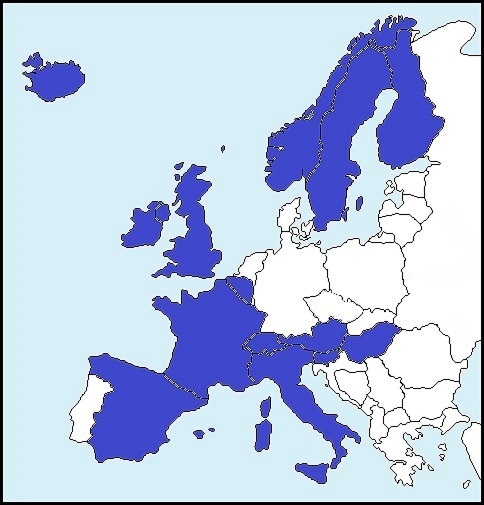 |
|
May 2015 - Capital
Markets Union |
 |
The
European Commission launched a Green Book and
a public consultation on "building a Capital
Markets Union".
It is remarkable that, together with the European
Federation of Employee Share Ownership, several
major organizations representing the full range
of private actors of the Capital Markets Union
converge on analysis and proposals about employee
share ownership in Europe, as:
• EuropeanIssuers
• The European
Private Equity & Venture Capital Association
• The Federation
of European Securities Exchanges
• Better Finance,
the European Federation of Investors and Financial
Services Users.
Details
|
21.04.2015:
Answering the European Commission’s Green Paper
on the Capital Markets Union, EuropeanIssuers,
the European Private Equity & Venture Capital
Association and the Federation
of European Securities Exchanges published the
EU IPO Report: "Rebuilding
IPOs in Europe; Creating jobs and growth in European
capital markets".
The
Report points out the fact that the number of employee
shareholders was recently declining in Europe. As
the EFES evidenced, these changes are clearly related
to the regressive fiscal policies in many European
countries.
However,
European companies need investment, to grow, to
enter new markets, to develop new products and to
create jobs. A healthy European capital market attracting
long-term investors (especially households, employees
and pension savers) is a critical route to channel
such investment. More generally, "the links
between savers, the original providers of capital,
and the financial markets, which allocate that capital,
have become less coherent".
The
Report recommends that policymakers set the goal
of creating an equity culture in Europe. That Member
States should be encouraged to use tax policy to
encourage long-term investing, providing tax incentives
to encourage investment for the longer-term in equity.
That fiscal incentives should be provided to support
the development of employee share ownership across
Europe.
|
April 2015 - European
governments bet again on employee ownership |
| The
table of all recent policy decisions regarding
employee share ownership in European countries
reveals a remarkable shift. At the beginning
of the financial crisis, several countries
took negative decisions to reduce their
expenses, in a pure short term vision. This
bad signal came first from France, followed
by Greece, Denmark, Ireland and The Netherlands,
between 2009 and 2012. |
|
| Since
2012, most political decisions are positive
again, as in the UK, in Spain, in Hungary,
and in Austria where tax incentives will
be doubled. Details |
April 2015 - New
study finds ESOPs total return beats S&P
500 by 62%
A new analysis of the economic impact of S corporation ESOPs in
USA examines trends in account balances,
distributions to participants, total return,
and the existence of other retirement plans.
The study, performed by EY's Quantitative Economics
and Statistics, finds that:
• S corporation ESOPs are growing
by many measures. They represented 22% of ESOPs
in 2002 and 42% in 2012. The number of plans,
participants, and net assets also increased
over that time.
• The total return for participants
in S ESOPs from 2002 to 2012 was an 11.5% compound
annual growth rate, 62% higher than the S&P
500 Total Returns Index's 7.1% growth rate over
the same period. Details
February 2015 - Divorce
Assets held by European employees in shares
of their company increased to 301 billion Euro
in 2014, a new record. However, for the third
consecutive year in 2014, the number of employee
shareholders decreased in Europe. This is clearly
related to the regressive fiscal policies in
many European countries. In contrast, the UK
chose to double the fiscal incentives for employee
share ownership, considering it is a key element
of recovery and an investment for the future.
Lower incentives have a clear consequence in
continental Europe: The democratization of employee
share ownership regresses, leading to wealth
concentration in the richest hands. The following
graph shows how dramatic is the divorce between
continental Europe and the UK. While 30% of
employees held shares of their company last
year in the UK (the highest rate since the statistic
exists), a sharp drop below 24% can be observed
on the continent. More
information
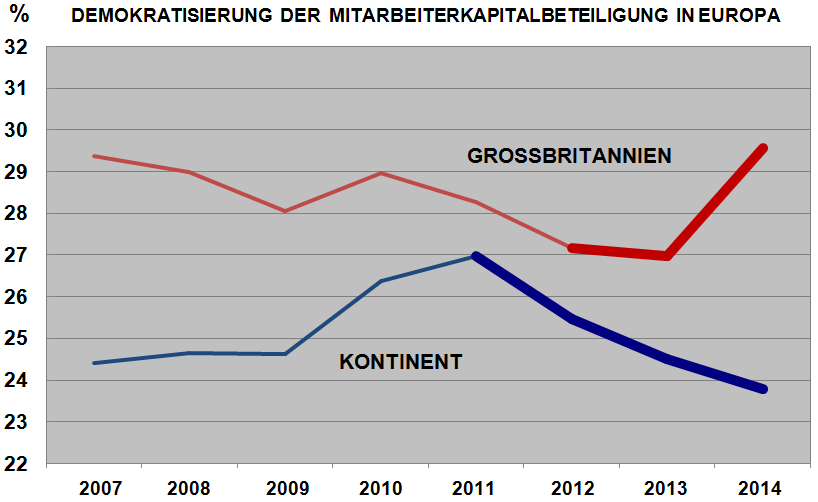
January 2015 - Warning
signal
For the third consecutive year in 2014, the
number of employee shareholders decreased in
Europe. This should be a warning signal for
everyone. In fact, the number of employee shareholders
in continental Europe decreased by 500.000 persons
(-8%) from 2011 to 2014, while the number increased
by 200.000 persons in the UK (+8%). These changes
are clearly related to the regressive fiscal
policies in many European countries, while in
contrast, the UK chose to double the fiscal
incentives for employee share ownership, considering
it is a key element of recovery and an investment
for the future. This is the first information
from our annual census of employee ownership
in European companies. More
information
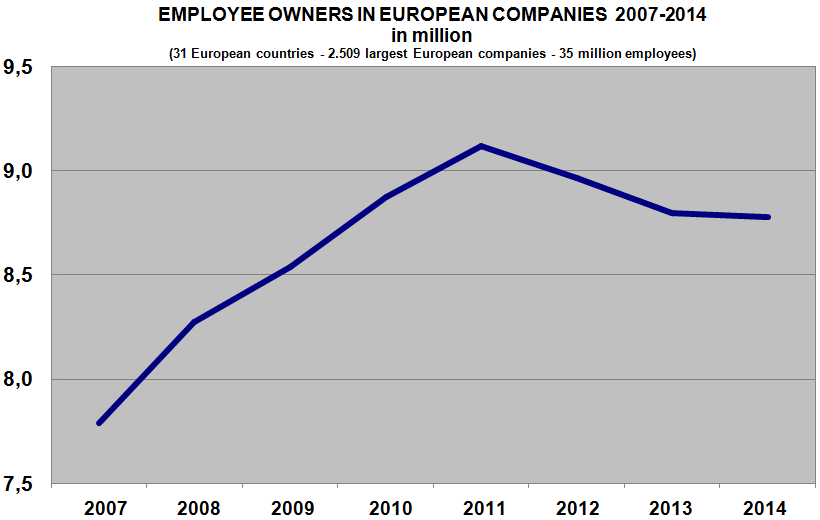

The
Virtual Information Center for employee ownership
and participation offers a full picture of each
country of the European Union. For each country,
it offers a summary of dedicated legislation
as well as a short information about fiscal,
social, political and cultural aspect of employee
ownership and participation. It is on the Internet
and it is for free. More information
December
2014 - Italy on the right way
On November 30 the Italian Government approved
the Parliamentary Motion presented by MPs Tidei,
Galperto and Bargero about the promotion of
employee share ownership in Italy. The document
is largely inspired by the EFES positions and
activities. Its aim is to promote employee share
ownership through a new legislation and through
a dedicated budget. See
more in Italian
|
|
The
study entitled "Employee Financial Participation
in Companies' Proceeds" was published by
the European Parliament in September 2012. Authors
of the study were severely condemned by the
Court of Justice of Brussels and the study had
to be definitely removed by the European Parliament.
Authors of the study are
a consortium made of Ecorys and Case, represented
by Professors Jens Lowitzsch and Iraj Hashi.
In addition, the study seriously misled
the Parliament on two major points. More
information
November
2014 - Back
to fiscal incentives
It
is well known that fiscal incentives are the
key point for the development of employee share
ownership. Australia: The Labor Government
decided in 2009 to cut fiscal incentives for
share option plans, leading to a disaster for
employee ownership and entrepreneurship in Australia.
Now they're back: “We are reversing the changes
that the former government made in 2009 which
essentially stopped employee ownership in
this country,” Prime Minister Abbott said. Denmark:
Fiscal incentives on employee share plans were
removed in 2012. Now they're back: Legislative
amendments are presented in this sense to the
Parliament. The Netherlands and Greece:
Fiscal incentives were removed in 2012. When
will reason come back there? France:
Surprising Government's order removes the whole
legislation which formerly encouraged employee
share ownership in case of privatisations. At
the same time, the British Government recently
doubled fiscal incentives for employee share
plans in the UK, as a key element of recovery.
And former European Commissioner Michel Barnier
just launched a call in the British and French
press, telling that "Europe can only gain
if we embrace employee share ownership",
and calling the new European Commission to bring
support in this sense. More
information in our press review
|
October
2014 - Manifesto
2014: Fiscal incentives are
indispensable prequisites |
|
|
Worldwide practical evidence and
a wide range of academic research support
the view that a proper legal environment
and the provision of suitable fiscal incentives
are indispensable prerequisites for any
policy truly aiming the development of
employee share ownership.
Moreover,
such evidence and research also show that
fiscal incentives always pay off medium/long
term and in many ways.
Organisations promoting employee owner-ship
around the world have demanded persistently
and consistently supportive legislations
including fiscal incentives for the common
good (evidenced in additional growth and
profitability, the spread of wealth, contribution
to economic and social stability).
New fiscal incentives pave the way to
new encouraging development, while political
decisions reducing or cutting such incentives
always lead to regression.
|
|
September
2014 - To
the new European Commission and Parliament
All
over the world, from the United States to China
and Africa, employee share ownership is highlighted
and promoted as a factor for boosting activity,
greater productivity and better results and social
balance for all. This is also true in the UK,
where fiscal incentives in this direction have
been strongly improved recently.
The development of employee share ownership can
be a major factor of investment and recovery,
also for the European Union. For the EU, this
is the right political choice to do.
Letter
to President Jean-Claude Juncker 17-9-2014
September 2014 - EFES' Manifesto: Fiscal incentives are indispensable prequisites
|
Worldwide practical evidence and
a wide range of academic research support
the view that a proper legal environment
and the provision of suitable fiscal incentives
are indispensable prerequisites for any
policy truly aiming the development of employee
share ownership.
Moreover,
such evidence and research also show that
fiscal incentives always pay off medium/long
term and in many ways.
Organizations promoting employee owner-ship
around the world have demanded persistently
and consistently supportive legislations
including fiscal incentives for the common
good (evidenced in additional growth and
profitability, the spread of wealth, contribution
to economic and social stability).
New fiscal incentives pave the way to new
encouraging development, while political
decisions reducing or cutting such incentives
always lead to regression.
The EFES' Manifesto 2014 is soon to be published.
|
|
June 2014 - Strong
move in the UK
High fiscal incentives are the base of the successful
policy to promote employee ownership through ESOPs
(Employee Stock Ownership Plan) in the USA. In
contradiction with Europe, this allowed American
public policies to promote employee ownership
in SMEs. Some 11.000 ESOP companies can be found
in the USA compared to only 300 quite similar
cases in Europe.
It is now generally admitted in the UK that such
policy has also to be promoted here, leading to
higher productivity, greater levels of innovation
and outstanding financial performances. Finance
Bill 2014 designs two new tax reliefs to encourage
and support the shift to employee-owned companies:
• Under the
first new tax relief, the sale of a controlling
interest in a business to an employee ownership
trust, will be entirely free from capital gains
tax.
• Under the
second tax relief, bonuses of up to £3.600 per
tax year paid to employees of companies controlled
by an employee ownership trust benefit from an
income tax exemption.
These new incentives are still relatively modest
compared to those for ESOPs in the USA but the
UK is clearly showing the right way for all European
countries.
May
2014 - Transparency
It is usually considered in large European
companies that employee share ownership has to
be developed, leading to better performances and
better governance. Top Executives are commonly
the first employees to be encouraged in this way.
More and more companies have "shareholding
guidelines", requiring Top Executives to
hold up to 100-300% of their annual salary in
shares of the company, so as to align employees'
and shareholders' interests. The 2.200 largest
European companies employ some 8.800 Top Executives,
each of them owning 13 million Euro on average
in shares of his company. 77% of all large European
companies are fully transparent about this (see
graph). However, the lack of transparency is flagrant
in a number of European countries: Greece, Luxemburg,
Austria, Belgium, Germany and some others. A detailed
chapter about this can be found in the European
Survey of Employee Ownership in 2013. More
information
Download
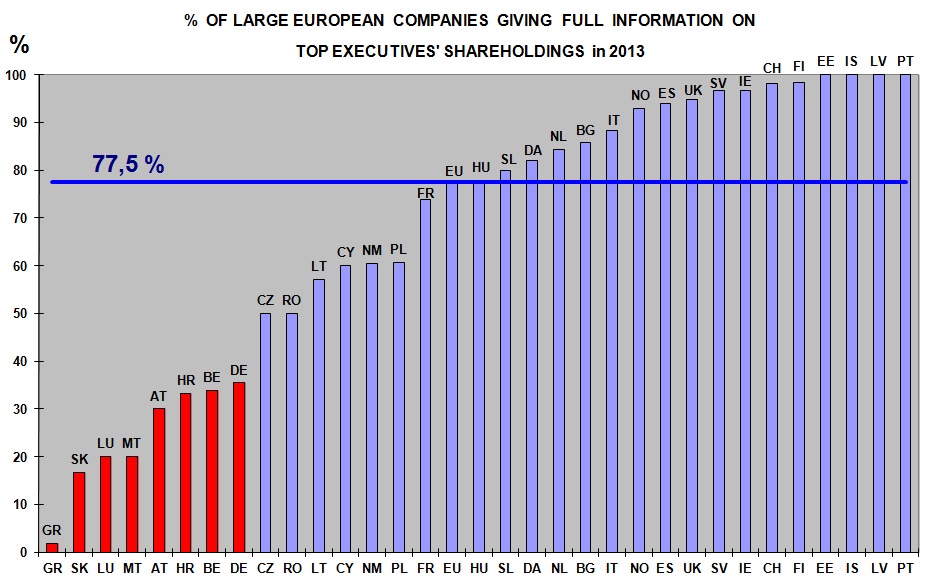
April
2014 - Listed
and non-listed companies
It was sometimes told, based on the observation
of specific examples, that non-listed employee-owned
companies could have been more resilient than
others through the financial crisis. Employee-owned
companies might have fared better. This idea is
even a cornerstone of the British Government's
policy to build a wide "employee-owned business
sector" in the UK. The picture is not the
same when based on the systematic comparison of
all large listed companies and all
large non-listed employee-owned companies in Europe.
The graph hereafter illustrates this through the
case of employment in both types of companies
from 2006 to 2013. A detailed chapter about this
can be found in the European Survey of Employee
Ownership in 2013. More
information
Download
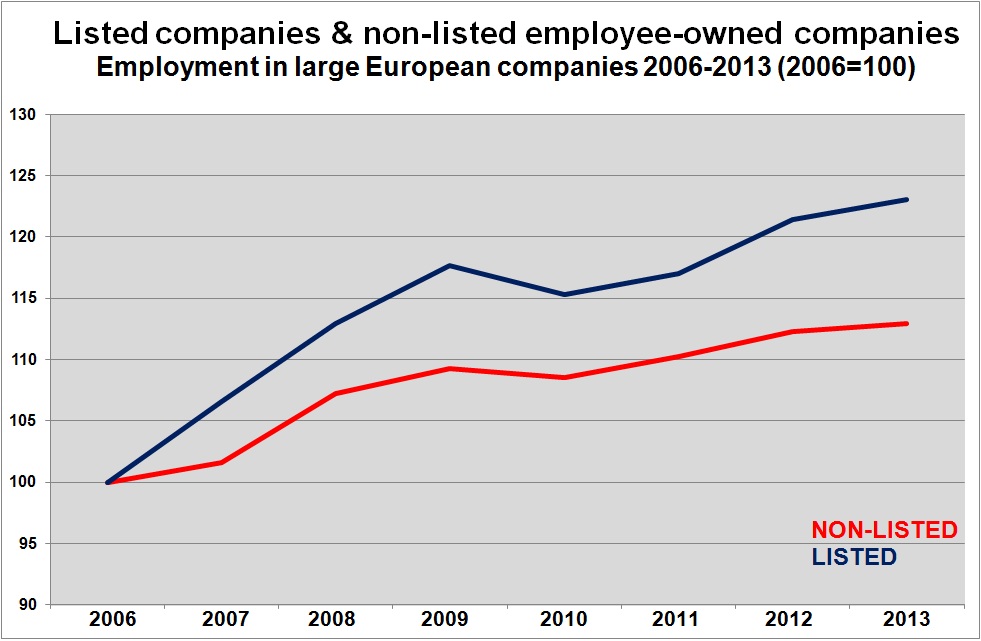
 |
NOW
AVAILABLE !

EUROPEAN
SURVEY 2013
The
whole information about employee ownership
and
employee share plans, top
executives and common
employees in European companies,
corporate
governance and profit-sharing,
employee representation
on boards and discrimination
in employee shareholders'
voting rights, and a comparison
between listed
companies and non-listed employee-owned
companies.
150 pages, 100 tables and graphs.
More
info
|
March
2014 - Discrimination in voting rights
There is no discrimination for or against employee
shareholders' voting rights in most European countries.
However, significant discrimination can be observed
in six countries. Employee shareholders' voting
rights are generally multiplied in France due to
the fact that shares enjoy a double voting right
when held for at least two years. At the contrary,
employee shareholders' voting rights suffer negative
discrimination in five other countries: Denmark,
Germany, Finland, Sweden and The Netherlands. Typical
cases there are companies issuing two classes of
shares, A-shares with 10 votes and B-shares with
1 vote. Controlling owners hold high voting shares
but employee share plans are based on low voting
ones. This way, employee shareholders' voting rights
are severely discriminated, in up to 45% of large
companies in Sweden. More
info
Februar
2014 - Still
more employee share plans in Europe
The EFES Survey of employee ownership in 2013 is
soon available, showing that still more and more
of European companies organize employee share plans.
In 2013, 85% of all large European companies had
employee share plans of all kinds, while 53% had
"broad-based" plans for all employees
and 63% had stock option plans... More
Download
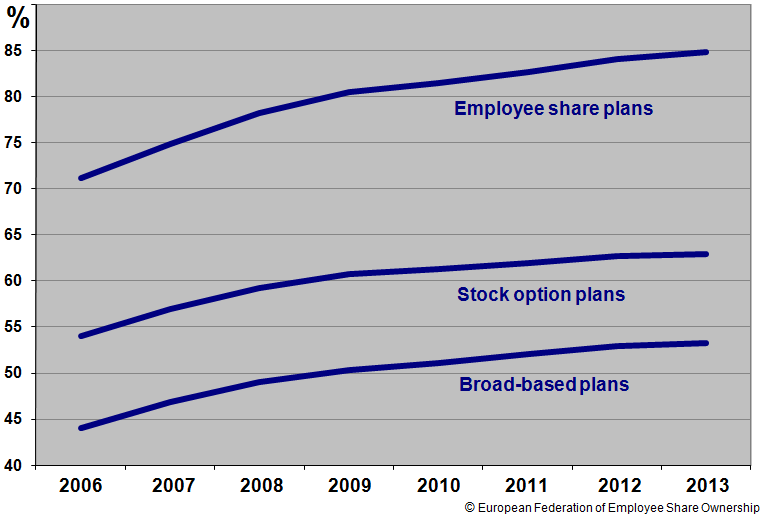
January
2014 - 266
billion Euros in 2013, just as before the financial
crisis
In 2013, the capital held by employees in European
companies increased by 32% to 266 billion Euro,
just the same level as before the financial crisis.
The stake held by employees rose to the top with
2.99% (see graph). This new increase was not mainly
due to new employee share plans (some 30% of all
large European companies launched new employee share
plans, as usual). The main reason is due to the
fact that share prices increased more in companies
having higher employee ownership, leading mechanically
to a higher average stake. This is remarkable. More
Click
to download
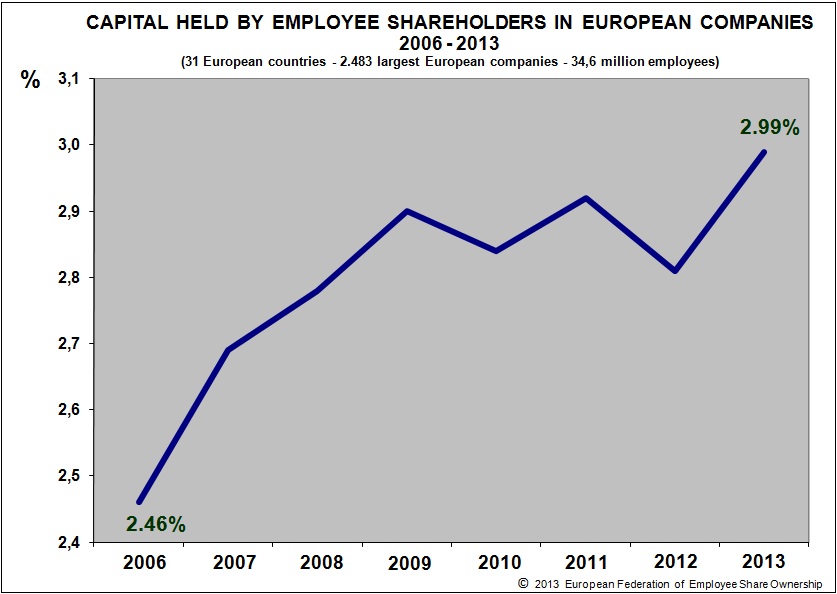
January
2014 - Policy
support increasing again and again in the UK
Tax
support for employee share plans will be doubled.
Fantastic news for the millions of employee shareholders.
Policy makers are increasingly embracing employee
ownership as a key sustainable business model. Recent
years saw a strong lobbying to favour "employee
ownership" (in short: employees having controlling
stake in SMEs) even at the detriment of "employee
share ownership" (in short: employees owning
minor stake in large listed companies). The British
Government decided to offer £ 50 million in this
sense and voices were even heard to express the
idea that support for employee share ownership in
large companies should be cut. However an additional
£ 25 million will go to further encouragement of
employee share plans. Amount of money employees
can save in Government approved SAYE employee share
plans will be doubled from £250 a month to £500
a month and for the SIP employee share plan it has
increased from £1,500 a year to £1,800 a year.
Dezember
2013 - UK
Employee Ownership Index
The
UK Employee Ownership Index (EOI) has recently been
re-launched and from June 2013, it is calculated
by FTSE International. The index was created to
test a hypothesis that businesses with substantial
employee ownership perform well over the long term.
The UK Employee Ownership Index is an index of UK
public companies quoted on the London Stock Exchange.
Strangely, the picture the new EOI brings about
performance is quite different from the former Index...
More
Dezember
2013 - Employee
representation on boards in Europe
Employee
representation on boards is highly sophisticated
in many large companies in France, either in Boards
of Directors or in Supervisory Boards. Altogether
employee representatives are present on boards covering
51% of employment in large French companies. This
is through unions or workers councils for 36% and
it is for 29% through employee shareholders representatives
(while both unions or workers councils and employee
shareholders are present in 14% of cases). A detailed
publication about employee representation on boards
is now available… More
November
2013 - Employee representation on Boards
Employee
representation on Boards is usual in many large
European companies, either in Boards of Directors
or in Supervisory Boards.
Employee shareholders are represented on Boards
in 13% of large French companies (but 29% in terms
of employment). Employee shareholders representation
on Boards is thus typical in French largest companies.
On the other hand, employee representation on Boards
is usual for 36% of employees in large European
companies (See Graph). This is the case for 95%
of employees in large companies in Austria, Germany
or Slovenia. In France, it is the case for 51% of
employees in large companies (just over the European
average), while it is only the case for 2.3% in
the UK… and 0% in Italy.
The EFES database of large European companies gathered
initially all information about employee share ownership
in the 2.200 largest European companies (25% of
all listed companies in Europe but 94% in terms
of employment and 97% in terms of capitalization).
The EFES database is now extended to corporate governance
issues. A
detailed publication about employee representation
on Boards is now available.
Download
graph
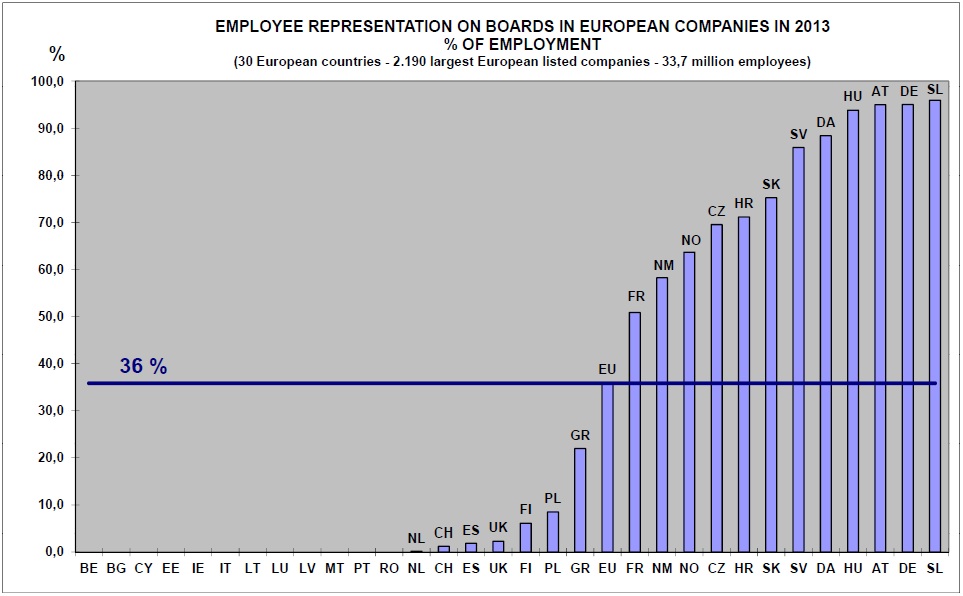
Oktober
2013 - European Trade Union Institute
Die Internetsite worker-participation.eu
wurde als Informationsplattform für Fragen der Arbeitnehmerbeteiligung
in Europa aufgelegt. Dies war eine bemerkenswerte
Arbeit der European Trade Union Institute (ETUI).
Angesprochen werden dort die folgenden Aspekte:
Gewerkschaften, Tarifverhandlungen, Vertretung auf
betrieblicher Ebene, Unternehmensmitbestimmung,
Vertretung auf europäischer Ebene, Arbeitsschutz,
und Finanzielle Mitarbeiterbeteiligung. Aus dem
Blickwinkel der ETUI gehört die Mitarbeiterkapitalbeteiligung
zum Bereich der finanziellen Mitarbeiterbeteiligung,
die wiederum zwei Dimensionen beinhaltet: Erfolgsbeteiligung
und Kapitalbeteiligung. Die Erfolgsbeteiligung wird
dabei als einfachste Form der finanziellen Beteiligung
betrachtet. Sie wird als kollektive Regelung gesehen,
die zu einer zusätzlichen variablen Vergütung in
Abhängigkeit vom Unternehmenserfolg führt. Die Mitarbeiterkapitalbeteiligung
stellt in der Vision der ETUI das letzte Element
partizipativer Unternehmensführung dar. Weitere
Informationen
September
2013 - Der
Aktionsplan "Kapitalbeteiligung von Arbeitnehmern"
der EU-Kommission
Die EU-Kommission hat vor kurzem ihren Aktionsplan
vorgelegt. Insgesamt sollen die folgenden Schritte
eingeleitet werden:
•
Die Kommission will das Thema im Detail erörtern.
•
Die Kommission will ermitteln, welche Initiativen
zur Förderung grenzübergreifender Systeme der Kapitalbeteiligung
von Arbeitnehmern in Europa angemessen sein können.
•
Die Kommission will potenzielle Hindernisse bei
grenzübergreifender Systemen der Kapitalbeteiligung
von Arbeitnehmern ausmachen und analysieren.
•
Sodann will die Kommission angemessene Maßnahmen
zur Förderung der grenzübergreifender Systemen der
Kapitalbeteiligung von Arbeitnehmern in Europa ergreifen.
Alle
Details des Aktionsplans stehen Ihnen hier
zum Download zur Verfügung
Juli
2013 - Richtigstellung
über eine Studie des Europäischen Parlaments
Die Abteilung Wirtschafts- und Forschungspolitik
des Europäischen Parlaments veröffentlichte eine
Studie unter dem Titel "Employee Financial
Participation and Companies' Proceeds". Diese
Studie wird von der Kommission als das aktuellste
Element bezeichnet, um die Hintergründe in Europa
unter Bezug auf die Ausschreibung eines EU-Pilotprojektes
zur Förderung der Mitarbeiterbeteiligung darzustellen…
Weitere
information
April
2013 - Zum ersten Mal seit der
Finanzkrise …
… stieg die Zahl der beteiligten Mitarbeiteraktionäre
im letzten Jahr nicht weiter an.
Betrachtet
man die Beteiligungen des Top Managements und der
übrigen Mitarbeiter werden ebenso Unterschiede nach
der Krise deutlich. Der Anteil der übrigen Mitarbeiter
sinkt seit 2009 kontinuierlich. Im Gegensatz dazu
steigerte das Top Management seinen Anteil am Kapital
der Gesellschaften stetig. Im Ergebnis verbuchten
8.845 Top-Führungskräfte ein durchschnittliches
Beteiligungskapital von 9,1 Millionen Euro 2012
auf sich, verglichen mit einer durchschnittlichen
Beteiligungshöhe von 11.500 Euro der insgesamt 9,6
Millionen übrigen Mitarbeiter-Aktionäre.
Dieses
Bild mag auf einige negative politische Entscheidungen
in Sachen Mitarbeiterbeteiligung in europäischen
Staaten zurückzuführen zu sein. Hierzu zählen Irland,
die Niederlande und sogar Großbritannien. Darüber
hinaus wurden auch keine effektiven Maßnahmen zugunsten
der Mitarbeiterbeteiligung in Ost- und Südeuropa
ergriffen …
Das
ist das Fazit der wirtschaftlichen Betrachtung der
Mitarbeiterbeteiligung in Europa für das Jahr 2012.
Weitere
informationen
März
2013 - Dokumentarfilm über Mitarbeiterkapitalbeteiligung
in den USA
Was bedeutet es, beteiligter Mitarbeiter zu sein?
Wir sind die Eigentümer: Mitarbeiter erweitern
den amerikanischen Traum erzählt die Geschichte
von drei Unternehmen in Mitarbeitereigentum: New
Belgium Brewing, Namasté Solar und DPR Construction.
ESOP-Unternehmen sind typisch für Mitarbeiterbeteiligung
in den USA (ESOP ist ein Belegschaftsbeteiligungsmodell).
Dieses Modell ist teilweise für den Erwerb von Unternehmen
durch Mitarbeiter zugeschnitten. In dieser Ausprägung
ist es eindeutig das effektivste Modell der Welt,
das ein Pensionsmodell mit deutlichen steuerlichen
Anreizen für die verkaufenden Familieneigentümer
wie für die erwerbenden Mitarbeiter, die oft das
gesamte Unternehmen für geringes Geld erwerben,
vorsieht. Zugang
zum Film
Februar
2013 - Neue Ära für Belegschaftsaktienmodelle in
Großbritannien
Die
britische Regierung hat grünes Licht für die Vereinfachung
und Reform aller vier Durchführungswege von Belegschaftsaktienbeteiligungen
innerhalb der nächsten 15 Monate gegeben. Dies ist
das Ergebnis eines umfangreichen Berichts der Behörde
zur Steuervereinfachung, der zu dem Ergebnis kommt,
dass umfangreiche Veränderungen erforderlich sind,
um einer Überregulierung und einer exzessiven Bürokratie
bei Aktienbeteiligungsmodellen zu begegnen.
Weitere
Details
Januar
2013 - Neue Unterstützung durch die Europäische
Union im Jahre 2013
Sowohl die EU-Kommission als auch das Parlament
werden die Mitarbeiterbeteiligung in diesem Jahr
verstärkt unterstützen. Der EU-Haushalt wurde vom
EU-Parlament verabschiedet und beinhaltet ein Budget
zur Durchführung eines Pilotprojektes, das dem Aufbau
von Zentren für Mitarbeiterbeteiligung in den einzelnen
Mitgliedstaaten dient. Die Zentren sollen Informationen
bereitstellen, Seminare durchführen und auf eine
förderliche Gesetzgebung in den Staaten hinwirken.
Zudem kündigte die EU-Kommission Kommission plant
die Modernisierung des europäischen Gesellschaftsrechts
und der Corporate Governance an, was sich auch auf
die Mitarbeiterbeteiligung auswirken soll. Weitere
Informationen
December
2012 - Eine neue Bewegung für die Mitarbeiterbeteiligung
in Europa
Eine neue Welle scheint in den
größten Volkswirtschaften Europas zu entstehen,
die die Mitarbeiterbeteiligung fördert. Großbritannien: Arbeitsminister Jo
Swinson äußerte, dass die Britische Regierung alles
in ihrer Macht stehende tun wird, um die Mitarbeiterbeteiligung
in Großbritannien substanziell zu fördern. Sie sagte:
"Wir müssen die Hindernisse aus dem Weg räumen,
die die Einführung von Mitarbeiterbeteiligungsprogrammen
und die Beteiligung der Beschäftigten an den Unternehmen
beschränken". "In den letzten Jahren wurde
von der Regierung der Mitarbeiterbeteiligung nicht
die Aufmerksamkeit entgegengebracht, die sie verdient
gehabt hätte. Arbeitskräfte sind unser Kapital und
müssen entsprechend motiviert werden“, sagte Frau
Swinson. "Es werden viel mehr Beteiligungsmodelle
in kleinen und großen Unternehmen benötigt, da sie
ein wichtiger Faktor des Wirtschaftswachstums sind”,
sagte die Ministerin dem Zentrum für Mitarbeiterbeteiligung
in London. Frankreich: Präsident François
Hollande kündigte eine neue Gesetzgebung für Mitarbeiterbeteiligung
und Teilhabe an. Deutschland: Arbeitsminister
Philipp Rösler legte ein neues Internetportal für
Mitarbeiterbeteiligung auf. Italien: Das
Warten auf ein neues Gesetz zur Teilhabe und Mitarbeiterbeteiligung.
Das Parlament beauftragte die Regierung zur Umsetzung
bis Ende Juni, aber der weiße Rauch wird noch immer
aus Rom erwartet.
November
2012 - Bundesministerium
für Wirtschaft und Technologie - Informationsportal
Mitarbeiterbeteiligung
Das Bundesministerium für Wirtschaft und Technologie
(BMWi) hat heute das Informationsportal Mitarbeiterbeteiligung
frei geschaltet (www.bmwi-unternehmensportal.de).
Auf der neuen Internetseite werden umfassende Informationen
zur Mitarbeiterkapitalbeteiligung sowie praxisorientierte
Handlungsempfehlungen, Checklisten und Musterverträge
für alle gängigen Beteiligungsmodelle bereitgestellt.
November
2012 - Britische
Regierung will die Mitarbeiterbeteiligung fördern
Die britische Regierung hat eine verstärkte Förderung
der Mitarbeiterbeteiligung angekündigt. Insgesamt
soll abgewogen werden, ob ein unabhängiges Institut
für Mitarbeiterbeteiligung gegründet werden soll,
ein gebrauchsfertiges Modell entworfen, Handlungsempfehlungen
der steuerlichen Behandlung von Beteiligungsmodellen,
ein Leitfaden für Mitarbeiter auch zu Fragen der
Unternehmensübernahme durch Mitarbeiter erarbeitet
und gemeinsam mit der John Lewis-Gesellschaft die
Hindernisse zur Unterstützung der Privatwirtschaft
von Unternehmen in Mitarbeitereigentum untersucht
werden soll. Weitere
Details
November
2012 - Mitarbeiter-Gesellschafter
oder Semi-Mitarbeiter-Gesellschafter?
Sein oder nicht sein, das ist hier die Frage? Wir
sind selbstverständlich noch immer in Großbritannien.
Jeder Tag bringt neue Ideen zur Stärkung der Mitarbeiterbeteiligung
hervor. Kanzler George Osborne kündigte einen neuen
Vertrag "Mitarbeiter-Gesellschafter" an:
Mitarbeiter könnten Gesellschaftsanteile im Austausch
gegen Arbeitnehmerrechte erhalten. So gelange man
zu einer neuen Form der Beschäftigung. Ein Sturm
der Entrüstung war die Folge! Würden Sie Arbeitsrecht
gegen Anteile eintauschen? "Osborns Ankündigung
verleiht der Mitarbeiterbeteiligung entscheidenden
Aufwind ", sagt die Employee Ownership Association.
Und weiter: "Mitarbeiterbeteiligung wird nun
als geeignete Alternative zum dominanten PLC Model
und seiner inhärenten Kurzfristigkeit wahrgenommen."
Das National Center for Employee Ownership sagte,
Kanzler Osbornes Vorschläge seien "schrecklich",
eine “sehr schlechte Idee” und dass kein “rationales
Wesen” Arbeitsrechte gegen Kapitalgewinne und Steuervorteile
eintauschen werde. Letztendlich kamen die meisten
MAB-Organisationen zu dem Ergebnis, dass Arbeitsrechte
nicht beschränkt werden sollten, um der Mitarbeiterbeteiligung
Wachstum zu verleihen. Siehe
auch den Pressespiegel für weitere Details
Oktober
2012 - Index
der Mitarbeiterkapitalbeteiligung
Würden Sie in ein Finanzinstrument investieren,
das nicht transparent ist? Hoffentlich nicht! Der
“Index Mitarbeiterkapitalbeteiligung für Großbritannien“
wird von einer Anwaltssozietät aus London veröffentlicht.
Er zeigt (siehe Grafik), dass notierte Unternehmen
mit Mitarbeiterbeteiligung den FTSE All-Share Companies-Index
im Durchschnitt um 10% jedes Jahr übertreffen. Das
ist nicht schlecht!!! Wir stellten der Sozietät
die Frage: “Welche Firmen sind Bestandteil des Index?”
Die Antwort lautete: “Wir bedauern, die Namen der
Unternehmen, die im Index enthalten sind, nicht
herausgeben zu können“. Vielleicht ist dies der
einzige Aktienindex, dessen Zusammensetzung unbekannt
ist. Wenn Sie dies kommentieren oder Fragen stellen
wollen, dann nutzen Sie bitte diesen
Link
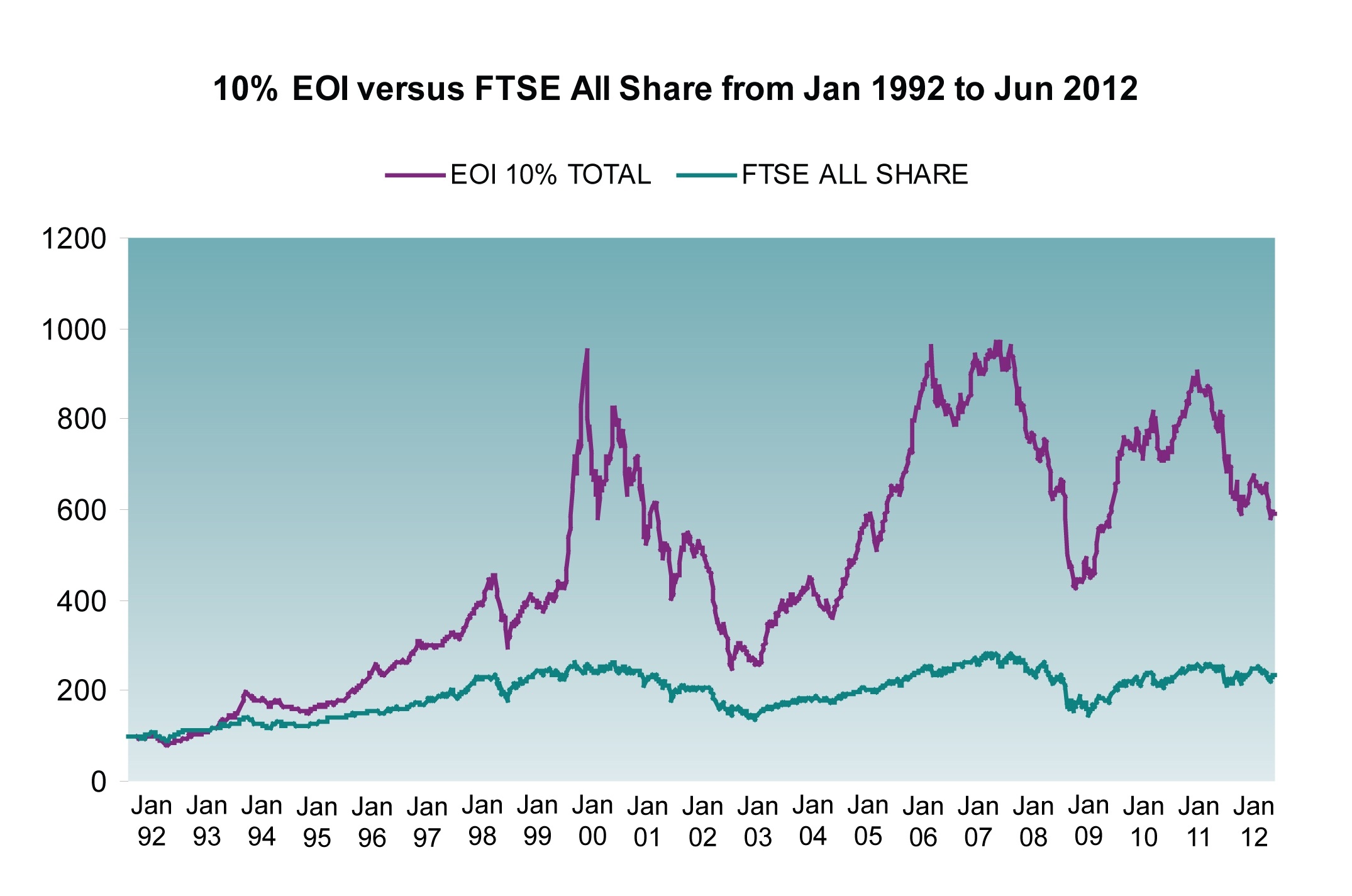
September
2012 - Eine
neue Ära des Kapitalismus in Großbritannien
Die britische Regierung kündigt eine neue Ära
des Kapitalismus an. "Nie zuvor genoss die
Mitarbeiterbeteiligung in Großbritannien eine so
hohe Aufmerksamkeit", sagte der Arbeitsminister
Norman Lamb. Wir werden "Mitarbeiterbeteiligung
zu einem tragenden Gedanken des Wirtschaftens in
Großbritannien machen". Zudem stößt die Behörde
HMRC eine öffentliche Beratung über Mitarbeiterbeteiligungsprogramme
an. Es sollte auf jeden Fall etwas in Bezug auf
die Priorität von Mitarbeiterbeteiligungsmodellen
in Großunternehmen unternommen werden, wie der Vergleich
mit Frankreich zeigt. Dies geht auch aus den
Antworten von EFES auf die HMRC-Beratung heraus.
September
2012 - Typologie
der Mitarbeiterbeteiligung
Basierend auf empirischen Untersuchungen kann
eine Typologisierung der Mitarbeiterbeteiligung
vorgenommen werden: Bis zu 1% Beteiligungsquote
ist Mitarbeiterbeteiligung nicht signifikant, über
1% erlangt sie Signifikanz, über 6% erhält sie eine
strategische Bedeutung, über 20% wirkt sie bestimmend
und ab 50% kontrollierend. Selbstverständlich gibt
es hier einen starken Bezug zu Fragen der Unternehmensführung.
Bemerkenswert ist, dass Mitarbeiterbeteiligung nicht
nur in KMU, sondern auch bei einer Vielzahl der
größten Unternehmen Europas zumindest eine strategische
Bedeutung annimmt. Mehr Informationen
Juli
2012 - Employee Ownership Summit 2012
Der britische Vizepremierminister
Nick Clegg organisierte zusammen mit den Ministern
Norman Lamb und Francis Maude die erste Employee
Ownership Summit am 4. Juli in London. "Wir
sind sehr enthusiastisch über die Mitarbeiterbeteiligung”
sagte Norman Lamb. "Die Mitarbeiterbeteiligung
genoss nie zuvor in Großbritannien so viel Aufmerksamkeit."
Es ist eine Tatsache, dass das englische Mitarbeiterbeteiligungsrecht
ineffizienter ist als das Recht in Frankreich. Weitere
informationen
Juli
2012 - Zentrale
Empfehlungen für die Britische Regierung
Das Wirtschaftswachstum genießt bei der britischen
Regierung höchste Priorität. Der Berater für Mitarbeiterbeteiligung
der Regierung veröffentlichte seinen Bericht, der
28 Empfehlungen zur Stärkung der Mitarbeiterbeteiligung
enthält. Die Empfehlungen konzentrieren sich auf
die Mitarbeiterbeteiligung in kleinen und mittleren
Unternehmen mit mindestens 25% Mitarbeiteranteil.
Weitere
informationen
Juli
2012 - The Nuttall Review of Employee Ownership
The British Government adviser on employee
ownership publishes its report, including his 28
recommendations to promote employee ownership
in the UK, in line with the British Governments'
aim of shifting employee ownership into the mainstream
of corporate Britain. The
Nuttall Review of Employee Ownership
Juni 2012 - Das
EU-Parlament ist aktiv
Im Rahmen der öffentlichen Anhörung am 22.
März, die wir organisierten, stellten wir die Frage
nach der Bewilligung des in Aussicht gestellten
Budgets von € 2,5 Millionen für die Entwicklung
der Mitarbeiterbeteiligung in Europa. Ein klarer
und einfacher Vorschlag. Die Bewilligung des Budgets
soll den Aufbau von Informationszentren in den einzelnen
Mitgliedstaaten ermöglichen. Das ist der Dreh- und
Angelpunkt, um grenzüberschreitende Beteiligungsmodelle
zu ermöglichen und so zu einem einheitlichen Markt
für Mitarbeiterbeteiligung zu gelangen. Nun arbeitet
das Parlament an dem Vorschlag. Wir hoffen, dass
es zu einer effektiven Entscheidung kommt. Mehr
Informationen.
Juni 2012 - Beteiligungsquote
in Europa
Die Beteiligungsquote errechnet sich über die
Anzahl der an ihren Unternehmen beteiligten Mitarbeiter
dividiert durch die Gesamtzahl aller Mitarbeiter.
Die Quote stieg im Verlauf der letzten 30 Jahre,
auch während der letzten Finanzkrise, ständig an
(siehe Schaubild). Im Jahre 2011 betrug sie 30,1%.
Somit ist annähernd jeder dritte an seinem Unternehmen
beteiligt. Ziel ist es, die Beteiligungsquote in
naher Zukunft auf 50 bis 60% zu steigern.
Mehr
Informationen.
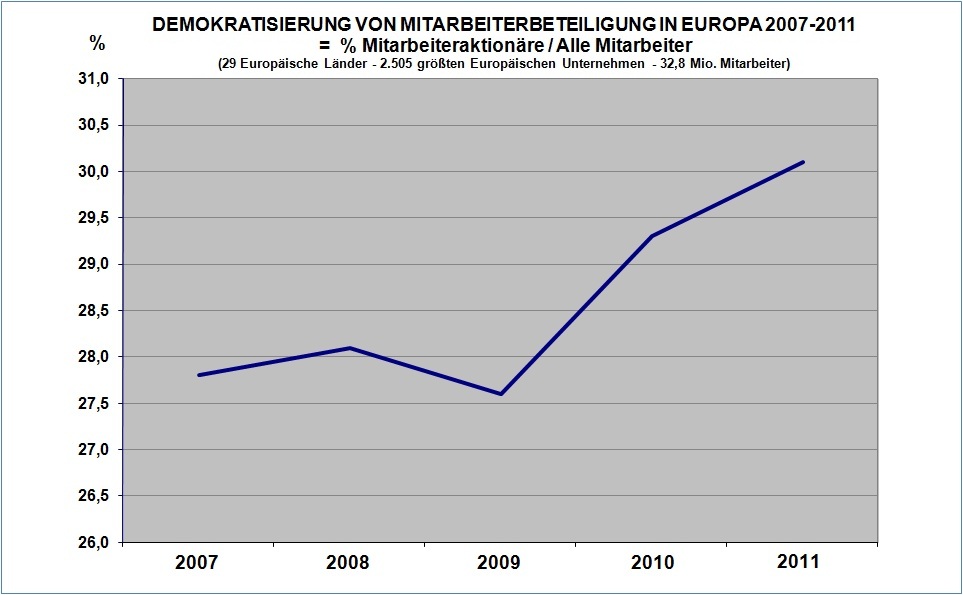
Mai 2012 - Bericht
über die öffentliche Anhörung im EU-Parlament
|
|
|
Der
Bericht über die öffentliche Anhörung ist nun
verfügbar. Die Anhörung wurde von Pervenche
Berès, Vorsitzender des Ausschusses für Beschäftigung
und soziale Angelegenheiten, und Michel Barnier,
Kommissar für Binnenmarkt und Dienstleistungen,
am 22. März durchgeführt.
In diesem Rahmen wurde auch ein Budgetvorschlag
zur Unterstützung der Mitarbeiterbeteiligung
in allen EU-Ländern vorgelegt.
Download des gesamten Berichts
|
Mai 2012 - Untersuchung
über Mitarbeiterbeteiligung in EU-Ländern 2011 nun
verfügbar
Die aktuelle Untersuchung ist nun verfügbar. Sie
basiert auf einer Totalerhebung über Mitarbeiterbeteiligung
in den 2.505 größten EU-Unternehmen, die insgesamt
32,8 Millionen Mitarbeiter beschäftigen. Aus dem
Inhalt: Mehr als 50 Tabellen und Grafiken, Kennzahlen
zur Mitarbeiterbeteiligung aus den verschiedenen
EU-Ländern, Aussagen über Anteile am Unternehmen
in der Hand des Managements und der Restbelegschaft,
eine Auflistung herausragender Beispiele... Weitere
Informationen
April 2012 - EU-Kommissar
Barnier: Mitarbeiterbeteiligung, ein Symbol des
sozialen Zusammenhalts
Mitarbeiterbeteiligung ist ein Symbol des sozialen
Zusammenhalts, das Europa in diesen Tagen benötigt.
Daher muss sie auf allen Ebenen unterstützt werden.
Dies waren die Ergebnisse, die Michel Barnier, Kommissar
für Binnenmarkt und Dienstleistungen und Pervenche
Berès, Vorsitzender des Ausschusses für Beschäftigung
und soziale Angelegenheiten im Anschluss einer öffentlichen
Anhörung am 22. März verkündeten. Ein Budgetentwurf
wurde in diesem Rahmen präsentiert, der die Entwicklung
der Mitarbeiterbeteiligung in allen Ländern der
EU vorsieht … Weitere
Informationen
April 2012 -
Mitarbeiterbeteiligung in den Ländern der EU
2011
Der Kapitalbestand, der von Belegschaftsaktionären
2011 gehalten wurde, stieg auf 232 Milliarden €.
Dies ist nahe dem Höchststand von 2007. Der Anteil
am Gesamtkapital stieg auf 2.83%. Damit wurde der
positive Trend wieder aufgenommen. (siehe Grafik).
Weitere
Informationen
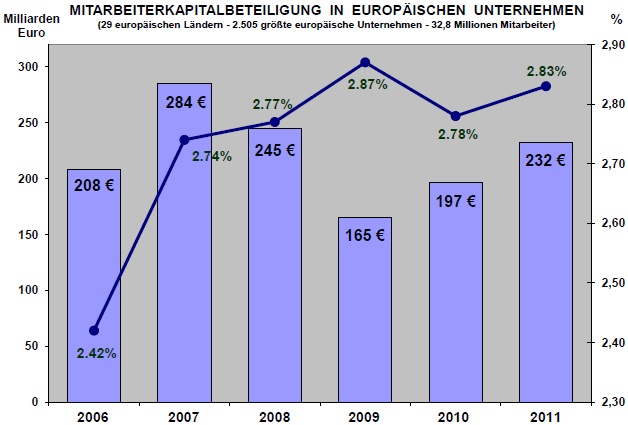
März 2012 - Mitarbeiterbeteiligung in Europa
im Jahr 2011
Die
jüngsten Zahlen zeigen, dass sich die Mitarbeiterbeteiligung
in Europa seit der Finanzkrise kontinuierlich entwickelt.
Dies ist das wichtigste Ergebnis des neuen "Wirtschaftsberichts
über Mitarbeiterbeteiligung in Europa 2011".
Somit kann auch das Ergebnis des Vorjahres wieder
bestätigt werden.
Im Jahr 2011 hielten insgesamt 9,9 Mio. Mitarbeiter
232 Mrd. Euro Beteiligungen in Aktien. Im Vorjahr
waren es noch 9,5 Millionen Mitarbeiter mit einem
Kapitalbestand von 197 Milliarden Euro. Die Zahl
der beteiligten Mitarbeiter erhöhte sich in Spanien,
Schweden, Dänemark und Frankreich, während sie in
den Ländern Italien, Griechenland und Portugal sowie
in Deutschland, Belgien und Irland rückläufig war.
Die Umfrage erbringt umfassende Informationen. Sie
beruht auf Angaben der 2.505 größten europäischen
Unternehmen, die insgesamt 32,8 Millionen Mitarbeiter
beschäftigen. Mehr
Informationen
Öffentliche
Anhörung im Europäischen Parlament am 22. März
Der
Europäische Wirtschafts-und Sozialausschuss hat
vor kurzem eine Aufforderung an die europäischen
Institutionen und Regierungen für eine erneute Initiative
des EU-Haushalts durch eine eigene Haushaltslinie
unterstützt. Ein solches Budget soll dazu beitragen,
dass in jedem europäischen Land ein Europäisches
Zentrum für Mitarbeiterbeteiligung eingerichtet
und finanziert wird. Die Zentren sollen Unternehmen,
Mitarbeitern und der Öffentlichkeit Möglichkeiten
zur Information, Schulung und Beratung eröffnen.
Die öffentliche Anhörung im Parlament am 22. März
gibt Gelegenheit für einen Budgetvorschlag.
Programm
der Anhörung Budgetvorschlag
December 2011 - Mitarbeiterbeteiligung
und Unternehmensführung in der EU
Im Jahr 2011 veröffentlichte die Europäische
Kommission ein Grünbuch und organisierte eine öffentliche
Befragung zum Thema Unternehmensführung in der EU.
Frage 23 in diesem Rahmen betraf die Mitarbeiterbeteiligung:
"Werden Maßnahmen ergriffen, und wenn ja, welche,
um auf EU-Ebene die Mitarbeiterbeteiligung zu fördern?"
Viele Firmen, Unternehmen, Gewerkschaften, Organisationen
der Zivilgesellschaft und öffentliche Behörden antworteten.
Über Mitarbeiterbeteiligung erhielt die Kommission
252 Antworten aus 34 Ländern. Es ist bemerkenswert,
dass die Antworten global durchgehend positiv sind.
In der Tat ist die globale Quote zu 65% positiv.
Allerdings ist es traurig, dass die Frage nicht
eindeutig war: Viele Befragte, die positiv antworten,
unterstützten die Idee, dass die Mitarbeiterbeteiligung
durch die EU gefördert werden sollte. Andere dagegen
befürchteten, dass die EU bestehende Freiheiten
beschränken könnte (z. B. gaben die meisten schwedischen
Unternehmen die gleichen negativen Antworten). Weitere
Informationen
December 2011 - Curriculum-Bibliothek
der Mitarbeiterbeteiligung
CLEO (Curriculum Library on Employee Ownership
/ CLEO) ist das größte akademische Online- Archiv
mit Lehr-und Hintergrundmaterial über die Mitarbeiterbeteiligung.
CLEO bietet über 500 Materialien (z.B. Bücher, Artikel,
Fälle, Lehrmodule, etc.), um auf den Gebieten der
Forschung und Lehre mit einer breiten Palette von
Themen auf dem Gebiet der Mitarbeiterbeteiligung
zu helfen. Hierzu gehören neue Werke, Fallbeispiele,
Lehrpläne und Lehrmodule. Weitere
Informationen
November 2011 - The
EU Corporate Governance Framework
The European Commission organized a public consultation
about "The EU Corporate Governance Framework".
All contributions are now public, including ours.
Question 23 is about employee ownership: "Are
there measures to be taken, and is so, which ones,
to promote at EU level employee share ownership?"
Of course we answered positively, arguing that "Employees'
interest in the long-term sustainability of their
company is going to be increasingly a crucial element
of trust and corporate governance. Not only can
employee owners contribute greatly to increase the
proportion of long-term shareholders, but we will
also see that employee ownership itself will be
more and more perceived as a trust indicator."
We are delighted to see that so many organizations
too gave encouraging answers, including international
unions like ETUC or UNI. All contributions are available
here,
while the EFES' one can be downloaded here
September
2011 - Zwei Organisationen mit besonderem Gewicht
in Großbritannien
Zwei Organisationen hatten in Großbritannien einen
großen Einfluss auf die Popularität der Mitarbeiterbeteiligung.
Die erste wurde 1979 mit Hilfe der John Lewis Partnership,
Scott Bader und anderen Unternehmen gegründet. Sie
war ursprünglich bekannt unter dem Beratungsunternehmen
Job Ownership Ltd ein. Die Idee der Gründung kam
von dem im Juni dieses Jahres verstorbenen Robert
Oakeshott. Robert war ein Gründungsmitglied der
European Federation of Employee Share Ownership
im Jahr 1998. Die Vereinigung änderte später ihren
Namen in Employee Ownership Association
und trat als Vertreter der Unternehmen in Miteigentum
von Mitarbeitern in Großbritannien auf. Die zweite
Organisation, bekannt unter dem Namen ifs ProShare, wurde (ursprünglich
als ProShare) im Jahr 1992 von HM Treasury gegründet,
die ein Konsortium der Londoner Börse und großer
Unternehmen ist. Dies zusammen gewährleistet eine
Stimme für die Unternehmen mit Mitarbeiterbeteiligung
in Großbritannien.
Talvivaara
Die Mitarbeiter der Talvivaara Mining Company
haben am 18. Juni 2011 beschlossen, einen Fonds
einzurichten, um die von Talvivaara geleisteten
Boni zu verwalten. Der Fonds wird einen wesentlichen
Teil seines Vermögens in Talvivaara Aktien investieren.
Er wird von Vertretern, die die Arbeitnehmer wählen,
geführt. Fonds sind eine typischer Weg, um Mitarbeiterbeteiligung
in Finnland durchzuführen.
August
2011 - Europäische Führungskräfte kaufen eigene
Aktien im großen Stil
Mit
dem massiven Abstoß von Aktien an der Börse in der
ersten Augusthälfte hat sich gleichzeitig ein anderes
starkes Phänomen in den letzten Wochen gezeigt:
Europäische Führungskräfte erwerben umfangreiche
Aktienpakete ihrer Unternehmen.
Dies
zeigt sich in Hunderten von Versionen von "Directors'
Dealings". In Italien z.B. bei Roundup von
Eni, Enel, Mediobanca, IntesaSanpaolo, Indesit und
dutzender anderer Unternehmen. Top Entscheidungsträger
kaufen Millionen Aktien. Das gleiche in Deutschland
bei Metro, BASF oder anderen. In Schweden bei Husqvarna...
In Frankreich bei Air Liquide, Alcatel-Lucent...
Ebenso bei Barclays, Shell... Man kann sagen, dass
alle großen Unternehmen betroffen sind.
Kurz
gesagt: Die bestehende Panik wird von langfristigen
Investoren und eben auch den Führungskräften als
Gelegenheit genutzt, günstig zu kaufen.
Was
aber ist mit den Angestellten? Was für die Führungskräfte
gut ist, sollte auch gut für die Mitarbeiter sein.
Ist das der Fall?
Bedauerlicher
Weise mangelt es noch in zu vielen europäischen
Ländern an einfachen Rechtsvorschriften zur Förderung
der Mitarbeiterbeteiligung.
Wer
gehört zu den schlechtesten der Europäischen Klasse
in diesem Bereich? Portugal, Italien, Griechenland,
Spanien. Somit finden sich hier die gleichen Länder,
die in der Krise des Euro stigmatisiert werden.
Diese Länder benötigen strukturelle Veränderungen,
auch im Bereich der Entwicklung von Belegschaftsaktien.
Im hinteren Teil des Klassenzimmers befinden sich
aber auch andere Länder: Belgien, die Niederlande
und die meisten mittel-und osteuropäischen Ländern.
Was
ist die Folge einer oft bestehenden mangelnden Gesetzgebung?
In all diesen Ländern sind nur 10 bis 15% der Mitarbeiter
Aktionäre großer Unternehmen, im Vergleich zu durchschnittlich
30% im gesamten Europa. Bei guten „Schülern“ steigt
sie auf 25, 30 oder 50%. Dies sind Norwegen, Schweiz,
Finnland, Großbritannien, Schweden und Frankreich.
Bemerkenswert ist, dass in den letzten zehn Jahren
Belegschaftsaktien zu einem Bestandteil der "nordischen
Modell" wurden.
Vor
Kurzem haben die europäischen Sozialpartner einen
Appell an die Regierungen ins Leben gerufen. Der
Europäische Wirtschafts-und Sozialausschuss nahm
diese Initiative auf. Der Ausschuss bündelt die
Meinungen von Vertretern der europäischen Wirtschaft,
der Gewerkschaften und der Zivilgesellschaft. Die
Tendenz ist klar und eindeutig.
Gerichtet
an große Unternehmen, sollte jedes europäische Land
in seiner Gesetzgebung ein "vereinfachtes
Modell zur Kapitalbeteiligung der Arbeitnehmer“
einführen.
Stehen
kleine und mittlere Unternehmen im Fokus, dann sollte
jedes europäische Land die mögliche Übertragung
z.B. im Bereich der Nachfolge an die Mitarbeiter
nach dem Vorbild des in den USA seit 1974 eingeführten
"ESOP-Modells" über langfristige Kredit
ohne Eigenbeteiligung der Mitarbeiter fördern.
Die
Stärke und Konsistenz der Kapitalbeteiligung wird
mehr und mehr ein wesentlicher Faktor des verantwortungsvollen
Handelns im europäischen Unternehmen. Er verbessert
die unternehmerische Leistung und gewinnt zunehmen
an Vertrauen.
Die
Stellungnahme des Europäischen Wirtschafts-und Sozialausschusses
ist auf Seite https://www.efesonline.org/EESC/DE.htm
verfügbar.
July
2011 - Neue Forschungsergebnisse über die Auswirkungen
der Mitarbeiterbeteiligung
In den USA sind neue Forschungsergebnisse über die
Auswirkungen der Mitarbeiterbeteiligung vorgelegt
worden. Dies ist die bisher umfangreichste Studie,
die die Verbindungen zwischen den verschiedenen
Formen der Kapitalbeteiligung, von Unternehmenskultur
und Unternehmenserfolg darstellt. Einerseits findet
sich hier eine bedeutende Sammlung
von Essays der Ökonomen Richard Freeman, Joseph
Blasi und Douglas Kruse, die im letzten Jahr vom
National Bureau of Economic Research herausgegeben
wurde. Die Dokumente weisen auf mehrere entscheidende
Punkte hin: etwa die Hälfte aller Arbeitnehmer des
Privatsektors haben bereits eine Art von Teilhabe-Vereinbarung
mit ihrem Arbeitgeber. Dies führt dazu, dass Mitarbeiter
zufriedener werden sowie produktiver und besser
arbeiten, solange sie nicht zu viel Risiko einzugehen,
indem sie zu viel Kapital in das Unternehmen, für
das sie arbeiten, investieren. Aber auch die Unternehmen
profitieren oft und weisen eine verbesserte Leistung
auf verschiedenen Ebenen auf. Darüber hinaus bietet
die Studie eine große Anzahl von Stichproben börsennotierter
Unternehmen aus den Vereinigten Staaten der Jahre
1999 bis 2008 und gibt Hinweise darauf, dass Unternehmen
mit Mitarbeiterbeteiligung größere Beschäftigungsstabilität
in Anbetracht des wirtschaftlichen Abschwungs ausweisen.
Lesen
Sie mehr
April 2011 - Auch
in der Finanzkriste macht die Mitarbeiterbeteiligung
in Europa kontinuierlich Forschritte
Die Zahl der an Arbeit gebenden europäischen
Großunternehmen beteiligten Mitarbeiter stieg im
Jahr 2010 auf fast 10 Millionen (bezogen auf insgesamt
32,6 Mio. Beschäftigte). Die Zahl der Unternehmen,
die ihre Mitarbeiter beteiligen erhöhte sich (91,7%),
ebenso die Rate von Unternehmen mit Aktienprogrammen
für alle Mitarbeiter (53,7%) und der Unternehmen,
die Aktienoptionsprogramme durchführen (64,1%).
Allerdings können signifikante Unterschiede zwischen
den Ländern festgestellt werden: Einen signifikanten
Anstieg in der Anzahl der beteiligten Mitarbeiter
verzeichnen Spanien, Polen, Frankreich und die nordischen
Länder (Dänemark, Schweden, Norwegen, Finnland),
im Gegensatz zu einem deutlichen Rückgang in Belgien,
Irland und den Niederlanden.
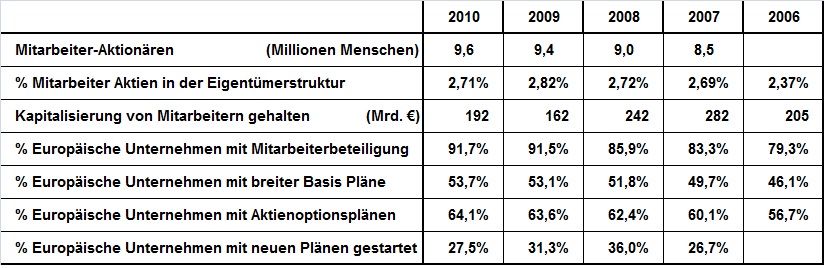
Insgesamt fiel die Marktkapitalisierung von Mitarbeiteranteilen
auf 192 Milliarden Euro im Jahr 2010. Relativ gesehen
gab es zum ersten mal seit vielen Jahren einen leichten
Rückgang (von 2,82% bis 2,71%). Allerdings konnte
der Anteil der Top Executives erhöht werden, während
derjenige der "gewöhnlichen" Arbeitnehmer
schrumpfte.
Die Details werden im Mai im "Economic Survey
of Employee Ownership in European Countries in 2010"
veröffentlicht.
Download
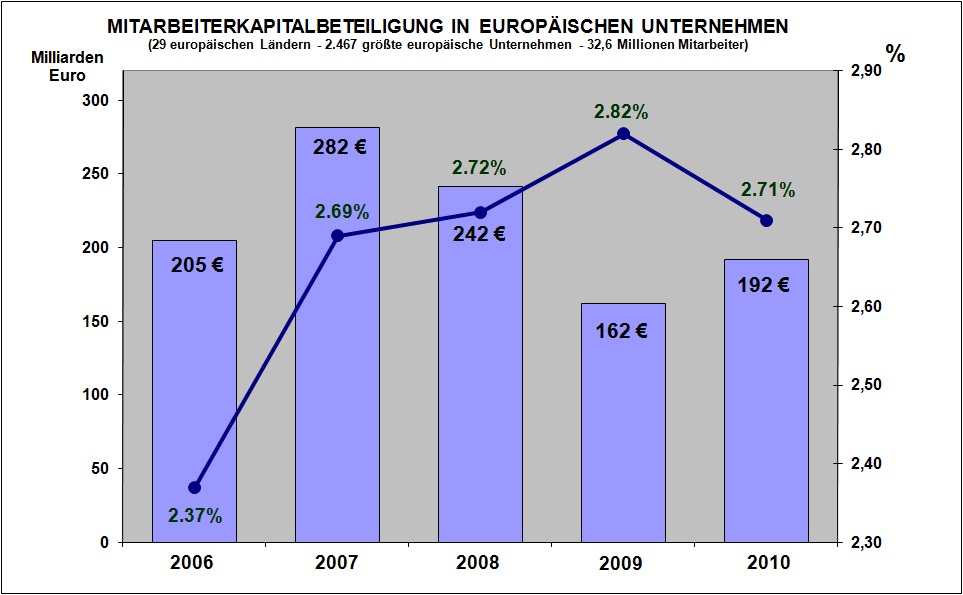
März 2011 - Ein
europäischer Binnenmarkt für Mitarbeiterbeteiligung
EU-Kommissar Michel Barnier organisiert eine
große Konferenz über den neuen "Single Market
Act". Im gemeinsamen Binnenmarkt dreht sich
alles darum, Barrieren und Vereinfachung der bestehenden
Regeln in ganz Europa zu erreichen. Dieser sollte
auch einen europäischen Binnenmarkt für Mitarbeiterbeteiligung
beinhalten. Lesen
Sie mehr
März 2011 - Mitarbeiterbeteiligung
verbessert Unternehmens-Performance
Es gibt eine Menge Beweise innerhalb der heutigen
Sozialwissenschaft dafür, dass die Kombination von
sinnvollen breiten Mitarbeiterbeteiligungsmodellen
mit einer teamorientierten Unternehmenskultur eine
verbesserte Leistung des Unternehmens mit sich bringt.
Viele Forschungsarbeiten in den USA haben dies seit
langem gezeigt. Eine erste ökonometrische Arbeit
liegt jetzt auch über französische Unternehmen vor:
Laut dem Zentrum für strategische Analyse, ist die
soziale Leistungsfähigkeit eines Unternehmens mit
einer Kapitalbeteiligung um 52% höher als die von
Unternehmen, die weder Mitarbeiterbeteiligungen
noch einen Mitarbeitersparplan haben. Lesen
Sie mehr
Februar 2011 - Vorsitz
des Rates der Europäischen Union - Konferenz über
Mitarbeiterbeteiligung
Die Konferenz brachte ihre Unterstützung für den
Europäischen Wirtschafts-und Sozialausschuss zum
Ausdruck und bat um die folgenden Punkte:
● Für große Unternehmen: Jedes europäische
Land in der EU sollte ein optionales, einfaches
und einheitliches Anreiz-Modell mit dem gleichen
steuerlichen Regelungen und Anreizen anbieten.
● Betreffend KMU: Jedes europäische
Land sollte zur Geschäftsübertragung an Arbeitnehmer
ermutigen, wie die USA dies seit 1974 tun - das
ist das Konzept eines "Europäischen ESOP-Modell"
für KMU.
Der Bericht der Konferenz ist ab sofort verfügbar.
Lesen
Sie mehr
Februar 2011 - voestalpine-Mitarbeiterbeteiligung
Das Management und der Betriebsrat des voestalpine-Konzerns
entwickelten ab dem Jahr 2000 gemeinsam ein innovatives
und für viele zu diesem Zeitpunkt überraschendes
Konzept: die Mitarbeiter sollen sich mit eigenem
Aktienbesitz am Unternehmen beteiligen, mittels
Stimmrechtsbündelung sollen sie zu einem stabilen
Kernaktionär werden und als individuelle Aktionäre
auch Anteil am Erfolg der voestalpine haben. Lesen
Sie mehr
Februar 2011 - Zentrum für
Strategische Analyse der Republik Frankreich
Laut dem Zentrum für strategische Analyse Frankreichs
ist die soziale Leistungsfähigkeit eines Unternehmens
mit Kapitalbeteiligung um 52% höher als die von
Unternehmen, die weder eine Mitarbeiterbeteiligungen
noch einen Aktiensparplan haben. Die Wirksamkeit
von Mitarbeiterbeteiligungsmodellen sollte wieder
gestärkt werden, indem die Position der Belegschaftsaktionäre
verbessert wird. Lesen Sie mehr
Januar 2011 - Unternehmensbefragung Mitarbeiterkapitalbeteiligunggesetz
Wir haben Unternehmen nach ihrer Einstellung
zum Mitarbeiterkapitalbeteiligungsgesetz befragt,
das im letzten Jahr seine erste Novelle erfahren
durfte. Die befragten Unternehmen äußerten sich
teils lobend, teilweise aber auch kritisch. Wir
haben die Ergebnisse zusammen gefasst und übersenden
Ihnen diese anliegend. Mehr
Januar 2011 - Kontroverse über
Mitarbeiterbeteiligung in Großbritannien
Das
Unternehmen John Lewis wurde für gewöhnlich als
bestes Beispiel für Mitarbeiterbeteiligung in Großbritannien
aufgeführt. Aber wie arbeitet das Modell wirklich?
In Regierungskreisen wurde das John Lewis-Modell
der Mitarbeiterbeteiligung als Weg zur Modernisierung
des öffentlichen Dienstes gesehen. "Aber John
Lewis ist nicht das, was es vorgibt zu sein",
sagt ein Experte. "Es ist kein von Mitarbeitern
geführtes Unternehmen. Das Interessante sind, wenn
man sich sorgfältig mit Dokumenten beschäftigt,
die Aussagen über die Struktur des Unternehmens
treffen; dann ist es schwierig zu erkennen, wer
die Entscheidung über Benennung oder Abberufung
der Manager der vermögensverwaltenden Gesellschaft
trägt. In diesem Sinne handelt es sich annähernd
um eine eigennützige Oligarchie, in der die Geschäftsführung
des Unternehmens, neben den Aktionären, in einem
Ausschuss tätig ist, der für die Benennung und Abberufung
von Geschäftsführern verantwortlich ist. Mehr
Januar 2011 - Studie zeigt
auf, dass breit angelegte Aktienoptionsmodelle die
Performance verbessern
Vor kurzem wurde eine sehr umfassende und überzeugende
Studie veröffentlich, die Effekte breit angelegter
Aktienoptionsmodelle aufzeigt. Die Untersuchung
von Optionen für Nicht-Führungskräfte in Relation
zur Entwicklung der Performance im Vergleich zur
Branche zeigte, dass sowohl die Existenz eines breit
angelegten Optionsmodells und die hieraus induzierte
Anreizwirkung positiv auf die Unternehmensperformance
wirken. Im Gegensatz dazu entwickelten sich Unternehmen,
die Zusagen an Führungskräfte machten, schlechter.
Mehr
Welcome amendments to the Prospectus
Directive for employee share plans will be in force
by July 2011
We have previously reported on proposed amendments
to the Prospectus Directive - in particular to the
exemption from the requirement to publish a prospectus
in relation to an offering made under an employee
share scheme. The amending Directive has now been
published in the Official Journal of the European
Union and will take effect from 31 December 2010.
It must be implemented by Member States within 18
months. Pinsent
Masons outlines the main changes as they relate
to employee share plans
Oktober 2010 - Neue Forschungsergebnisse
über den Zusammenhang zwischen Mitarbeiterbeteiligung
und Unternehmenseffizienz
Es gibt zahlreiche neue Untersuchungsergebnisse
über Mitarbeiterbeteiligung aus Großbritannien,
den USA und den Niederlanden (siehe Pressemeldungen).
Die Ergebnisse bestätigen, dass Unternehmen in Mitarbeitereigentum
eine höhere wirtschaftliche Stabilität aufweisen
und dazu neigen, schneller neue Arbeitsplätze zu
schaffen. Darüber hinaus sind diese Unternehmen
anderen Firmen wirtschaftlich überlegen. Der Zusammenhang
ist stabil bei kleinen Firmen. Aber auch bei größeren
Unternehmen ist ein höherer Ertrag zu erwarten,
wenn sich die Beteiligung auch in der Firmenkultur
und der Strategie niederschlägt.
Oktober 2010 - Konferenz
über politische Maßnahmen in Europa auf dem Gebiet
der Mitarbeiterbeteiligung
Die Konferenz findet in Brüssel am 26.11. statt.
Teilnehmen werden u.a. der EU-Kommissar Michel Barnier,
Pervenche Berès (Europäisches Parlament), Alexander
Graf von Schwerin (Europäische Wirtschafts- und
Sozialausschuss) und viele andere hohe Vertreter.
Die Konferenz wird von EFES im Rahmen der EU-Präsidentschaft
Belgiens organisiert. Weitere
Informationen
Oktober 2010 - Neue MitarbeiterBeteiligungsService
In der Vergangenheit waren Unternehmen, die
ihre Mitarbeiter am Kapital beteiligen, in der Verwaltung
der Modelle weitgehend auf sich gestellt. In der
Regel mussten eigene IT-Lösungen programmiert werden,
die nicht immer frei von Fehlern waren. Hieraus
resultierten nicht immer geringe Kostenbelastungen
der Beteiligungsunternehmen und möglichenfalls ein
Vertrauensverlust der Mitarbeiter in das Modell.
Dieses Defizit der Vergangenheit griffen Mit-unternehmer.com
Beratungs in Zusammenarbeit mit dem S-Siegerlandfonds
2 (Beteiligungsgesellschaft der Sparkasse Siegen)
durch die Gründung der S-MBS MitarbeiterBeteiligungsService
auf. Die S-MBS bietet einen umfassenden Service
rund um die Verwaltung von Mitarbeiterdarlehen,
Stillen Beteiligungen und Genussrechtsprogrammen.
Somit werden Beteiligungsunternehmen im Bereich
der Administration ihrer Modelle umfangreich entlastet.
Mehr
Juli
2010 - Projekt
„Finanzielle Mitarbeiterbeteiligung" / Link zur
Online-Befragung
Der Lehrstuhl für Wirtschafts- und Organisationspsychologie
der Universität Rostock führt zurzeit ein Projekt
zu Chancen und Risiken von finanziellen Beteiligungsmodellen
durch, das von der Hans-Böckler-Stiftung gefördert
wird. „Im Rahmen des Projektes wird eine freiwillige
Befragung von Mitarbeitern in Unternehmen mit Kapitalbeteiligungsmodellen
durchgeführt. Dabei interessiert uns vor allem,
wie Beschäftigte die Beteiligungsangebote einschätzen
und welche Wirkungen sie durch das Beteiligungssystem
auf Motivation, Arbeitszufriedenheit, Leistung etc.
wahrnehmen. Wir möchten auch untersuchen, wie die
Mitarbeiter die Rolle des Betriebsrats im Zusammenhang
mit dem Beteiligungsmodell sehen. Wir möchten gezielt
Unternehmen und Mitarbeiter ansprechen, die sich
für das Thema und die Befragung interessieren. Wir
würden uns freuen, wenn Unternehmen (Geschäftsführer,
Personalleiter) ihren Mitarbeitern den Link zur
Befragung zur Verfügung stellen könnten, beispielsweise
durch Verbreitung über ihr Intranet. Die Befragung
ist nur mit geringem Aufwand verbunden. Vertraulichkeit
ist selbstverständlich garantiert. Die Befragung
erfolgt anonym, Rückschlüsse auf Unternehmen oder
die teilnehmenden Mitarbeiter sind nicht möglich.
Wichtig ist uns, dass die Forschungsarbeit auch
einen praktischen Nutzen für die Unternehmen hat
und diese weitere wichtige Erkenntnisse über Beteiligungssysteme
aus Mitarbeitersicht erhalten. Daher bieten wir
allen an der Befragung teilnehmenden Unternehmen
an, ihnen die Ergebnisse der Befragung (z.B. spezifiziert
nach Branche / Rechtsform der Unternehmen) zur Verfügung
zu stellen“. Hier geht es direkt zur Befragung:
http://www.wiwi.uni-rostock.de/~wsf1155/limesurvey/index.php?sid=11453&lang=de
Juni
2010 - Ermutigende
Zeiten für die Mitarbeiterbeteiligung in Europa
Die jährlich erscheinende Übersicht über die Ersparnisse
durch Beteiligung der Mitarbeiter in Frankreich
war gerade erschienen mit dem Ergebnis, dass sich
die Werte im Verlauf des Jahres 2009 erholten. Die
jährlich herausgegebenen Zahlen aus GB erschienen
zur gleichen Zeit und wiesen einen Boom an Popularität
aus. Hier gab es einen großen Anstieg. Die von EFES
durchgeführte Analyse für alle europäischen Länder
bestätigt diesen Trend. Dem steht gegenüber, dass
die Sozialpartner einen neuen Standpunkt gegenüber
der finanziellen Teilhabe einnehmen, der durch die
neuen Rahmenbedingungen des European Economic and
Social Committee geprägt ist. Lesen
Sie mehr
Mai
2010 - Europakonferenzen
in Rom und Brüssel
Zwei große Konferenzen werden auf europäischer
Ebene stattfinden: In Rom vom 16.-17. September
und in Brüssel am 26. November 2010. Die Konferenz
in Rom hat die “Ausübung der Rechte von Mitarbeiteraktionären”
zum Thema. Welche Verfahren sind geeignet? Welche
Modelle und welche Hindernisse bestehen in Europa?
Könnte das System effektiver sein? Die Konferenz
in Brüssel ist Bestandteil der belgischen EU-Präsidentschaft
– "10 Jahre politische Entwicklung der Mitarbeiterbeteiligung
in Europa – Vergangenheit, Gegenwart, Zukunft ".
Lesen
Sie mehr
Mai
2010 - Eine Katze ist eine Katze
Eine Katze ist eine Katze. Dies ist die gegenwärtige
Debatte im europäischen Internetforum zu Mitarbeiterbeteiligung.
Die Finanzkrise bringt neues politisches Bewusstsein
über die Mitarbeiterbeteiligung. Sie erhält mehr
und mehr den Ruf, die beste Option für gesunde Unternehmensführung,
langfristige Visionen und Stabilität zu sein, Das
alte Konzept der finanziellen Teilhabe scheint überflüssig
und verwirrend. Dies ist das Motiv für Sie, das
Forum zu besuchen. Lesen
Sie mehr
Mai
2010 - Zähneknirschen in Frankreich
Die Überführung der Direktive über Aktionärsrechte
schafft Probleme in Frankreich. Der europäische
Mitgliedsstaat hat die Direktive in nationales Recht
zu überführen. Sie hat das Ziel, die Ausübung von
Aktionärsrechten zu erleichtern und damit die Kontrolle
von EU-Unternehmen effektiver zu gestalten. Frankreich
scheiterte, das Gesetz rechtzeitig zu implementieren.
Darüber hinaus bringt das Projekt zur Übernahme
des Gesetzes neue Schwierigkeiten und Hindernisse
mit sich. Lesen
Sie mehr
März 2010 - Die Demokratisierung der
Mitarbeiterbeteiligung
Im Durchschnitt verfügt jedes größere europäische
Unternehmen über vier Vorstände. Jeder Vorstand
hält 2009 eine Beteiligung in Höhe von 6.475.000
€ am Unternehmen. Die meisten der großen europäischen
Unternehmen praktizieren auch ein Mitarbeiterbeteiligungsmodell.
Viele dieser Unternehmen wollen durch Beteiligung
der Mitarbeiter Aktionärs- und Mitarbeiterinteressen
in Einklang bringen. Meist beginnt Mitarbeiterbeteiligung
auf Vorstandsebene. Die Zahl der Beteiligten auf
den nachgelagerten Hierarchiestufen beträgt insgesamt
9,3 Millionen, von denen jeder Mitarbeiter 2009
im Durchschnitt € 10.000 Beteiligungswert hält.
Dies zum Vergleich. In der letzten Zeit wurde viel
über die Vergütung von Vorständen diskutiert. Aber
was ist mit der Mitarbeiterbeteiligung? Mehr
März 2010 - Rechte der Mitarbeiteraktionäre
in europäischen Unternehmen
Welche Regelungen sind gut? Welche Modelle und
welche Hindernisse gibt es in Europa? Können Rechte
effektiver ausgestaltet werden? Diesen Fragen widmet
sich ein europäischer Report, der mit Unterstützung
der Europäischen Kommission erstellt und am 16.
und 17. September 2010 in Rom vorgestellt wird.
Er wird dazu beitragen, neue Dialoge im sozialen
Bereich und bezüglich Unternehmensführung zu eröffnen.
Hier geht
es zur Homepage
März 2010 - Europäische Arbeitnehmer profitierten
von gesunkenen Aktienkursen
2009
2008
2007
2006
Beteiligte Mitarbeiter
9.3 Million 9
Million
8.4 Million
Kapitalanteil in Mitarbeiterhand
2.86%
2.79%
2.75%
2.43%
Kapitalvolumen in Mitarbeiterhand in €
166 Milliarde 249 Milliarde
291 Milliarde 213 Milliarde
Anteil europ. Unternehmen mit MAB
91%
83.8%
81.4%
77.4%
Anteil europ. Unternehmen mit MAB auf breiter Basis
53.1%
50.9%
49%
45.2%
Anteil europ. Unternehmen mit neuen Modellen
30.3%
35.3%
26.5%
In
Kurzform: Durch den Rückgang der Aktienkurse konnten
Mitarbeiter ihre Beteiligungsanteile ausweiten.
Dies ist die wesentliche Schlussfolgerung einer
europaweiten Untersuchung über Mitarbeiterbeteiligung
in den europäischen Staaten in 2009, welche bald
veröffentlicht wird. Mehr
März
2010 - Vom Deutschen Aktieninstitut
Interview mit dem geschäftsführenem Vorstandsmitglied
des Deutschen Aktieninstituts Prof. Dr. Rüdiger
von Rosen. Mehr
März
2010 - Fortschritte
Mitarbeiterbeteiligung
ist ein zentraler Punkt im Rahmen der Wahl in Großbritannien
(siehe Pressemeldungen). In Paris brachte der Kommissar
für Binnenmarkt und Dienstleistungen seine positive
Einstellung wie folgt zum Ausdruck: "Ich werde
Vorschläge für eine Verbesserung der Corporate Governance
unterbreiten: Höhere Transparenz für Vergütungen
von Aktionären bis hin zu Vorständen und eine verbesserte
Position für Mitarbeiterbeteiligungen…" Weiter so, Michel !!… Mehr
Februar 2010 - Happy End in Italien
Jedes Land Europas ist nun damit beschäftigt,
die McCreevy Richtlinie bezüglich Aktionärsrechte
in nationales Recht umzusetzen. Zuerst brachte die
Richtlinie die Initiative der Belegschaftsaktionäre
in Gefahr. Glücklicherweise kann jedoch die neue
Gesetzgebung weiter bestehen bleiben.
Februar 2010 - das neue gemeinsame Logo
der Mitarbeiter-Genossenschaften in Frankreich
Die französische Vereinigung der Mitarbeiter-Genossenschaften
tritt nun mit einem neuen gemeinsamen Logo für Mitarbeiter-Genossenschaften
auf. Mehr
Januar 2010- INSM - Dossier Mitarbeiterbeteiligung
Ein Stück vom Kuchen für jedermann? Die Parteien
überbieten sich in ihren Programmen mit Modellen
zur finanziellen Mitarbeiterbeteiligung von Arbeitnehmern
an den Unternehmen. Von einfachen Lösungen einer
direkten Erfolgsbeteiligung bis hin zu komplizierten
Fonds-Modellen einer Kapitalbeteiligung reicht dabei
die Spannbreite der Überlegungen. Der Fachautor
Stefan Fritz erklärt die Möglichkeiten der Mitarbeiterbeteiligung,
nennt die Vorteile und zeigt Beispiele aus der Unternehmenspraxis.
Mehr
2010: ein wichtiges Jahr
2010 wird ein wichtiges Jahr für die Mitarbeiterbeteiligung
in Europa, was die politische Ebene anbelangt. Im
Anschluss an die Konstituierung des Europäischen
Parlaments steht nun die Neubesetzung der Kommission
an. Wir richteten ein Schreiben an die neuen Kommissare
… Mehr
Dezember 2009 - Anwendung der Mitarbeiterbeteiligung
in europäischen Unternehmen
Welche Verfahrenweisen sind geeignet? Welche
Modelle können übergreifend in Europa eingesetzt
werden, welche Hindernisse bestehen? Kann Mitarbeiterbeteiligung
effektiver werden? Diese Fragen beantwortet ein
Bericht, der mit Unterstützung der Europäischen
Kommission erstellt und im Rahmen einer Europakonferenz
in Rom im Juni 2010 vorgestellt wird. Mehr
Dezember 2009 - Australisches Mitarbeiter-Buyout-Znetrum
Das australische Mitarbeiter-Buyout-Zentrum
(Australian Employee Buyout Centre) wird bald seine
Arbeit aufnehmen. Seine Aufgabe ist der Erhalt,
der Schutz und die Erhöhung der Anzahl von Arbeitsplätzen
durch Mitarbeiterbeteiligung. Mehr
Dezember 2009 - Bitte unterstützen Sie
unsere Arbeit
Dank Ihrer Unterstützung sind wir in der Lage,
Ihnen regelmäßig Informationen bereitzustellen.
Wir bitten Sie daher auch weiterhin um Ihre finanzielle
Unterstützung, damit wir unsere Arbeit fortsetzen
können. Mehr
November 2009 - Konferenz unter Vorsitz
von Lech Walesa in Warschau
Mitarbeiterbeteiligung steht in Polen wieder
auf der Agenda. Das Thema stand im Zentrum einer
am 16. November in Warschau unter Beteiligung der
European Federation of Employee Share Ownership
durchgeführten Konferenz. Bilder
November 2009 - Maybe a historic step
Crisises are typical moments for new ideas.
Last summer, we saw German unions changing their
minds about employee ownership, considering it as
a tool against the financial crisis, and demanding
capital stakes in troubled companies. "Arbeitnehmer
sind die besseren Aktionäre" (the best shareholders
are employee shareholders)!
Now it is in the USA: Last month, the United Steelworkers
(USW) and Mondragon Corporacion Cooperativa announced
a framework agreement for collaboration to establish
workers cooperatives.
Unions are usually quite reluctant about employee
ownership. This is normal. It is well the unions'
role to defend workers against risks. Ownership
is a risky matter, and this is also true for employee
ownership.
Highlighting the differences between Employee Stock
Ownership Plans (ESOPs) and union co-ops, USW President
Leo Gerard said, "We have lots of experience
with ESOPs, but have found that it doesn't take
long for the Wall Street types to push workers aside
and take back control. We see Mondragon's cooperative
model with "one worker, one vote" ownership
as a means to re-empower workers and make business
accountable to Main Street instead of Wall Street."
Votes, accountability… This is about governance,
pointing out that ownership is not only a risk but
also the ability to have a say. Probably your risk
is even higher when you don't have any say.
October 2009 - Effervescence in Italy about
McCreevy's Directive on shareholders' rights
Effervescence
in Italy. For now, each European country is in the
process of transposing the "McCreevy's Directive"
on shareholders' rights. In Italy, the transposition
threat to remove the associations of shareholders.
The federation of shareholders' associations CONAPA
convenes its congress on November 10. Detailled information Letter to Minister Sacconi Letter to the Treasury and to the CONSOB
October 2009 - New course in Germany, discussions
in Italy and Poland
Things are changing quickly. Until recently,
Germany was quite reluctant about employee ownership.
It's only just since April that a new legislation
was in force and employee ownership is already again
on the agenda, with German trade unions promoting
employee ownership as a tool against the financial
crisis, and demanding capital stakes in troubled
companies. However, employers' organisations seem
more cautious. Whatever next !? Same situation in
Italy: Minister Sacconi convened social partners
to a roundtable about employee financial participation,
getting positive reactions from the unions' side
but cautiousness from employers. In Poland, Vice-Prime
Minister Pawlak prepares a new privatisation phase
based on employee ownership. Who's next?
September
2009 - New course in Germany, new course for Europe
Until
recently, Germany was quite reluctant about employee
ownership. Things are now changing. The German Ministry of Employment
& Social Affairs launch a dedicated website
and an excellent brochure promoting employee ownership.
German trade unions are discovering employee ownership
as a tool against the financial crisis. Demanding a capital stake in a troubled
company is fast becoming a powerful rallying cry
- "Arbeitnehmer sind die besseren Aktionäre"
(the best shareholders are employees !). Now that
most big European countries feel positive, the whole
political picture could change in a positive way
for employee ownership at European Union level.
July 2009 - Bücher mit den Themen der Vergütung
oder Beteiligung von Mitarbeitern
Aktuelle Bücher die sich mit den Themen der Vergütung
oder Beteiligung von Mitarbeitern auseinandersetzen.
Vielleicht ist ja der ein oder andere Titel
für Sie von Interesse?
July 2009 - Proposal to the new European
Parliament
After 10 years of (no) European policy, time
has come to assess the situation and to re-launch
a dynamic policy for developing employee ownership
across Europe. 150 Members of the European Parliament
and leaders from all political parties expressed
their support to the Employee Ownership Manifesto
for the 2009 European elections. Healthier economy,
sustainability, better governance are the key points
in most supporting messages from all parties. Proposal
to the new Parliament
June 2009 - 150 Members of the European
Parliament
150 Members of the European Parliament and candidates
from all political parties answered our Manifesto
for the European elections. The last ten years saw
a strong development of employee ownership in European
companies. Strangely, this happened while a European
policy for the promotion and the development of
employee ownership was completely lacking. It is
time to reconsider things and to relaunch a real
European policy. This is a role for the new European
Parliament. Detailed information
June 2009 - Employee ownership or not employee
ownership in the auto industry
For the first time Washington is looking to employee
ownership in a unique form at Chrysler -- employees
will have a stake in the company. However, what
is it really? Employee ownership or not employee
ownership? The United Auto Workers union will own
55% of Chrysler. What future for a union-controlled
industry? Which place for employee ownership in
the auto industry bailout? Same question for German
unions and Opel in Europe. Detailed information
Marz 2009 -
Am kommenden Mittwoch tritt das neue Mitarbeiterkapitalbeteiligungsgesetz
in Kraft in Deutschland
Passend dazu legt die EUROPEAN FEDERATION OF EMPLOYEE SHARE OWNERSHIP (EFES) eine europäische Vergleichsstudie
über den Bestand von Kapitalbeteiligungsmodellen
vor. Download
Die Ergebnisse bekräftigen
die Zielrichtung des neuen Gesetzes: Kapitalbeteiligungsmodelle
sind in Deutschland unterrepräsentiert. Nur 1,67%
des Kapitals von Großunternehmen ist in der Hand
der Beschäftigten (EU-Vergleich 2,63%). Die Ursache
hierfür liegt teilweise darin, dass lediglich ¾
der Großunternehmen eine Form der Kapitalbeteiligung
praktizieren. In Irland und Finnland liegt die Quote
dagegen bei 100%. Darüber hinaus praktizieren lediglich
36% der Großunternehmen eine Kapitalbeteiligung
auf „breiter“ Basis (EU-Vergleich 51,9%).
Weitere Negativmerkmale sind, dass die Quote neu aufgelegter Programme (Bezugsbasis
sind die Jahre 2007/2008) mit 29% relativ gering
ist (EU-Vergleich 36,6%) und Beteiligungsmodelle
im Durchschnitt erst im Jahre 1999 eingeführt wurden
(in Irland dagegen bereits 1995).
Charts zu diesen und weiteren Erhebungsmerkmalen
finden Sie anliegend.
Im Ergebnis zeigt sich grundsätzlich, dass die Intention
der Bundesregierung zur Einführung des neuen Mitarbeiterkapitalbeteiligungsgesetz
bestätigt wird: die Beteiligungskultur in Deutschland
muss ausgebaut werden, um hierüber positive Effekte
auf den Wirtschaftsstandort Deutschland zu erreichen.
Für Rückfragen stehen wir oder die Mitarbeiter von
EFES Ihnen gerne zur Verfügung!
Mit herzlichen Grüßen
Stefan
Fritz
Geschäftsführender Gesellschafter,
mit-unternehmer.com Beratungs-GmbH
Eighth European Meeting of Employee Ownership
– Brussels, 18 May
The Eighth European Meeting of Employee Ownership
will be held in Egmont Palace, in the center of
Brussels on May 18, 2009. Registration
and practical information
March 2009 - Your country compared
to others in 2008
Each European country can easily be compared
to others regarding employee ownership in 2008,
thanks to a set of ten graphs, using fully comparable
information. Download
country files
February 2009 - Manifesto for the 2009
European Parliament Elections
The Employee Ownership Manifesto presents 6 practical
proposals to all candidates to the new European
Parliament and to the European Commission. All interested
people are invited to express their support and
answer our questions. Knowing that the European
Union doesn't have the necessary competency in the
matter, most proposals are addressed to the states.
All reactions are published on the dedicated website.
We already received a number of interesting reactions
from MEPs and others: Glenis Willmott, Stephen Hughes,
Brian Simpson, Bernard Lehideux, Robert Goebbels,
Frédéric Lefebvre and others. Detailed
information
February 2009 - Economic Survey of Employee
Ownership in European Countries in 2008
Assets held by employee owners fell to 240.2 billion
Euro in 2008, compared to 283.3 billion in 2007,
a serious decrease of 15.2%; however this was still
quite more than the 206.2 billion in 2006. Employees
share in companies capital stabilized on 2.63% in
2008, compared to 2.64% in 2007 and 2.32% in 2006.
Europe had 9,1 million employee owners in 2008 compared
to 8.5 million in 2007. This is a first information
from the Survey of Employee Ownership 2008. The
survey brings an exhaustive information about 2.533
European groups, gathering 259.000 companies and
32.4 million employees. See below a first graph
showing that employee share plans continue to multiply
among European companies. The full Annual Survey
will be published on May 18, 2009, it is time for
subscription! Subscription
order
February 2009 - Eighth European Meeting
of Employee Ownership
The Eighth European Meeting of Employee Ownership
will be held in Egmont Palace, in the center of
Brussels on May 18, 2009. Detailed
information
February 2009 - New legislation in Germany
Finally they did !! The Bundestag voted the
new legislation for the promotion of employee ownership
on January 22. Detailed
information
January 2009 - Crisis as usual
Is the present crisis so different from others?
No future, the end of the world, the end of the
free enterprise economy, the end of (employee) ownership?
As usual, the biggest crisis we've ever seen. As
usual doomsayers and happiness mongers as well.
As usual most were surprised while many had predicted.
As usual bankruptcies, scandals, even surprising
frauds, some billionaires suicides. Gesticulations
as usual and reflection. As usual some cry for
freedom while others for more regulation. As usual,
many look backwards while some look forwards. Get
here a long-term vision of financial crisises 1929-2008
January 2009 - Restructuring and
rescuing distressed companies
Bailout plans are multiplying, involving employee
ownership. However, all companies cannot be saved.
Last month, Tribune Company went bankruptcy in the
USA. One year ago, it was acquired through an ESOP
(employee stock ownership plan) for 8.4 billion
dollars. Tribune employees won't be losing anything
from the company's employee ownership stock plan.
However a bad story for ESOPs. What about the automotive
crisis? Is employee ownership the future of automotive
companies? Which future for employee ownership?
This is a new big debate in the US. After the ESOP
Foundation launched its "Employee Ownership
Blog" some months ago, it is now turn for the
US National Center for Employee Ownership. Both
blogs give the opportunity to some of the most experienced
experts to discuss the point: Michael Keeling, Corey Rosen, John
Logue and John Hoffmire
January 2009 - Faux pas at the
European Commission
The recent call for proposals concerning employee
ownership was corrupted. A double complaint was
addressed to the European Ombudsman. Detailed
information
December 2008 - Time to buy (bis)
"Workers of the world unite. Don't down your
tools but buy a slice of the action. There couldn't
be a better time to start learning to love equity
- owning shares and investing in business... It
is counter-intuitive but with the stock market at
rock bottom, this is a great moment for the British
worker to swap being a wage slave for owning shares
through employee share schemes or investing on the
stock market. Taking part in cooperatives or partnerships
could be explored too..." (British press).
Just as we already pointed in October, it is remarkable
that most debates about employee ownership are going
in the same way: Time to buy.
Panic at the European Commission
Difficult time to face. Too difficult for the present
European Commission, at least regarding employee
ownership. Ignorance, incompetency, what else? This
has to be changed. We call for a renewed Commission
with real competency in the matter. Letters were
addressed to José Manuel Barroso and to Nicolas
Sarkozy. See detailed
information
November 2008 - A political roadmap for
employee ownership in Europe
A political roadmap for Europe was proposed in the
framework of the French Presidency of the European
Union. What should be done at European level to
promote the development of employee ownership? Should
we set up a European model? The picture of employee
share plans in large European companies is highly
fascinating. It is a general movement, involving
all large companies in all countries. However, when
considering the European states, it is still everyone
for himself. What can be done for Europe? Which
European model? Download
Employee ownership for all
Employee ownership for all: This is the common theme
linking all these articles about employee ownership
in the world's press last month. Most discussions
about the financial crisis, share options and executive
pay. "Share options and participation for all"
seems to be the way in France, Germany and others
as well. Tax benefits for employee-owned companies
are requested in Spain… See
press review
Unternehmer für unsere Gesellschaft - 58. Jahrestagung
der AGP e.V. 27.11.2008, Berlin
Finanzkrise und Kapitalismuskritik kratzen wieder
einmal kräftig am Bild der Sozialen Marktwirtschaft
in Deutschland. Sind Gier und kalter Markt die bestimmenden
Faktoren in unserer Gesellschaft geworden, wie vielfach
behauptet wird? Tausende von Unternehmern beweisen
täglich das Gegenteil. Insbesondere mittelständische
Unternehmer zeigen durch ihr Handeln, dass sie nicht
am kurzzeitigen Tageserfolg interessiert sind, sondern
mit Weitblick ihre Verantwortung für Unternehmen
und Gesellschaft wahrnehmen. Sie reden nicht nur
von Teilhabe, sondern sie praktizieren sie auch.
Sie lassen die Gemeinde und den Fiskus genauso teilhaben
wie Lieferanten, Vereine und vor allem ihre Mitarbeiter.
Durch Wertschätzung, Förderung und Kommunikation
auf Augenhöhe, aber auch durch Erfolgsbeteiligung
und manchmal sogar Kapitalbeteiligung. Dass die
Teilhabe am Erfolg für viele Unternehmer nicht mehr
wegzudenken ist, spricht sich immer mehr herum.
Auch die Politik hat reagiert und bereitet ein neues
Gesetz vor. Einladungskarte
October 2008 - Time to buy
It is remarkable that most articles
about employee ownership in the world's press tell
about similar information: Time to buy. For a former
Prime Minister, Maltese dockyards should be transferred
to a workers' cooperative rather than to foreign
ownership. Austrian Airlines: Unions ask for strategic
employee ownership which could even be a reason
to choose Air France-KLM's offer rather than Lufthansa.
Alitalia: Big unions are more reluctant here than
Austrian colleagues, but Pilots Union asks for significant
employee ownership. Ireland: Eircom's Employee Share
Ownership Trust, which alreay owns 35pc of the telecommunications
firm, is considering a stake in its majority owner
Babcock & Brown Capital. France: Long struggle
to rescue Ledar Papermaker through a new workers'
coop. Successful new employee share plans for AXA,
Société Générale, EDF… Finally, the question is
also coming from the USA: "Maybe it's time
for Chrysler's employees to buy the company."
September 2008 - Employee ownership in tough
times
"Investing employee retirement money in company
stock is not just risky: It's idiotic"
(in American press). Yet in present times, numerous
French companies are launching new global plans
(see press review)… Many American companies are
bought by employees through ESOPs… German government
has now just decided for a new supportive legislation
in 2009… French employees didn't reduce their employee
savings so much, yet President Sarkozy encouraged
them to spend it and to boost consumption… The chairman
of British employee-owned retailer John Lewis Partnership
promises no job cuts in tough times… All idiots?
Finland
– Germany - Spain
Finland brings a good example of employee ownership
development in 2008. Compared to 2007, employees'
share in capital raised from 1.56% to 1.89% (+21%)
on average in the 61 largest Finnish companies.
Due to troubles on financial markets, the market
capitalisation of the 61 companies decreased from
215 to 213 billion Euro (-1%), while employees'
shareholdings grew from 3.3 to 4 billions Euro (+20%).
This is based on our survey of employee ownership
in European companies, being now updated for year
2008. Things are not so good in Germany: Employees'
share in capital appears to be unchanged in 2008
compared to 2007 (1.72%) – It is time for a better
legislation. Things are even worst for Spain: Employees'
share in capital decreased from 1.57% in 2007 to
1.45% in 2008.
June 2008 - New research confirms employee-owned
companies more productive
A new recent research on "Employee Ownership
and Participation Effects on Firm Outcomes"
conducted by Brent Kramer, a doctoral candidate
at the City University of New York, “provides strong
evidence that majority employee-owned businesses
have a significant advantage over comparable traditionally-owned
businesses in sales per employee.” More information
June 2008 - Private Equity and employee ownership
Over the past decade, management and employee share
ownership has become a standard way for the private-equity
industry. It can even be said that management and
employee share ownership has become an established
part of the private-equity toolkit. More
information
May 2008 - First Annual Economic Survey of Employee
Ownership in European Countries
The Survey reveals that employee ownership is progressing at a quicker
rate and with greater depth across Europe than expected.
When considering recent trends, employee ownership
is predicted to double within the next 5-10 years,
from currently 8.2 million employee owners to 16
million and from currently 26.2% of all employees
in large European companies to 40-50%, and finally
capitalisation held by employees is predicted to
rise currently from 2.35% to 4 - 4.5%. This is a
sudden development in most European countries. However,
some countries began earlier while others dawdled
on the way. They can easily be compared to each
others. Each country file can be downloaded and
the full Annual Survey is now available. More
information
Seventh
European Meeting of Employee Ownership -
Brussels, 23 May 2008
The Seventh European Meeting of Employee Ownership
was held in the prestigious Solvay Library, just
near the European Parliament. Most presentations
and documents are now available. More
information
The
European Employee Ownership Top 100 in 2007
The
new rankings or European top companies regarding
employee ownership are now available for year 2007.
More
information
April
2008 - Europe – USA and the hedge funds
USA: Some days ago, we got the "Statistical
Profile of Employee Ownership" from the National
Center for Employee Ownership in the USA. Employee
Stock Ownership Plans (ESOPs) are the most popular
employee ownership scheme in the US – they have
now 9.774 ESOPs, with 11.2 millions employee owners,
holding 630 billions Euro in assets. Looking at
all other employee ownership schemes besides ESOPs,
they have some 25 millions employee owners, holding
more than 1.000 billions Euro in assets.
Europe: Considering the 2.500 largest European
companies, we have now 8.2 millions employee owners
across Europe, holding 260 billions Euro (see
our first "Annual Economic Survey of Employee
Ownership" will be soon made public).
Europe and USA: Employee owners hold now
some 1.260 billions Euro, quite similar to the
global capitalisation of all hedge funds across
the world in 2007 (US$ 1.700 billions = 1.160
billions Euro).
New
legislation in Slovenia
On February 29, the Slovenian Parliament voted
a new legislation for employee share ownership
and financial participation. This is a first major
change in the new Member States of the European
Union. Most of them promoted employee ownership
when they privatised, 15 years ago, but nothing
was done to support employee ownership in the
longer term. Hence this strange situation, employee
share ownership expanding in the first 15 countries
of the European Union, while declining in the
new ones.
80%
of all European largest companies have employee
share plans
80% of all European largest companies had employee
share plans in 2007, coming from 50% in 2000,
20% in 1994, 10% in 1986... A quick and recent
development. All European countries are involved
without any exception. However, some of them began
earlier while others dawdled on the way. We present
the full picture in a set of graphs, so you can
see what it is for each country. See
graph
Brussels,
23 May 2008 – Seventh European Meeting of Employee
Ownership
The Seventh European Meeting of Employee Ownership
will be held in Brussels on 23 May. The meeting
will be the place for the publication of the ranking
of the European Employee Ownership Top 100 for
year 2007 and the full analysis of employee ownership
across Europe in 2007. Would
you like to attend – get detailed information
here
January
2008 - Promising year 2008
A lot of things seem promising for a new political
impulse to employee ownership across Europe. Germany
is going fast to a new legislation, Austrian Government
is working hard, Prime Minister Jean-Claude Juncker
of Luxemburg launched a call some weeks ago, the
new All Party Parliamentary Group on Employee
Ownership is in place in UK, some new Member States
seem opening doors, for instance Slovenia (going
to a new legislation for employee ownership in
2008), and the next French Presidency of the European
Union could be a good opportunity.
December
2007 - 14 European countries in 2007 – and Austria
Compared with a set of 14 European countries, employee
share ownership seems low in Austria. We made a
presentation last month in Vienna on invitation
of Vice-Chancellor Wilhelm Molderer and Minister
of Economics and Labour Martin Bartenstein, comparing
employee share ownership in 14 European countries.
This is based on most recent numbers, those of year
2006/2007 – a photography of European employee ownership
in real time. See
presentation
Mitarbeiterbeteiligung
kittet Koalition !
Arbeitsgemeinschaft Partnerschaft in der Wirtschaft
- AGP
Mitteilungen Newsletter 04-2007
Gesellschaft für innerbetriebliche Zusammenarbeit
GIZ - Newsletter
"Mitarbeiter-Beteiligung" Nr. 3/2007
und Pressespiegel
Dezember 2007
All-Party
Parliamentary Group on Employee Ownership in UK
British Parliament decided to set up a permanent
All-Party Parliamentary Group on Employee Ownership.
This looks a major political step for employee ownership
in UK. The Group organised first a public inquiry,
allowing us to express our requirements regarding
employee ownership not only in UK but for the whole
European Union. See
inquiry
Employee
share ownership in business succession planning
It is known that ESOP – one of the most typical
employee ownership scheme in USA, was particularly
designed for business succession. In Australia,
the Australian Employee Ownership Association
(AEOA) has been vigorously promoting the role
that employee share ownership can play in business
succession planning. To support the development
of employee share ownership in the SME sector, the
AEOA has set up a special "resources"
page to assist business consultants with
advising on ESOP-based business successions
and the expansion of employee equity in private
companies. The articles, case studies and
web-links appearing on this page will be
useful for informing retiring business
owners wanting to transition their business to
their employees as part of a succession plan,
as well as for those wanting to implement shared
ownership of private businesses generally.
See
this new resources web-page
Employee
Ownership Blog
Creation of the Employee Ownership Blog in USA.
The Employee Ownership Blog is dedicated to fostering
an open discussion about employee ownership in
the US while keeping readers informed of new developments
on the legislative front and linking to relevant
articles. Access
to the blog
A
trade unionist in the world of employee ownership
David Wheatcroft is a British trade unionist and
an experienced practitioner in the employee ownership
field. He just published a new paper: "Caring
and sharing – the co-owned route to better care",
a personal account of how an employee owned company
– Sunderland Home Care Associates – was formed
and has flourished. Of course such company is
not listed – the paper tells how a regulated internal
share market is used for employees who wish to
sell or buy shares. Another aim of this report
is to show national and local policy makers why
the co-ownership model has so much to offer public
services. Download
Soon
coming - The European Employee Ownership Top 2007
Last year we set up a full database of employee
ownership in all widest European groups, including
detailed description and history of all share-based
and option schemes in each group. Our database is
presently being updated for year 2007. So we'll
be able to see how employee ownership evolved from
2006 to 2007 in all 27 countries of the European
Union. This year the database will cover all 2.500
widest European groups, on which 1.200 are already
updated. In these 1.200 companies, we can mention
that capitalisations held by employees rose by 29,8%
in 2007. Of these capitalisations, executives held
19% in average and common employees 81% (but executives
held 67% in Spain, 29% in Germany, 17% in Finland).
Last year, many companies designed and launched
new employee share and options plans. 44% did so
in Denmark, compared to 39% in Ireland, 35% in Finland,
and only 22% in Germany, 15% in Spain, 8% in Portugal…
The database will be soon completely updated and
we will publish our rankings for year 2007 and our
detailed analysis through a publication and a conference
in March 2008. Would your company be a sponsor for
this publication and event? Sponsoring
September
2007 - Aus brandaktuellem Anlass !
SPD und CDU/CSU haben jüngst ihre Vorschläge zur
Förderung der Mitarbeiter-Beteiligung in Deutschland
vorgelegt. AGP und GIZ haben die Kernpunkte herausgearbeitet:
AGP
Mitteilungen - Newsletter 03/07
Employee
share ownership - what's in it for you?
Is buying shares in your company a wise investment
and a good way to keep your eye on management? In
this interview for Rhodia Alliance OnLine (Rhodia's
association of employee shareholders), we talk about
the advantages of owning a stake in your company,
whether criticism of your management is a bad career
move, and we break down some of the mysteries
and financial ins and outs of share ownership. More
details
New
European Report
The European Foundation in Dublin just published
a new report about financial participation of employees
in the European Union. Conclusion: "There has
been a clear trend of rising levels of financial
participation over the five years between 2000 and
2005. In all countries there has been an increase,
in some cases notable, in the percentage of employees
participating… This indicates that the percentage
of workers involved in financial participation schemes
in Europe, although still low, is on the increase,
suggesting that the phenomenon will probably become
more significant in the near future." More details
Political
debate about employee share ownership in Germany
Two
different proposals are discussed in Germany. The
Christian Democratic Party has published a paper
with a list of proposals to promote financial participation
on the company level. The proposal of the Social
Democratic Party has a different objective: They
propose to establish a so called “Germany Fund”.
A common proposal of the two governmental parties
– that means a compromises – could be expected in
autumn. More
details
Request
to the new Member States of the European Union
EFES requests all new Member States to adopt a legislation
allowing employee share plans based on international
standards. Most countries answered positively. More information
Juli
2007 - Aus brandaktuellem Anlass !
SPD und CDU/CSU haben jüngst ihre Vorschläge zur
Förderung der Mitarbeiter-Beteiligung in Deutschland
vorgelegt. Wir haben die Kernpunkte
(pdf) herausgearbeitet und freuen uns über Ihre
Bewertung unter Ihre
Meinung !
2007
surveys in France and United Kingdom
France publishes its Sixth Annual Survey on
employee savings plans. In 2007, 84% of Executives
and 82% of employees consider employee share ownership
as a good thing for companies (it was 79% and
80% in 2002). Download
French Survey UK released the results of
its annual SIP (Share Incentive Plan) and SAYE
(Save As You Earn) survey – the most common plans,
a succesful story. More information
about UK
And
now Germany
From its start one year ago, Angela Merkel's
Government plans to make up the time Germany had
lost regarding employee share ownership. Both political
parties of the big coalition had their own working
groups. Now both proposals are on the table. Socialist
SPD thinks to indirect employee ownership, free
of risk, through a big "German Fund",
managing employees savings and investing in German
companies. Christian Democrat CDU/CSU is more inclined
to favour direct employee share ownership. See more
information in press review.
Request
to the new Member States of the European Union
EFES requests all new Member States to adopt a legislation
allowing employee share plans based on international
standards (annual employee share purchase plans,
20% discount price free of tax and social security,
up to 5.000 Euro or 10% annual wage, 3 years blockage).
We already got answers from Slovenia, Estonia, Latvia
and the Czech Republic. More information
Juni
2007 - Gesellschaft für innerbetriebliche Zusammenarbeit
Newsletter
"Mitarbeiter-Beteiligung" 02/2007
Request
to the new Member States of the European Union
EFES requests all new Member States to adopt a legislation
allowing common employee share plans. Most new Member
States have a bad opinion about employee share ownership
and they don't have any adapted legislation. This
makes things difficult, not only in these countries
but in the European Union as a whole, because most
new Member States being not interested or even hostile,
political interest for employee share ownership
fell dramatically also in Brussels !! More
information
Russian
Employee Ownership Association
An international conference on employee ownership
in Russia was held on June 7-8, 2007 in Rostov-on-Don,
Capital of South Russia (city of Essenin, Tchekhov,
Soljenitsin, etc), being hosted by the Rostov State
Economic University. The Conference decided to set
up a new Russian Association for Employee Ownership,
and EFES will help.
More
information
Mai
2007 - Die Mitarbeiter als Aktionäre der Zukunft
in Österreich
Die österreichische Bundesregierung will die Mitarbeiterbeteiligung
in Österreich im Laufe dieser Legislaturperiode
verdoppeln, sagt Finanzminister Wilhelm Molterer.
Explosive
development about employee ownership in the world's
press (May 2007)
7.560
articles about employee ownership in the world's
press in April. When we launched our press review
for the first time in October 2005, we got 597
articles. In March 2006, it was 1.090. In March
2007, last month, it was 2.090… Now with 7.560
articles, we have to change our methods. See press
review below.
Fever
in USA, employee ownership schemes are especially
topical
For the second time in a few weeks, employee
stock ownership plans (ESOPs) figured prominently
in high-profile deals. $8.2 billion deal for Chicago
Tribune (21.000 workers – they will have 60% in
hands). $5 millions deal for Chrysler with a possible
bid by the United Auto Workers reviewing a proposal
for employees and the union to buy 70 percent
of Chrysler via an employee stock ownership plan…
See more information in the press review below.
Netherlands
Participation Institute
New
website for the Netherlands Participation Institute
which promotes employee ownership in the Netherlands
on http://www.snpi.nl/
Bangladesh:
New worker-owned garment factory
The Institute of Integrated Rural Development
promotes worker ownership in the textile industry
and in roadside tree plantations More
information
April 2007 -
Zukunft Mittelstand - Erfolgsfaktor gesellschaftliches
Engagement
Berlin
17.04.07 - Bertelsmann Repräsentanz, Unter
den Linden 1 Weitere
Informationen
Employee ownership
in largest European companies (April 2007)
87%
of all largest European groups have employee share
ownership and 82,6% have plans to develop it more,
while 49% have broad based plans (all employees
plans). Employee share ownership is significant
in 40,3% (employee owners holding more than 1%).
On the other hand, 69,6% use stock options. Our
database of employee ownership in European companies
is now complete. It gathers the numbers and the
detailed history of employee share plans in the
2.000 European widest groups, in 27 European countries.
This is 29 millions employees (corresponding to
100-120 millions people, some 25% of the whole European
population, if you consider that a family sizes
3-4 persons). The database can be used for benchmarking
about countries, branches or a defined list of companies
as well. You
can ask us here for conditions
The
European Employee Ownership TOP 2007
Would your company be partner of the European
Employee Ownership TOP 2007? The database will be
updated. It will also be expanded to Romania, Bulgaria
and probably Turkey. The ranking of the TOP employee
ownership companies will be published through a
celebration conference at the end of the year, a
dedicated website and a publication. Call
us for partnership
März 2007 - The European Council of
Finance Ministers calls for more employee ownership
(March 2007)
European companies must give workers
a bigger share of their soaring profit or risk igniting
a “crisis in legitimacy” in the continent’s economic
model, Germany’s finance minister warned on last
Ecofin Council of Ministers. The idea of using initiatives,
such as employee share ownership schemes, to increase
the link between profit and worker benefits was
discussed, the debate having even some “Thatcherite
overtones” – a reference to the former British prime
minister’s promotion of employee share ownership
schemes. Here
more information
Investivlohn- / Mitarbeiterkapitalbeteiligungsmodelle
in Deutschland
Investivlohn- / Mitarbeiterkapitalbeteiligungsmodelle
in Deutschland Insgesamt 3.750 Unternehmen praktizieren
in Deutschland Modelle zur Kapitalbeteiligung ihrer
Mitarbeiter.
Weitere Informationen
The CoCo Report: Work, Happiness and Employee
Ownership
Companies where workers have a say
in decisions and a stake in ownership are more
productive because staff are happier, according
to a new report in the UK. The study found absence
levels were lower and workers were more committed
in "co-owned" companies. The British
Government was urged to introduce tax incentives
to encourage the launch of more co-owned companies.
Download
the full report
First Investment Fund based on the employee
share ownership index
In December, Euronext together with the French Federation
of Employee Shareholders' Associations launched
its Indice de l'Actionnariat Salarié (Employee
Share Ownership Index). They launch now a first
investment fund based on the index. Here
more information
Small
and Medium-Sized Enterprises (February 2007)
The
UK's Accounting Standard Board announced a major
relaxation of the requirements for Share Based
Payments for smaller companies. Here
more information
Netherlands Participation Institute
Pascale Nieuwland and Marjon Westerhof are the
new Directors of the NPI. Here more information
The
European Employee Ownership Top 100 in 2006 (January
2007)
The rankings of European biggest companies
considering employee ownership are now available.
The Top 10 companies for capitalisation held by
employees are: UBS, Total,
Novartis, Mondragon, Deutsche Bank, Société Générale,
BNP Paribas, Crédit Agricole, AXA, Bouygues. Employees
hold 6,16% of those companies, which means 43.357
Euro by employee in average.
Click
here for The European Employee Ownership Top 100
rankings in 2006
Sixth
European Meeting of Employee Ownership
The Sixth European Meeting of Employee Ownership
was held in Brussels on December 14-16. Click
here for all presentations of the conference
Insolvency,
Employee Rights & Employee Buyouts - A Strategy
for Restructuring
A
new report by Anthony Jensen, Ithaca Consultancy
and The Common Cause Foundation
Three
new original research works about employee ownership
and participation in Europe
•
Patrick
Guiol & Jorge Munoz made the demonstration
that participative management contributes to better
public health (French report)
• Eric
Kaarsemaker gave a theoretical and empirical treatise
about employee ownership and human resource management
and the Dutch context
• Marco
Caramelli made an attitudinal cross-cultural approach
about the effects of employee ownership in large
multinational companies
New
British guidelines on employee share plans in
2007
The Association of British Insurers updated its
guidelines on executive remuneration and employee
share plans. Click
here for detailed information
Job
Ownership Ltd (UK) changed
Job Ownership Ltd decided to change its strategy
and name. It is now the Employee Ownership Association
on http://www.employeeownership.co.uk/
With
the participation of one of the candidates to
the French Presidency (November 2006)
Publication of the first ranking of the TOP
100 European employee ownership companies, during
the Sixth European Meeting of Employee Ownership
- Brussels 14-15 December 2006.
Click below for:
Programme and practical information
Whole
information
These
companies will probably belong to the first TOP
100 ranking
PEPPER
III Report
The European Commission opened doors for a
European policy regarding employee ownership,
with PEPPER I Report (1991) and PEPPER II (1996).
Now the Inter-University Centre Split/Berlin publishes
the PEPPER III Report, describing employee financial
participation in the new Member and Candidate
Countries of the European Union. Download
here
A
European Commission's disaster
This is how an expert describes his participation
to a European Commission's group of experts on
financial participation. Download
here
Come
in Brussels for the celebration of the TOP 100
European employee ownership companies (October
2006)
On the menu of the Sixth European Meeting
of Employee Ownership (Brussels 14-15 December
2006): Announcement of the TOP 100 for year 2006
and celebration of companies at the Brussels Stock
Exchange Palace. For the first time, a complete
survey of employee ownership will be available,
for all countries of the EU. A number of companies
case studies from various countries. Unions' testimonies.
Obstacles to employee share plans. Reactions of
a panel of high political representatives.
Many services providers in the field will be present.
Click below for:
Whole
information
Registration
form
Programme
and practical information
Reimbursement
of your travel and accommodation expenses
Your
company in the European TOP 100 ?
Which companies will be at the top
of the TOP 100 for year 2006? Companies of the
TOP 100 will be celebrated during a gala dinner
in the Brussels Stock Exchange Palace on December
14 evening.
These
companies will probably belong to the TOP 100
New
reports about employee ownership in European countries
New reports were recently published about
employee ownership in
Austria, in
France, and in
Germany
Sixth
European Meeting of Employee Ownership (September
2006)
The Sixth European Meeting of Employee Ownership
will be held in Brussels on December 14-15-16,
2006. The meeting will announce the ranking of
all Europe's widest employee ownership companies:
The European Employee Ownership Top 100 - 2006.
For the first time, a complete survey of employee
ownership will be available, for all countries
of the EU. Click
here for detailed information and draft programme
Your
travel and accommodation expenses could be reimbursed
!!
Thanks to our sponsors, EFES will be able to cover
your travel and accommodation expenses for the
Sixth European Meeting of Employee Ownership.
Click
here for detailed information.
A
new platform for employee ownership in Austria
A new platform published a strong study on employee
ownership and participation schemes in Austria.
See on Plattform
Mitarbeiterbeteiligung Österreich
Top European
companies set up a lobby group
Design and management of multinational share plans
are very difficult and expensive. The management
of multinational schemes is confronted with a
huge range of constraints and changeable national
rules for which managers and directors of schemes
are poorly equipped and frequent use of expensive
legal advice is necessary. Many improvements or
exemptions could be achieved, hence lower complexity
and costs. The first meeting of the lobby group
allowed participants to define priorities. Click
here for detailed information.
The European Employee Ownership Top 100 2006
It will be designed with respect to two rankings
of Europe's largest companies, considering employee
ownership.
EUROPA EMP 100: Companies are ranked by
number of employees. Ranking Europe's largest
companies that are 50% or more employee-owned
through an ESOP, Share Purchase Plan, or other
Broad-Based Ownership Plan, or as a workers' co-operative.
EUROPA CAP 100: Companies are ranked by
equity held by employees, in millions Euro. Ranking
Europe's largest companies that are partly or
totally employee-owned through an ESOP, Share
Purchase Plan, or other Broad-Based Ownership
Plan, or as a workers' co-operative.
International
Survey on Employee Share Ownership and Work Values
(April 2006)
The CREGO - Research Center in Management of the
University of Montpellier II, is carrying out
an international survey on employee share ownership
and work values. The goal of this research is
to give some insight to several practical issues
like the one of the effects of employee ownership
on employee motivation and organisational commitment
or the impact of cultural values on employees’
perceptions and behaviours towards employee ownership.
The survey is aimed at all employees (both shareholders
and not shareholders) of traded companies which
offer some employee share ownership plan. Filling
the questionnaire, takes about 15 minutes and
the information gathered is strictly anonymous
and confidential. You
are invited to take part, clicking here.
30.06.2005:
The Mondragon Co-operative Research Conference
2005 was held in Mondragon on 28 June.
We noticed 3 remarkable papers:
- Entry,
exit and the business cycle. Are coops different?
by Virginie Perotin, Leeds University Business
School.
- The
business of co-operative education: Master of
Management - Co-operatives and credit unions,
by John Chamard, Stephen Dutcher and Tom Webb,
Saint Mary's University. Tom Webb took part in
the first stages of our EOLE Programme.
- Challenges
and opportunities for Mondragon co-operatives
in the face of globalization, by Isabel Uribe
and Ignazio Iribar, Mondragon University.
05.03.2005:
USA - The ESOP Association Urges President's Advisory
Panel on Federal Tax Reform to Promote the Ownership
Society Through Employee Ownership
WASHINGTON, March 4 /PRNewswire/ -- Today, The
ESOP Association submitted comments and recommendations
to the President's Advisory Panel on Federal Tax
Reform that encourages the Advisory Panel to be
consistent with President Bush's goal to encourage
and promote an "Ownership Society" in the United
States. See on http://www.esopassociation.org
18.02.2005:
Committee for Effective Employee Ownership: practical
guidelines for employee ownership
In 2004, the National Center for Employee Ownership
(NCEO); the Beyster Institute at the Rady School,
UC San Diego; and the Global Equity Organization
(GEO) created the Committee for Effective Employee
Ownership (CEEO). The CEEO's primary goal is to
devise principles intended to help companies and
investors make appropriate, economically sound
choices about the distribution of equity among
employees. In addition, the CEEO seeks to provide
general guidelines on how companies can best use
broad employee equity ownership plans to create
more productive and rewarding workplaces. The
CEEO bases each of the principles in this document
on objective research by scholars, advisors, and
the National Center for Employee Ownership; the
principles are not simply our opinion or philosophy.
The CEEO does not propose these principles as
the basis for laws or regulations. Instead, it
believes that market-proven benefits of responsible
employee ownership can prove themselves without
rhetoric. In order to make this happen, business
and investment leaders need a deeper understanding
of how these various approaches to employee ownership
operate. The findings of the CEEO are available
at www.nceo.org/ceeo
You
can also get the full document available here
in pdf (49 pages).
17.09.2004:
Report of the High Level Group of Experts on cross-border
obstacles to financial participation of employees
for companies having a transnational dimension
The
need to reduce, through concrete measures, the
obstacles to the introduction of financial participation
throughout the Union for enterprises established
in several countries has been stressed by the
Communication of the European Commission proposing
a general framework for promoting financial participation
in Europe in July 2002. The report of the high
level group of independent experts set up against
this background deals with the various forms of
financial participation used in the European Union,
the obstacles to cross-boarder spread of financial
participation and the proposals that would help
to reduce the obstacles and promote financial
participation at Union level.
Available in pdf format in : EN
/ FR
/ DE
JUNE
2004: FOR THE NEXT RENEWAL OF THE EUROPEAN PARLIAMENT
AND THE EUROPEAN COMMISSION
In 1998, when the European Federation of Employee
Share Ownership was< set up, it was said that
some 10% of American employees held shares of
their enterprise; they are now 23,3%. Some weeks
ago, the Australian Government launched a programme
to double employee share ownership in Australia,
from 5,5% of employees today to 11% in 2009.
Today, performances studies have multiplied and
we can now consider with no doubt that when it
is practiced in good conditions, employee ownership
brings to enterprises a gain of performances estimated
at 2% of additional annual growth on average.
On the European Union scale, this would represent
millions of additional jobs. In this way the development
of employee ownership could be an important factor
for the Lisbon Strategy.
Today, we are far from a European awareness and
a strong mobilisation. Scepticism or indifference
still dominate in many European countries. The
contrast is obvious in comparison with the United
States, Australia and other parts of the world.
A political willingness of the European Union
has still to crystallize.
We recommend that Europe gives itself a voluntary
objective of industrial policy : reach 10 % of
employee ownership in the whole European Union
in 2010. In this way, a whole combination of means
have to be implemented at the Union level, in
the Member States and in the regions.
We particularly insist on the followings :
1. The implementation of a community organ (agency
? institute ? committee ?) for the promotion and
the development of employee ownership. In this
way, we applaud the proposal of the European Commission
Experts Group, chaired by Jean-Baptiste de Foucault,
to install a European Committee for Financial
Participation of Workers.
2. An adapted legislation must be applied in each
country of the European Union. In this way too,
we applaud the proposals of the Experts Group
of the Commission chaired by Jean-Baptiste de
Foucault.
3. Enterprise transfer and salvation of failing
enterprises are situations where employee ownership
has proved its worth. Employee buyouts schemes
should get particular support. These formulas
are not only to be supported for themselves but
also because they are favourable to the diffusion
and promotion of employee ownership, in all enterprises
of the Union's countries.
20.04.2004:
The Australian
Government recently announced a scheme to double
employee share ownership (ESO) in Australian workplaces
from 5.5 per cent now to 11% in 2009. They set
up a very good website on: http://www.workplace.gov.au/Workplace/WPDisplay/0,1280,a0%253D0%2526a1%253D517%2526a2%253D634,00.html
02.02.2004:
Owners At Work draws the attention on the prestigious
award that the Ford Foundation presented to John
Logue, Director of the Ohio Employee Ownership
Center. See on http://dept.kent.edu/oeoc/PublicationsResearch/OwnersAtWork.htm
...
and these are now growing together our OEOC and
EFES trees !!!.
.
19.03.2004:
Letter
to all European Governments. On the occasion
of the forthcoming renewal of the European Commission,
EFES calls for a transfer of the competence related
to employee ownership and employee financial participation
along with the management of the sub-programme
on employee financial participation of budget-line
B3-4003 to DG Enterprise.
04.03.2004:
A main conference on employee financial participation
in Europe, Paris, April 28-29, 2004. Organised
by the French organisation "Europe et Société".
Most speakers beeing EFES members: Erik Poutsma,
Jean-Claude Mothié, etc. Here
the draft programme in pdf. Registration on
line on www.europeetsociete.com
Contact: Jacques Moreau, Executive Manager, europeetsociete@wanadoo.fr
26.02.2004:
The European Commission has released its new Action
Plan setting out Europe’s agenda for entrepreneurship
in the years to come, published
here in the 11 Community languages.
13.02.2004:
EFES Secretariat in Brussels got the visit of
two Polish students in the framework of a Leonardo
Programme led by the University of Cracow (Prof
essor Ryszard Stocki). They spent 31/2 months
in Brussels, helping EFES to build our Polish
website and to translate all documents of the
European Union concerning employee ownership and
financial participation of workers. A good experience
for EFES. Below Maja Bobruk and Ola Michalik with
some members of the teams of EFES, EFES Belgium
and L'Associatif Financier. Just click for a better
view:
02.02.2004:
Mondragon Corporación Cooperativa renewed
completely its website. It is now full of information
in English, French, German, Spanish and Basque.
See on http://www.mondragon.mcc.es/
28.01.2004:
Marco Caramelli (University of Montpellier, France)
is developing a
cross-cultural study of the attitudinal effects
of employee stock ownership plans
He looks for support.
22.01.2004:
Conference on employee financial participation
in Europe, Paris, April 28-29, 2004. Organised
by the French organisation "Europe et Société".
They are still looking for speakers from EO companies
in UK, Spain and other countries. Some EFES members
are already registered as speakers: Erik Poutsma,
Jean-Claude Mothié, Marc Mathieu. Here
the draft programme in pdf. Registration on
line on www.europeetsociete.com
Contact: Jacques Moreau, Executive Manager, europeetsociete@wanadoo.fr
07.01.2004:
Employee ownership continues to be widely growing
in the US. 23.3% of all employees working for
for-profit companies report owning stock in their
companies (this is 23 million employees); the
number is 12,0% in companies employing less than
50 employees; it is 25,1% in companies between
50 and 499 employees; it is 38,7% in companies
employing more than 500 people. How much do employees
own actually: the mean is 84.409 $, which is 99,6%
of their average annual pay. You find the complete
results of this survey on page http://www.nceo.org/library/widespread.html
5.9.2003:
There are still many legal and political obstacles
for employee share ownership in Europe. You
find here the August issue of the
European Financial Services Regulation. EFSR
is a monthly magazine specialised in financial
and legal cross European matters. In this month’s
issue, EFES made a contribution attempting to
address the various legal and political obstacles
that promotion of employee financial participation
encounters in Europe. The article calls for a
more active involvement of the European Commission.
It points the obstacle due to the dual management
of the DG Enterprise on one hand and the DG Employment
& Social Affairs on the other. This could be changed
with the installation of the new Commission in
2004.
BELGIUM
WILL ENCOURAGE THE USE OF THE SPANISH MODEL OF
THE"SOCIEDADES LABORALES"
Some
ten years ago, Spain set up a new original corporate
model - the Sociedades Laborales - employee
owned companies. This model allowed Spain to start
with 17.000 new companies, creating 105.000 new
jobs within the last ten years, in all regions,
all sectors in industry and services. A major
success ! Most are small and medium-sized enterprises.
Many of them are resulting from transfers of businesses
or rescue plans. More recently, a lot of them
are also new starters.
This model is based on the best practices in employee
ownership.
A
new Belgian government was installed in July 2003.
Following an information given by EFES (we organized
an international conference at the Belgian Parliament),
Prime Minister Guy Verhofstadt confirms that Belgium
will encourage the use of the Spanish model.
Prime
Minister's letter is available in 4 languages
(NL/EN/FR/ES) (pdf).
THE
EUROPEAN PARLIAMENT AND THE EUROPEAN ECONOMIC
AND SOCIAL COMMITTEE ARE NOW DISCUSSING OF EMPLOYEE
SHARE OWNERSHIP AND PARTICIPATION (January 1,
2003)
Let's
first remember: In 1999 we launched a call to
put employee share ownership on the European political
agenda. Belgian Prime Minister Guy Verhofstadt
promised to put the point on the table during
the Lisbon Summit, and he did.
The promotion of employee financial participation
was then on the European Social Agenda and the
European Commission had to make a communication
and an action plan; the Commission published its
communication on July 5, 2002 (see here below).
The European Parliament and the European Economic
and Social Committee are now discussing of the
Communication and preparing their own opinion.
EUROPEAN
ECONOMIC AND SOCIAL COMMITTEE
The
EESC set up a dedicated working group and the
draft opinion of the EESC is well advanced, Mario
Sepi (Italy, CISL) doing a very good work as the
EESC Rapporteur. The
preliminary draft opinion is here available in
English,
French,
Spanish,
and Italian
(PDF). The EESC will decide on its opinion in
its Plenary Session of February 26-27, 2003, after
that the Section for Employment and Social Affairs
will have discussed of the draft opinion on February
5. This is of high interest, the EESC beeing the
voice of the European social partners.
EUROPEAN
PARLIAMENT
Winfried
Menrad (Germany) is the Rapporteur. He already
produced some good working documents. You can
see the most recent working document here in English
and in French
(PDF), or in other languages (Spanish, Danish,
German, Greek, Italian, Nederlands, Portuguese,
Finish, Swedish), clicking on page http://www.europarl.eu.int/meetdocs/committees/empl/20021209/empl20021209.htm
The Parliament will hold various working sessions
on the point, going to a conclusion in May or
June 2003.
New
Employee Ownership Legislation in UK (November
2002)
A new Employee Ownership Legislation was passed in UK
Parliament on November 7th and will take place
from 6th of April 2003. It will provide tax concessions
for companies who transfer shares to an employee
trust. Small and medium sized companies seeking
to become partly or full employee owned will benefit
from the new legislation. It also ensures that
employee representatives can be appointed as trustees
of trusts set up to manage employee share schemes.
Full details are on the Inland Revenue web site
www.inlandrevenue.gov.uk/shareschemes
News
from Washington (October 2002)
We were in Washington from October 6 to 11 for
the First International Conference of the Capital
Ownership Group, with some 100 participants. The COG is the global forum of Employee Share Ownership, whose EFES is
the main European component. The objective is to promote employee share ownership as a main actor for
"Fix globalization - Make it more inclusive,
democratic, accountable and sustainable".Were present for EFES: Adrian Celaya, David Erdal, Henk Kool, Marc
Mathieu, Erik Poutsma, Vic Thorpe, Pierre Vanrijkel,
David Wheatcroft.All main US employee share ownership organizations were present, as well
as people from Australia, South Africa, China,
Colombia, Chili, etc.The participation of Mark Levin, of the Cooperative branch of the ILO (International
Labour Organization, an UNO Agency) was relevant,
as well as those of various people representing
American trade unions and their pension funds.
Clearly, there is a place for a global EO organization, acting at world
level, and pressing the world organizations -
ILO, World Bank, IMF, etc - in favour of employee
share ownership and participation. The global
level is now the field where a lot of debates
take their full place : sustainability, Corporate
Social Responsibility, Corporate Governance, etc.COG's team: Deborah Olson, John Logue, Dan Bell, Steve Clem and others.
News
from Italy (October 2002)
We were invited to a very good conference held
in Milano on Monday October 14. It was organized by Fabi and Fiada (our friends Fabrizio Garberi, Gualtiero
Di Re, and others) and Banca Popolare di Milano,
70 people attending. We were able to see how far they are in Italy from considering the need
or urgency of a legislation on financial participation
or employee share ownership. Probably progress will be done in this way in the following months thanks
to Fabi and Fiada. ( Fabi is the trade union of bank employees; Fiada is the Italian Federation
of EO Associations).
BUDAPEST, February 28-March 2, 2002
SUCCESS OF THE FIRST CONFERENCE OF
THE CENTRAL AND EASTERN EUROPEAN NETWORK FOR PROMOTING
EMPLOYEE OWNERSHIP AND PARTICIPATION
The
conference held in Budapest on February 28-March
2, 2002 was the main event and an important part
of the project initiated by the European Federation
of Employee Share Ownership to develop a network
of individuals and organisations interested and
active in promoting employee ownership and participation
in the ten applicant Central and Eastern European
Countries.
There were 55 participants on the conference from
18 countries, particularly all candidate Central
and East European Countries (Bulgaria, Czech Republic,
Estonia, Hungary, Lithuania, Poland, Romania,
Slovakia , Slovenia – 10 countries except Latvia)
and some EU Member States (Belgium, France, Luxemburg,
Ireland, Italy, Netherlands, Spain, United Kingdom)
and even from the USA.
The conference gave the possibility to assess
the situation concerning employee ownership and
participation in the applicant CEE countries,
to exchange information on the legal background
and best practices on national and company level
in the Member States and in the USA. This was
the first time that representatives of almost
all candidate countries were present and actively
contributing to a joint initiative.
Within the framework of
a workshop participants outlined the goals of
the network for the next 3 years and for the coming
year, expressing the great need for the continuation
of the joint effort. The major aim of this joint
effort is establish and maintain an active, and
sustainable network, which is capable to connect
all, who are committed to and interested in promoting
employee ownership and participation. It should
contribute to the dissemination of information
about policy, research, and best practices in
systematic and regular way, and as widely as possible
in the ten applicant CEECs and in the Member States.
To this end all the materials presented during
the conference and the results of the planning
workshop will be available soon in the website
of the CEEO Network – www.efes-ceeo.net
THIRD
EUROPEAN MEETING OF EMPLOYEE SHAREOWNERSHIP THE
HAGUE (NETHERLANDS) 25-28 APRIL 2001
ORGANIZING
THE INTERNATIONAL EXCHANGES OF INFORMATION ON
EMPLOYEE OWNERSHIP AND PARTICIPATION
This
main event of our programme 2000/2001 was a success,
involving more than 100 participants of 19 countries.
Our p rogramme 2000/2001 is mainly dedicated to
the ORGANIZATION OF THE INTERNATIONAL EXCHANGES
OF INFORMATION ON EMPLOYEE OWNERSHIP AND PARTICIPATION.
The European Action Programme
issued from the European Workshop of 30 April
1999 at the European Parliament, Brussels, placed
the focus on this main priority. A particular
accent was put on the implication of the social
partners, trade unions as well as employers.
The
European Commission together with the European
Foundation for the Improvement of the Living and
Working Conditions opened the meeting, announcing
new major developments in European PEPPER policies
in 2001. Professor Erik Poutsma was the main author
of PEPPER II Report, and he is the main author
of the new report that the Foundation and the
Commission will publish in May on "Recent
trends in employee financial participation in
the EU".The Commission announced a "Communication
on Financial Participation" and an action
plan to be published later in 2001. These will
be prepared through a wide consultation of all
interested actors.
Members
of the European Parliament Philippe Herzog (France)
and Ieke van den Burg (Netherlands) made strong
presentations supporting employee ownership and
participation.
All
main organizations implied in international exchanges
of information about employee ownership and participation
were present, explaining their activities and
projects:
- the European Foundation in Dublin (the European
research institution representing Member States
and social partners);
- the International Labour Organization;
- the NCEO;
- the Capital Ownership Group;
- the GEO - Global Equity Organization;
- the International Associationfor Financial Participation.
Evelyne
Pichot made a clarifying presentation on the new
status for the European company: click here on
PICHOT.
EFES
held its Board meeting and Second annual general
meeting of members. Report of the Board, accounts
2000 and budget 2001 were approved as well as
the action programme for coming months. Some minor
changes were decided in the Board and Executive
Office.
Employee
ownership: SAM/Dow
Jones launches a new " responsible "
EO stock index
Sustainability Assets Management (SAM), the Swiss
rating cabinet which manages Sustainability Dow-Jones
Index jointly with the Dow-Jones company, has
just launched the " Dow-Jones Employee Ownership
Index ", a new stock index devoted to European
companies having the best policies regarding employee
share ownership. According to the official release published
by Dow-Jones, "employee share ownership presents
many advantages of which companies are increasingly
conscious, in particular while allowing, in a
flexible way, to interest employees durably in
the economic health of their company (...) Employee
shareholders become more conscious of the strategic
decisions and their implications."
The index counts 30 European securities
of 10 countries (among which SAP, British Airways,
Crédit Suisse, DaimlerChrysler, Royal Dutch Petroleum
and United Utilities) and 6 French companies (Rhodia,
Dexia, Société Générale, Aventis, Bouygues, Lafarge,
and Technip).
Selected companies were chosen among the
600 companies of the DJ Stoxx 600 according to
their answers to a questionnaire on employee ownership;
the criteria are: the features of the employee
share ownership program (30% of the note), its
magnitude compared to the total number of employees
and the capital (20%), the commitment of management
in the program (20%), the quality of the communication
around the program (20%) and finally the transparency
of information (10%).
Let us note that bank ABN AMRO in Frankfurt
makes it possible to invest in this index, calculated
by Dow-Jones in a daily way.
Information: http://www.sam-group.com/e/susindex/eoindex.cfm
THIRD
EUROPEAN MEETING OF EMPLOYEE SHARE OWNERSHIP THE
HAGUE (NETHERLANDS) 25-28 APRIL 2001
ORGANIZING
THE INTERNATIONAL EXCHANGES OF INFORMATION ON
EMPLOYEE OWNERSHIP AND PARTICIPATION
This is the
main event of our programme 2000/2001. Just
click here for the PROGRAMME
OF THE MEETING (pdf ADOBE).
Our programme
2000/2001 is mainly dedicated to the ORGANIZATION
OF INTERNATIONAL EXCHANGES OF INFORMATION ON EMPLOYEE
OWNERSHIP AND PARTICIPATION. The European
Action Programme issued from the European
Workshop of 30 April 1999 at the European Parliament,
Brussels, placed the focus on this main priority.
The project
aims to organize the exchanges of information
on employee ownership and participation, in particular
legislation and practices. A particular accent
will be put on the implication of the social partners,
trade unions as well as employers.
The
initiative is highly innovative:
- in Europe,
there are scattered information efforts, but none
at such a scale, or with the same degree of involvement
from the various actors in more than 20 European
countries (EU and associated countries).
- in the United
States, significant initiatives have been taken
and information exchanges are expanding quickly,
although they essentially address the needs of
American firms.
The Third European
Meeting of Employee Shareownership will:
- develop a
system of information exchange adapted to European
needs (methods, content, management, dissemination
and exchanges) by using existing European and
American know-how;
- a very broad
consultation of all those concerned in Europe,
in particular the social partners, and a large
mobilisation, in order to develop tools that could
satisfy the needs of all interested parties;
- involve,
for the first time, more than 20 countries (all
of the countries of the European Union and the
partner countries of Eastern and Central Europe)
in a joint effort to exchange information on workers’
financial participation.
The THIRD EUROPEAN
MEETING was prepared through an international
seminar of experts in Paris on 8-9 December 2000
(see more details hereafter), and a follow-up
meeting will take place in Brussels in October
2001.
Furthermore, a lot of specialised net-meetings
will be held during the programme. The organization
and the results of the programme will be spread
particularly through the implementation of a big
European internet portal giving access to information
databases and to links with the relevant sites
in Europe and in the world. The programme will
associate all member organizations of the EUROPEAN
FEDERATION OF EMPLOYEE SHAREOWNERSHIP, as well
as the social partners of the European countries.
It will be co-financed by the European Commission,
and by public and private sponsors.
23.2.2001:
SOCIAL PARTNERS
Involving social partners, trade unions and employers
organizations is a priority for EFES. We registered
a database of 350 social partners of the European
Union countries, being now able to send them our
electronic newsletters. To be registered as a
European social partner in this database, please
call us.
EFES
BOARD SEMINAR OF EXPERTS, Paris 8-9 December 2000
The
Board of EFES held an international seminar of
experts in Paris on 8-9 December 2000 to prepare
the next Third European Meeting of Employee Shareownership
(The Hague 26-27-28 April 2001).
The
seminar allowed the Board to be informed of the
main initiatives and projects of international
exchanges of information on employee ownership
and participation:
-
the NCEO and the
"International Equity Compensation Database"
project
-
the Capital
Ownership Group (COG)
-
the
Global Equity Organization (GEO)
-
the International Association for Financial Participation
(IAFP)
-
the projects coming from the European Commission
and the European Foundation in Dublin.
The
seminar was highly productive and it opened large
perspectives of cooperation between EFES and the
other organizations. The
report of our experts seminar is available, clicking
here on:
PARIS.
EFES MAIL NEWS N°6
– 11.10.2000
The
programme 2000/2001 of the EUROPEAN FEDERATION OF
EMPLOYEE SHAREOWNERSHIP (EFES) will be dedicated
to: “organizing the international exchanges of
information on employee ownership and participation”
and the Third European Meeting of Employee Shareownership
in The Hague in April 2001. This will be prepared
through an international seminar of 36 experts in
Paris on 7-8-9-10 December 2000, and a lot of specialised
net-meetings (you’ll be invited to take part). A
particular accent will be put on the implication
of the social partners, trade unions as well as
employers. All this, with the support of the European
Commission – Social Affairs.
EFES MAIL NEWS N°5 - 24.10.2000
We have the great pleasure to inform you that EFES - the EUROPEAN
FEDERATION OF EMPLOYEE SHAREOWNERSHIP will collaborate
in the conference in Paris on November 17 and
18 by the EUROPEAN EMPLOYMENT LAWYERS INSTITUTE
(IES), on the subject: " Employee shareholding
in Europe: Mode of management of modish management?
Profit sharing or power sharing? "
EFES
MAIL NEWS N°4 – 10.07.2000
EFES PROGRAMME 2000/2001
The executive office of EFES (EUROPEAN FEDERATION
OF EMPLOYED SHAREHOLDERS, FOR EMPLOYEE OWNERSHIP
AND PARTICIPATION) had a good meeting in London,
20-21 June and we discussed a lot of decisions.
We'll have two main action programmes
for year 2000/2001:
1. Under management of EFES secretariat, a
programme with our first priority: "organizing
the exchanges of information about employee ownership
and participation" (website, international
database, newsletter, etc). Preparatory experts
meetings in November/December 2000 (maybe in Paris),
a big meeting at spring 2001 (maybe in The Netherlands),
follow-up expert meetings in autumn 2001 (+ statutory
internal meetings of EFES).
2. Under management of the Hungarian organization
(with EFES partnership), a programme with our second
priority: the European networking and the CEEC's.
Would you like to take part or to co-operate,
please let us know.
On the other hand, we have the great pleasure
to inform you that the Belgian Government gave to
EFES his recognition as an international association,
by a King's Arrest of 1.2.2000. So the legal organization
of EFES is now complete, with good statutes, clarity
on procedures, elected board of directors, executive
office, president and secretary general. All what
we need to make of EFES the large and open federation
we want, with employee owners, companies, trade
unions, experts, etc, all those people who are looking
to promote employee ownership and participation
in Europe.
EFES/FEAS
MAIL NEWS Nr 3 – 15.11.1999
SUCCESS OF THE SECOND EUROPEAN MEETING OF EMPLOYED
SHAREHOLDERS,
WARSAW
12-13 NOVEMBER 1999
The success of the Second European
Meeting (12-13 November in Warsaw) was of first
importance, just as the First European Meeting in
May 1998 in Brussels.
- The meeting was held in the splendid rooms of
the Polish Parliament and people had come in great
numbers from Poland, and from the other European
countries and the USA.
- The meeting was opened by the President of the
Polish Parliament, a lot of members of the Polish
Government took part, as well as the Head of the
Delegation of the European Union in Poland, and
the President of the main Polish trade union (SOLIDARNOSC)
was present to express the support of his organisation.
- The European Partnership day on 12 November allowed
the participants to make their evaluation of the
introduction of employee ownership and participation
in the CEECs and to draw the policy framework for
European partnership for EO and participation.
- The first General Meeting of members of EFES (EUROPEAN
FEDERATION OF EMPLOYED SHAREHOLDERS, FOR EMPLOYEE
OWNERSHIP AND PARTICIPATION) was held on Saturday
13 November, with 29 members present or represented.
- The project of statutes for EFES as an international
non-profit organisation was adopted.
- The new Board of Directors of EFES was elected,
with 21 people representing 13 countries.
- The Executive Office of EFES was elected, with
7 people coming from the United Kingdom, Hungary,
France, Poland, Belgium, Italy and The Netherlands,
and the Executive Office named its President.
- Finally, the Secretary General of EFES was elected
unanimously.
- Robert OAKESHOTT and Ron GILBERT were applauded
as the first Honorary Members of EFES.
- Lastly, the participants held a workshop to discuss
the European Action Programme of EFES to promote
PEPPER policies troughout Europe.
We call all people, employee owners and all persons,
companies or institutions, unions, managers and
others : please,
become a member of EFES (see membership form joined),
in order to promote employee ownership and participation
and to form as representative a federation as possible
in all the countries of Europe.
BOARD OF DIRECTORS OF EFES :
1. ASSOCIATION
OF EMPLOYEE SHAREHOLDERS OF BBL, represented by
Pierre VANRIJKEL, Director, BELGIUM
2. Evgenie KOSTOURKOV, member of OWNERSHIP FOUNDATION,
BULGARY
3. Erik MAALOE, professor at the AARHUS SCHOOL,
DENMARK
4. Gorm WINTHER, professor at the GREENLAND UNIVERSITY,
DENMARK
5. ALEXANDER CORPORATE FINANCE OY, represented by
Erkki HELANIEMI, FINLAND
6. Serge CIMMATI, member of the FRENCH FEDERATION
OF ASSOCIATION OF EMPLOYED SHAREHOLDERS, FRANCE
7. Patrick GUIOL, of the CNRS – UNIVERSITY OF RENNES
1, FRANCE
8. Raymond GUILLAUME, former employee shareholder
of ELF/TOTALFINA, FRANCE
9. MRP - HUNGARIAN FEDERATION OF EMPLOYEE OWNERSHIP,
represented by Janos LUKACS, Executive Director,
HUNGARY
10. CGIL – CONFEDERAZIONE GENERALE ITALIANA DEL
LAVORO, represented by Walter CERFEDA, National
Secretary, ITALY
11. Mauro BOSSOLA, member of the FIADA – ITALIAN
FEDERATION OF ASSOCIATIONS OF EMPLOYED SHAREHOLDERS,
ITALY
12. NETHERLANDS PARTICIPATION INSTITUTE, represented
by Henk KOOL, Executive Director, NETHERLANDS
13. UNIA WLASNOSCI – POLISH FEDERATION OF EMPLOYEE
OWNERSHIP, represented by Kris LUDWINIAK, Director,
POLAND
14. UNIA WLASNOSCI – POLISH FEDERATION OF EMPLOYEE
OWNERSHIP, represented by Jacek LIPINSKI, President,
POLAND
15. SINERGIA – SINDICATO DA ENERGIA, represented
by Armenio SIMOES MATIAS, PORTUGAL
16. DEZAP – SLOVENIAN FEDERATION OF EMPLOYEE OWNERSHIP,
represented by Bozidar LEDNIK, Executive Director,
SLOVENIA
17. DRUSTVO DELNICAR – INSTITUTE FOR EMPLOYEE OWNERSHIP,
represented by Gojko STANIC, Vice President, SLOVENIA
18. JOB OWNERSHIP Ltd, represented by David ERDAL,
Executive Director, UNITED KINGDOM
19. David WHEATCROFT, member of the CENTRE FOR EMPLOYEE
OWNERSHIP AND PARTICIPATION, UNITED KINGDOM
20. Deborah Groban OLSON, member of the NCEO – NATIONAL
CENTER OF EMPLOYEE OWNERSHIP, President, USA
21. CECOP – EUROPEAN CONFEDERATION OF PRODUCERS’
CO-OPERATIVES, represented by Rainer SCHLUTER, Secretary
General, EUROPEAN UNION
EXECUTIVE OFFICE
OF EFES
Janos LUKACS, HUNGARY
David ERDAL, UNITED KINGDOM
Kris LUDWINIAK, POLAND
Henk KOOL, NETHERLANDS
Pierre VANRIJKEL, BELGIUM
Mauro BOSSOLA, ITALY
Patrick GUIOL or Serge CIMMATI (to be confirmed),
France
The Executive Office called Pierre VANRIJKEL to
be its President.
EFES MAIL NEWS
2 - 11.11.1999
EUROPEAN
PARLIAMENT STRENGTHENS PROVISIONS ON EMPLOYEE OWNERSHIP
IN 2000 BUDGET
As reported previously, EFES has established constructive relations with
members of the European Parliament of varied political
and national backgrounds, who have joined our efforts
to strengthen the cause of employee ownership and
participation in the European Union and applicant
countries of Central and Eastern Europe.
Up to 1999, the EU budget contained a short and very general phrase in
budget line B3-4000 on ‘Industrial
relations and social dialogue’ on financial
support to ‘pilot projects to promote workers’ financial
participation ‘. After suggestions by EFES,
the European Parliament has now specified, in its
first reading of the 2000 budget, that it will
‘… also cover expenditure to
promote good examples and networks, as well as studies
and further training measures to implement the proposals
in the Commission report on PEPPER II’
It is expected that this amendment will be reconfirmed in the second reading
of the budgetary process in December. For the first
time, the Commission’s PEPPER report (Promotion
of Employee Participation in Profits and Enterprise
Results) is mentioned in the budget. This will then
be a firm basis to stimulate the European Commission
to intensify and broaden its own activities and
those of organisations like FEAS, researchers and
other important actors in the promotion of ESOP.
This amendment reflects the conclusions of the First European Workshop
on Employee Ownership and Participation of April
99, where the participants drafted a European action
plan calling for the development of models of good
practice, exchange of information, training and
research at the European level.
FIRST STEPS…
We
launched our first call to set up a European Federation
in 1997. On
7 & 8 May 1998, we held the FIRST EUROPEAN
MEETING OF EMPLOYED SHAREHOLDERS, under the Presidency
of Belgian Prime Minister Jean-Luc Dehaene and
Deputy Prime-Minister Janusz Tomaszewski
of Poland. 248 people were present, coming from
28 countries, and they took the decision to create
the European Federation.
After
that, a first board of around 30 people was held, to organize the federation and discuss the project of its statutes.
On
30 April 1999, we had our FIRST EUROPEAN WORSHOP
FOR EMPLOYEE OWNERSHIP AND PARTICIPATION at the
European Parliament, Brussels, with an EUROPEAN
ACTION PROGRAMME as a conclusion.
Finally,
the statutes of EFES were adopted by the first
general meeting of members, during the SECOND
EUROPEAN MEETING OF EMPLOYED SHAREHOLDERS, in
Warsaw on 12-13 November 1999.
The
Belgian Government gave his recognition to EFES
as an international not-for-profit organization
by a King’s Arrest of 1.1.2000.
|
|